Locate Our Store
 +971 562162730
 AED
AED SAR
SAR KWD
KWD QAR
QAR BHD
BHD OMR
OMR


NordicTrack T Series vs Commercial Series: Key Differences & Best For
Introduction
NordicTrack makes it easy to get stuck: you search for a treadmill, land on NordicTrack, and suddenly you’re comparing models that look similar but sit in totally different “tiers.” The two families most people compare are the T Series and the Commercial Series.
At a high level:
-
T Series = best for walking, incline walking, beginner fitness, and light-to-moderate jogging (value + convenience)
-
Commercial Series = best for frequent running, multiple-user households, higher weekly use, and long-term durability (performance + stability)
But the real decision isn’t just “budget vs premium.” It’s about buying a treadmill that matches your actual routine—especially in UAE homes, where apartment noise, space, and consistent indoor training matter.
This guide breaks down:
-
the real differences that affect daily use
-
who should choose which series
-
how to avoid overpaying or underbuying
-
a simple checklist to pick the right series in minutes

1) The quick answer (choose in 30 seconds)
Choose T Series if:
-
your workouts are mainly walking or incline walking
-
you’re building a habit and want solid value
-
you’ll jog occasionally but not run hard frequently
-
you want a treadmill that fits apartment life and daily routines
Choose Commercial Series if:
-
you run 3+ times per week or plan to
-
multiple users will use the treadmill regularly
-
you want a more stable, gym-like running feel
-
you want higher long-term satisfaction and durability
If you’re unsure and you can afford it, the Commercial Series is usually the safest long-term buy. If you’re mainly walking and you’re budget-conscious, T Series is often perfect.
2) What the “series” really means (and why it matters)
When NordicTrack labels a treadmill “T Series” or “Commercial,” they’re signaling the intended use case.
T Series: home fitness value tier
Designed for:
-
walking routines
-
incline walking for fat loss
-
beginner fitness
-
moderate use schedules
The T Series focuses on:
-
affordability
-
folding convenience (often)
-
comfort and ease-of-use for everyday training
Commercial Series: performance and durability tier
Designed for:
-
frequent running
-
longer workouts
-
heavier usage (more days/week, more minutes/session)
-
users who want a more premium treadmill experience
The Commercial Series focuses on:
-
stronger stability at speed
-
runner-friendly build choices
-
long-term satisfaction for serious training
Simple translation:
T Series is built to make home fitness easy and accessible.
Commercial Series is built to make running feel good and hold up over time.
3) The 6 biggest differences that actually affect your workouts
Forget small feature comparisons. These six categories are what you feel day-to-day.
1) Stability and frame rigidity (wobble vs confidence)
This is often the #1 difference people notice.
-
T Series: stable enough for walking and jogging, but some models can feel lighter at running speeds.
-
Commercial: typically feels more planted and stable when running, especially during faster pace or fatigue.
Why it matters:
If the treadmill feels shaky, you run less. Confidence = consistency.
2) Running surface (belt/deck size and comfort)
Runners need room to stride naturally.
-
T Series: often designed for general home use, so some models may have smaller decks or feel more “compact.”
-
Commercial: usually targets runners more directly with a more generous running surface and a “runner-first” feel.
If you’re tall or run often, this difference matters a lot.
3) Motor performance under load (smoothness when you push it)
Both series can have capable motors—but the experience differs at higher demand.
-
T Series: great for walking and moderate jogging; heavy running and frequent intervals can expose limitations depending on the model.
-
Commercial: generally built to stay smoother under load during frequent running, speed changes, and longer sessions.
This isn’t just about a number—it’s about how “calm” the treadmill feels during harder work.
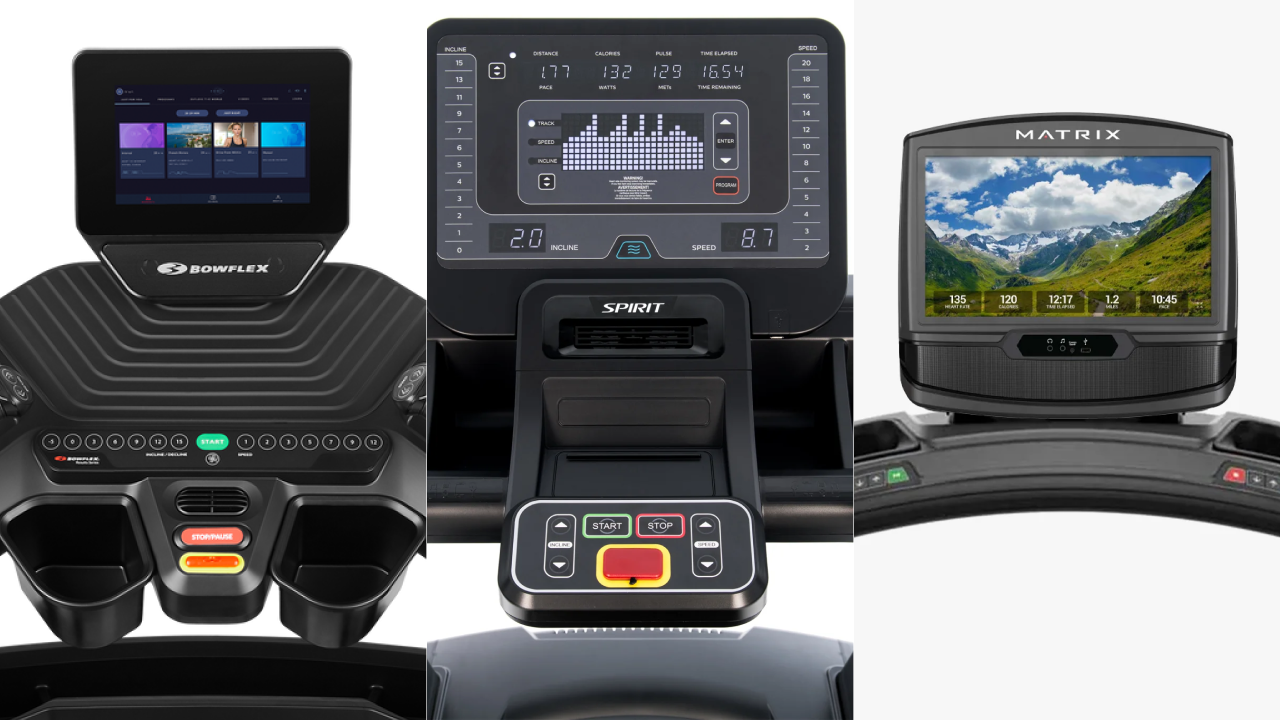
4) Console experience and training ecosystem
Many buyers think screens are fluff. They’re not—if they motivate you.
-
T Series: usually offers a good, functional console with training options.
-
Commercial: often offers a more premium console experience and a more immersive “training station” feeling (varies by generation).
If guided workouts keep you consistent, the console matters.
5) Noise and vibration (important in UAE apartments)
Noise isn’t only about the treadmill. It’s about:
-
stability (wobble causes vibration)
-
impact (running is louder than walking)
-
placement and matting
-
T Series: can be very apartment-friendly for walking and incline walking.
-
Commercial: can also be apartment-friendly, but its larger/heavier build often reduces wobble (which can reduce vibration transfer). Running will still create impact noise.
For many apartment users, incline walking on either series is a great “quiet high-results” strategy.
6) Long-term durability for frequent use
This is where the Commercial Series typically justifies its price.
If you train:
-
most days per week
-
long sessions
-
heavy running mileage
-
multiple users in the household
…Commercial Series is usually the safer investment.
4) Who should buy T Series (best-fit profiles)
T Series is ideal for people who want a treadmill that fits normal life: space, budget, and consistency.
T Series is best for you if:
-
Your primary routine is walking or incline walking
-
You’re a beginner building the habit
-
You’ll use it 2–5 days/week (mostly moderate exercise intensity)
-
You want a treadmill for fat loss and general fitness
-
You need folding convenience and easy storage
-
You live in an apartment and want a lower-impact, quieter routine
Best T Series use cases
-
morning incline walks
-
post-dinner steps
-
light jog intervals (walk/jog plans)
-
low-impact cardio sessions
-
general fitness for busy schedules
When T Series becomes a mismatch
T Series may feel limiting if:
-
you become a regular runner quickly
-
you do frequent intervals
-
you want long steady runs several times per week
-
you’re tall and feel cramped on smaller decks
-
the household has multiple frequent users
If that’s you, Commercial is the better tier.
5) Who should buy Commercial Series (best-fit profiles)
Commercial Series is for people who want treadmill training to feel like a “real runner setup.”
Commercial Series is best for you if:
-
You run 3+ times per week
-
You’re training for 5K/10K/half marathon
-
You want a stable, premium running feel at home
-
Multiple people will use the treadmill regularly
-
You’re buying for the long term and want fewer compromises
-
You want to do tempo runs, long runs, and interval sessions
Best Commercial use cases
-
structured running plans
-
longer endurance sessions
-
interval training where stability and response matter
-
mixed households with serious users
-
users who want the treadmill to still feel great after months of use
When Commercial is overkill
Commercial might be “too much” if:
-
you only walk casually 2–3 times per week
-
you rarely use incline
-
budget is tight and you’re still unsure about consistency
Overkill isn’t a problem—many people love “buy once, cry once”—but if budget matters, T Series can already deliver excellent results.

6) The UAE decision layer: apartment space, noise, heat, and dust
In UAE homes, your environment affects which series feels smarter.
Apartment living: noise and vibration reality
If you’re in an apartment, your best strategy is:
-
choose a treadmill that feels stable (less wobble)
-
use a thick treadmill mat
-
do incline walking for intensity without high impact
-
run at reasonable hours if neighbors are sensitive
Both series can work, but:
-
T Series is often enough for incline walking and everyday steps
-
Commercial is better if you plan to run frequently
Space and folding
T Series often fits apartment needs well because many models emphasize:
-
space-saving folding
-
convenient home storage
Commercial series may also fold (depending on model), but it tends to feel like a bigger “presence” in the room.
Heat and airflow
Indoor treadmill workouts can feel hot in UAE. Regardless of series:
-
add a fan
-
keep ventilation around the treadmill
-
avoid cramped corners
Comfort increases consistency more than any feature list.
Dust management
Dust is common, and it affects treadmills over time. For either series:
-
wipe down after use
-
keep area clean
-
follow belt maintenance guidance
A smoother belt system reduces motor strain and noise.
7) T Series vs Commercial: feature priorities by goal
Here’s the most practical part: your goal determines the best choice.
Goal: Fat loss (no running needed)
Best choice: T Series (often)
Because:
-
incline walking delivers high intensity without running
-
you don’t need the extra running-focused durability
-
T Series gives great value for this use case
Upgrade to Commercial if:
-
multiple users will train hard
-
you want the premium feel and budget allows
Goal: Beginner fitness habit (daily steps)
Best choice: T Series
Because:
-
convenience and comfort matter most
-
you can keep it simple and consistent
Goal: Walk/jog progression to running
Best choice: depends on your timeline
-
If you think you’ll run regularly within 2–3 months → Commercial
-
If you’re unsure and mostly walking now → T Series
Goal: Regular running and performance training
Best choice: Commercial Series
Because:
-
stability and deck comfort at speed matter
-
long-term durability under running load matters
Goal: Multi-user household treadmill
Best choice: Commercial Series
Because:
-
different users increase wear
-
stability and durability become more important than “good enough”
Goal: Apartment-friendly intensity
Best choice: T Series or Commercial, but your training approach matters more
Apartment-friendly strategy:
-
incline walking
-
mat + leveling
-
stability-first purchase
If you’re a serious runner in an apartment, lean Commercial for stability and smoother running feel.
8) “What if I buy T Series now and upgrade later?” (the real cost)
Many buyers consider:
-
buy cheaper now
-
upgrade later if they get serious
That can be smart—but only if you’re unsure you’ll stick with it.
When upgrading later makes sense
-
you’re truly uncertain about consistency
-
you only want walking and light cardio for now
-
budget is tight
-
you’re testing the habit
When upgrading later becomes a waste
-
you already know you will run regularly
-
you’ve run in the past and you’re returning to it
-
you’re buying for multiple users
-
you want long-term satisfaction and less compromise
If you already know treadmill running will be central to your life, Commercial is often cheaper in the long run because you avoid the “two purchases” path.
9) How to choose within each series (avoid the wrong model)
Even within a series, models can vary. Use these rules to avoid buying the wrong one.
Choosing within T Series
Prioritize:
-
belt size that matches your height/stride
-
incline usability (controls + range)
-
stability for your intended pace
-
warranty/support
Avoid:
-
very compact decks if you’re tall or plan to jog regularly
-
buying only for a screen instead of comfort
Choosing within Commercial Series
Prioritize:
-
deck comfort and stability at speed
-
ease of controls (quick keys)
-
console experience if you’ll use guided training
-
after-sales support and warranty coverage
Avoid:
-
overpaying for features you won’t use if you mostly walk
-
ignoring space and apartment placement planning
10) The simple 2-minute checklist (pick the right series confidently)
Answer these honestly:
-
Will I run 3+ times per week within 3 months?
-
Yes → Commercial
-
No / Not sure → T Series
-
Will multiple people use it frequently?
-
Yes → Commercial (usually)
-
No → either, depending on running
-
Is my main workout incline walking and steps?
-
Yes → T Series is usually enough
-
No → keep evaluating
-
Am I tall or do I feel cramped on smaller decks?
-
Yes → lean Commercial or ensure a bigger T Series deck
-
Do I care about a premium screen/training station feel?
-
Yes → Commercial often feels more premium
-
No → T Series may be perfect
-
Do I live in an apartment with noise concerns?
-
If walking/incline → T Series + mat is great
-
If running often → Commercial for stability, plus mat and smart timing
If your answers are mixed, the best tie-breaker is:
Buy for your hardest realistic use case.
FAQs
1) Is the NordicTrack T Series good enough for most people?
Yes—especially for walking, incline walking, beginner fitness, and moderate home use. It’s often the best value tier.
2) What’s the biggest difference between T Series and Commercial?
Usually stability and durability for frequent running. Commercial models typically feel more solid at speed and are built for heavier usage.
3) Can I run regularly on a T Series treadmill?
Some people do, but if you run often (3+ times/week), many users prefer Commercial for better long-term comfort and stability.
4) Which series is better for weight loss?
Both can work. For most weight loss goals, incline walking consistency matters more than premium running features—so T Series is often enough.
5) Which series is better for apartments in UAE?
For walking and incline walking, T Series is very apartment-friendly. For frequent running, Commercial may be better due to stability, but you still need a mat and good placement.
6) Is Commercial Series worth the extra money?
It’s worth it if you run often, want a premium running feel, or have multiple users. If you mainly walk, T Series is usually the smarter value.
7) Should I buy T Series now and upgrade later?
Only if you’re unsure you’ll stick with treadmill training. If you already know you’ll run regularly, buying Commercial once often saves money and regret.
Conclusion
The choice between NordicTrack T Series vs Commercial Series comes down to how you’ll truly use the treadmill. If your routine is mainly walking, incline walking, and general fitness, the T Series is often the best value and fits UAE apartment life well. If you run frequently, train seriously, or have multiple users, the Commercial Series is the better long-term investment thanks to greater stability, runner comfort, and durability under heavier use. Choose the series that matches your hardest realistic weekly workout, and you’ll end up with a treadmill you enjoy—and actually use consistently.
Related Blogs