
 Locate Our Store
 +971 562162730
 AED
AED SAR
SAR KWD
KWD QAR
QAR BHD
BHD OMR
OMR


Intermediate rowing workout plan: 4 weeks to fitness boost

Introduction
The shift from casual rowing sessions to a structured, intermediate program marks a turning point in an athlete’s conditioning journey. At this stage, the body already recognizes the rowing stroke’s rhythm, leg drive, core engagement, and upper-body coordination. What it needs now is targeted progression. A four-week plan delivers clear direction by sequencing effort, recovery, and adaptation in a repeatable cycle that builds strength, aerobic capacity, and technical consistency.
An intermediate athlete usually arrives with a baseline: moderate cardiovascular endurance, familiarity with machine setup, and the capacity to row continuously for 15 to 25 minutes. Without a plan, this existing ability plateaus. Muscles adapt to predictable workloads, heart rate fluctuations stabilize prematurely, and training sessions offer fewer performance gains. A structured program prevents stagnation by manipulating stroke rate, resistance, duration, and interval timing to engage aerobic and anaerobic systems in purposeful patterns.
Indoor rowing’s low-impact nature allows higher training frequency than many other conditioning methods. Legs, hips, core, and back drive the movement in synchronized phases, distributing load across major muscle groups while minimizing joint stress. This creates an ideal platform for progressive conditioning. A four-week structure introduces variety without overwhelming the athlete with excessive complexity.
The program suits both home environments and high-performance gyms, including regions with challenging climates such as the UAE, where indoor training becomes a practical necessity. Seasoned rowers use similar frameworks to prepare for distance trials, metabolic conditioning blocks, or general athletic maintenance during competitive seasons. The four-week horizon is long enough to produce measurable change while short enough to maintain motivation and prevent program fatigue.
A clear structure also lays groundwork for future advancement. Once the cycle is complete, loads can be increased, goals can be redefined, and performance markers can be tested again. The process becomes a stepping stone into longer or more specialized training cycles, making this four-week plan a functional midpoint in the athlete’s progression curve.
Key Takeaways / TLDR
• Intermediate athletes benefit from structured progression to avoid performance plateaus.
• A four-week plan provides controlled variation in stroke rate, intensity, duration, and resistance.
• Indoor rowing engages major muscle groups with limited joint strain, supporting frequent training.
• Periodized structure improves endurance, power output, and technical consistency.
• The format adapts well to indoor environments common in hot climates, including the UAE.
• A short cycle lays the foundation for future endurance blocks, strength phases, or performance-specific goals.
What Makes Rowing a Powerful Full-Body Workout (Key Benefits & Physiology)
Indoor rowing activates multiple physiological systems in a single coordinated motion. Each stroke recruits the legs, core, back, and arms in a kinetic chain that moves from leg drive to hip extension and finally to upper-body pull. This sequence trains force production, posture control, and breathing rhythm, creating a conditioning effect that extends beyond aerobic output.
The muscular demands span several regions:
• Lower body: quadriceps, hamstrings, gluteals
• Core: abdominals, obliques, spinal stabilizers
• Upper body: latissimus dorsi, trapezius, rhomboids, deltoids, biceps, forearm flexors
The cardiovascular system supports this full-body activation by maintaining steady oxygen transport during long rows and rapid energy turnover during interval sessions. The combination positions rowing as a time-efficient conditioning method for athletes who require strong aerobic foundations without compromising joint longevity.
Rowing also supports metabolic adaptability. Endurance rows develop oxidative capacity, while power intervals drive anaerobic thresholds upward. The machine’s resistance characteristics help regulate intensity across training types. Air and water rowers respond to stroke force, encouraging controlled technique, whereas magnetic rowers allow predictable resistance levels for structured plans.
Unlike high-impact running sessions, rowing reduces repetitive stress on the knees and ankles, making it suitable for frequent sessions or cross-training blocks. This quality benefits athletes recovering from impact-heavy sports or those training in environments where heat restricts outdoor activity. 
Baseline Assessment: Who Should Follow This Plan — and How to Test Readiness
An intermediate rowing plan assumes a measurable starting point. Athletes entering this stage typically maintain controlled technique, stable breathing patterns during moderate rowing, and sufficient muscular endurance for longer sets. Identifying readiness before beginning the four-week cycle reduces injury risk and improves the accuracy of progression targets.
Key indicators of intermediate readiness include:
• Consistent ability to row 15 to 25 minutes without technical breakdown
• Familiarity with machine setup, including foot strap adjustments and drag factor or resistance settings
• Awareness of stroke rate ranges, typically maintaining 20 to 24 strokes per minute during steady efforts
• Capacity to shift between aerobic and anaerobic intensities without excessive fatigue
A short assessment sequence helps establish a baseline for future comparison. A sample testing format includes:
-
A 10-minute steady row at comfortable intensity to gauge endurance stability and breathing rhythm.
-
A 1-minute controlled power test to observe stroke efficiency and peak effort without form collapse.
-
A moderate-paced distance trial such as 1500 to 2000 meters to record split times and perceived exertion.
-
Post-session mobility check focusing on hips, lower back, shoulders, and hamstrings to identify restrictions that may affect stroke mechanics.
Common readiness challenges appear in three categories:
• Technique limitations such as early arm pull, hunched posture, or loss of drive power
• Cardiovascular inconsistencies when transitioning from steady rows to interval bursts
• Muscular imbalances in hips or upper back causing reduced stroke strength or discomfort
Athletes in hot climates, including those training indoors in the UAE, may require additional hydration planning during assessments. Proper ventilation, adequate fluid intake, and shorter warm-ups help maintain comfort during testing.
This assessment stage clarifies the athlete’s capabilities and ensures the four-week plan begins with precise, sustainable training intensity rather than guesswork. Subsequent improvements become measurable, motivating, and easier to track across the program’s structured progression.
Weekly Structure & Periodization Strategy for 4 Weeks
A structured training cycle guides the intermediate athlete through predictable phases of effort and recovery. Periodization offers a framework that organizes intensity and volume so the body adapts through controlled stress rather than improvised workloads. A four-week rowing plan borrows principles common in endurance coaching: balanced workloads, varied intensities, and a progression curve that culminates in a reduced-load taper.
A weekly structure clarifies distribution of stress across sessions. The schedule typically includes steady endurance work, interval sessions, mixed rows, and recovery days. Each category contributes to a different physiological mechanism. Endurance sessions expand aerobic capacity and improve oxygen utilization. Interval and power-focused sessions stimulate anaerobic thresholds, challenge stroke mechanics under fatigue, and develop force application during the drive phase. Mixed days create hybrid stress patterns that mimic real-world conditioning demands. Recovery sessions encourage tissue repair, neuromuscular recalibration, and technique reinforcement.
A representative microcycle appears in the following structure:
|
Day |
Focus |
Primary Adaptation |
|
Day 1 |
Steady-State Row |
Aerobic conditioning, stroke rhythm |
|
Day 2 |
Intervals or Power Row |
Anaerobic development, force output |
|
Day 3 |
Light Row or Mobility |
Recovery, movement quality |
|
Day 4 |
Mixed Row or Strength + Short Row |
Hybrid conditioning, muscle strength |
|
Day 5 |
Longer Moderate Row |
Endurance volume, mental pacing |
|
Day 6 |
Optional Cross-Training or Rest |
System recovery |
|
Day 7 |
Rest |
Full restoration |
Progression takes place through incremental adjustments: stroke rate increases, interval density changes, or duration expands by moderate margins. Adaptation depends on respecting recovery windows, as muscle groups engaged in rowing—such as the quadriceps, hamstrings, gluteals, and spinal stabilizers—respond positively to both targeted effort and intentional rest.
This weekly structure aligns with the demands of intermediate athletes who seek measurable development while avoiding excessive fatigue. Indoor environments, particularly in regions such as the UAE, support reliable adherence to this structure because temperature and weather disruptions are minimized.
Detailed 4-Week Plan: Workouts, Progression & Variations
The plan unfolds through a sequence of weekly progressions that guide the athlete from foundational consistency to higher-intensity efforts before tapering in the final week. Each workout includes specific targets to regulate technique, stroke rate, duration, and physiological load. Variations allow customization for goals related to endurance, power, or body composition.
Week 1 establishes stability. The schedule includes a moderate 30-minute steady-state row at 20–22 strokes per minute, followed by short intervals such as eight rounds of one-minute exertion paired with one-minute gentle rowing. A lighter mobility or easy-row day supports recovery. The goal is familiarization with session structure and identification of sustainable pacing.
Week 2 introduces greater variety. A mixed endurance session combines steady rowing with short sprint segments, blending aerobic output with anaerobic spikes. A distance-focused row of 5000 to 6000 meters encourages mental pacing and steady rhythm. Supplementary sessions include core work, hip mobility, and posterior chain strengthening.
Week 3 delivers the highest workload. A power session uses ten rounds of one-minute high-intensity rowing separated by controlled recoveries. A longer steady row of 35 to 40 minutes challenges stamina and technique under fatigue. A mixed session combines rowing with strength-based movements such as squats, lunges, and bodyweight pulls, improving stroke efficiency through strengthened kinetic chains.
Week 4 functions as a deload phase. A moderate 20- to 25-minute row promotes circulation without excessive strain. A reduced-volume interval session maintains neuromuscular sharpness while lowering total workload. A mobility-focused day facilitates tissue recovery. Some athletes conduct a final 5- or 10-minute controlled test to compare with baseline measures.
The plan supports different goals through adaptations: endurance-oriented athletes emphasize steady volume; power-focused athletes add stroke-rate variations; athletes aiming for body composition changes include higher-density intervals. This modular design preserves structure while allowing individualized emphasis.
Technique & Form Essentials — Safe & Effective Rowing
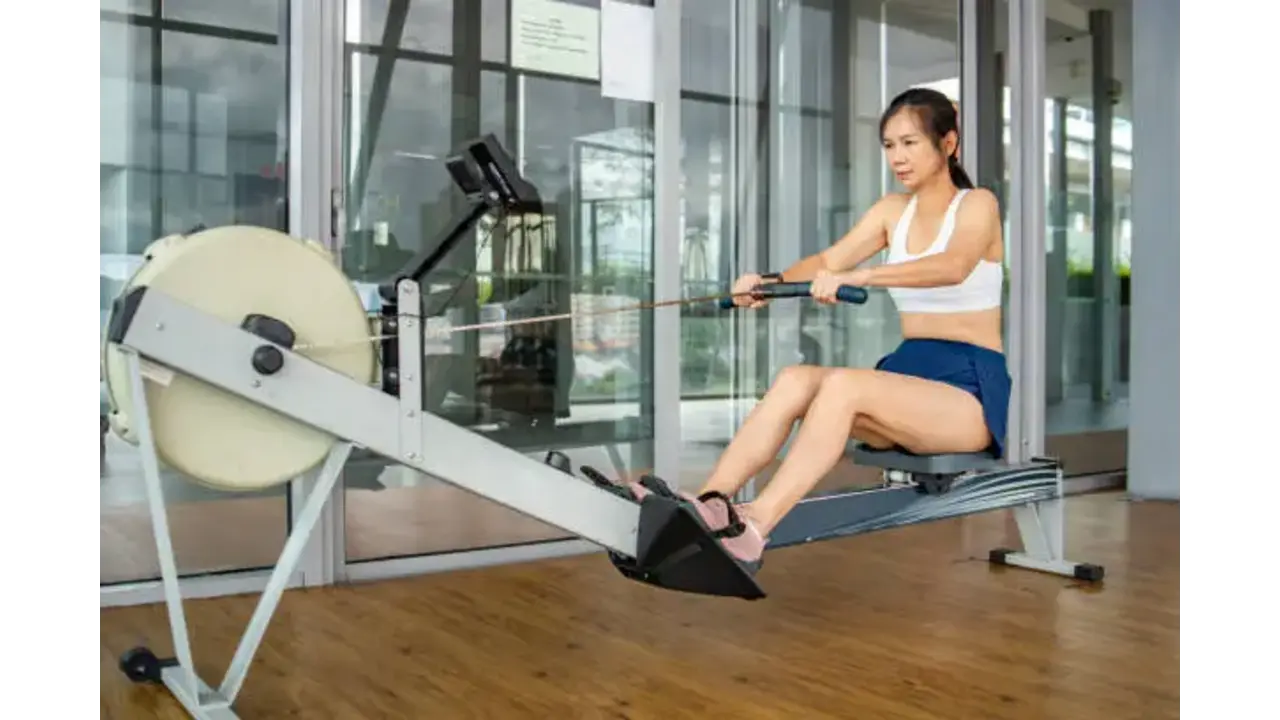
Efficient rowing depends on precise body mechanics and synchronized movement patterns. Technique influences power production, metabolic demand, and injury prevention. The stroke follows a four-phase sequence: catch, drive, finish, and recovery. At the catch, the body establishes forward compression with shins vertical, arms extended, and torso leaning slightly forward from the hips. The drive initiates with a strong leg push that transfers force through the hips and into the upper body. The finish culminates with a controlled pull that engages the upper back and arms. The recovery reverses the motion by extending the arms, hinging at the hips, and sliding forward into the next catch.
Neuromuscular coordination links these phases into a smooth rhythm. An efficient stroke relies on maintaining spinal alignment, avoiding early arm engagement, and controlling the slide to prevent rushed movement. The stroke rate functions as a pacing tool; intermediate athletes typically maintain 20 to 24 strokes per minute during steady rows, increasing to higher ranges during power sessions.
Warm-ups and cool-downs reinforce technique quality. A short five- to ten-minute warm-up encourages joint lubrication, muscle activation in the legs and hips, and steady breathing patterns. The cool-down reduces tension through gentle rowing and targeted stretching, particularly across the hamstrings, hip flexors, spinal stabilizers, and upper back.
Common technique challenges appear across three areas:
• Power imbalance between legs and upper body, producing premature fatigue
• Rounded posture at the catch or finish, increasing lumbar strain
• Excessive stroke rate that disrupts drive mechanics and breathing rhythm
Complementary Training: Strength, Mobility & Recovery
Rowing builds endurance and power across multiple muscle groups, yet certain areas benefit from targeted auxiliary work. Complementary training supports joint stability, movement efficiency, and long-term athletic development. Strength exercises enhance stroke force by reinforcing the posterior chain, hips, and core, while mobility work maintains the range of motion required for a comfortable catch position and powerful drive. Recovery activities ensure the body adapts to repeated rowing sessions without accumulating excessive strain.
Strength work typically focuses on movement patterns mirrored within the stroke. Squats and lunges reinforce leg drive mechanics, while hip hinges such as deadlifts improve posterior chain activation. Core stability exercises, including planks and controlled rotational movements, stabilize the torso during the transition from drive to finish. Upper-back movements such as rows and band pulls strengthen scapular engagement, contributing to cleaner finishes and reduced tension during high-intensity sessions.
Mobility training helps preserve fluidity across the hips, ankles, and thoracic spine. These areas often tighten under repeated seated movements and require deliberate stretching or mobility drills. Dynamic movements before workouts prepare the joints for load, while static stretches after training reduce muscular tightness. Foam rolling or targeted soft-tissue work benefits athletes who experience stiffness after long sessions.
Recovery considerations extend beyond brief mobility sessions. Adequate sleep, hydration, and nutrient timing influence adaptation rates. Rest days within the weekly structure serve as critical opportunities for muscular repair. Light aerobic movement or slow technique rows assist circulation without creating additional strain. These measures help protect high-use areas such as the lower back and hamstrings.
Tracking Progress: Metrics, Heart Rate Zones & Workout Logs
Progress monitoring allows an athlete to refine training intensity and recognize physiological changes throughout the four-week cycle. Indoor rowing provides multiple measurable indicators, making it easier to observe improvements in aerobic capacity, technique consistency, and power output. Tracking these variables supports decision-making when adjusting stroke rate, duration, or interval density.
Key metrics reveal different dimensions of performance. Distance and duration provide insights into aerobic endurance, while split time reflects row-by-row efficiency. Stroke rate indicates rhythm management during steady rows or sprint intervals. Heart rate data, if available, contextualizes exertion levels within specific aerobic or anaerobic zones. Rate of perceived exertion (RPE) complements these readings by capturing subjective fatigue that may not immediately appear in mechanical data.
A practical baseline test conducted in the beginning of the program enables comparisons at the end of week four. Typical assessments include a 10-minute time trial, a controlled 2000-meter row, or a fixed-power interval test. These formats highlight changes in cardiovascular efficiency, stroke control, and breathing rhythm.
A structured log helps keep these observations organized. A typical log includes:
• Date and workout type
• Distance or total time
• Average split and stroke rate
• Heart rate or RPE
• Notes on technique quality, mobility restrictions, or perceived fatigue
Tracking patterns across sessions uncovers useful trends. For example, a gradual decrease in split time at the same stroke rate signals improved efficiency. Stable breathing patterns during intervals indicate rising anaerobic tolerance. Persistent fatigue or rising heart rate during easy rows may suggest insufficient recovery.
Training logs also support decision-making for future cycles. Athletes completing the four-week plan often use these records to set new goals, modify intensity for the next block, or identify areas requiring mobility or strength focus. Consistent measurement creates a clearer picture of adaptation and encourages long-term commitment to structured conditioning.
Equipment Guide: Choosing and Setting Up the Right Rower
A rowing machine determines comfort, technique consistency, and the ability to manage varied intensity levels throughout a training plan. Intermediate athletes benefit from a machine that supports balanced resistance, stable construction, and ergonomic alignment. Machine type influences how resistance interacts with stroke power, and thoughtful selection helps match equipment to training goals.
Air and water rowers respond dynamically to force, increasing resistance as stroke power rises. This characteristic encourages technical discipline and rewards efficient drive mechanics. Magnetic rowers offer consistent resistance regardless of stroke speed, making them suitable for athletes who prefer predictable workloads during structured intervals. Hybrid systems combine these traits for a nuanced training experience.
Ergonomics influence technique integrity. An adjustable foot platform aligns the ankle angle with leg drive mechanics. A comfortable seat reduces friction during long rows, while a smooth rail ensures uninterrupted motion. Handle shape and grip texture affect wrist alignment and reduce strain during repetitive movements. For indoor environments, particularly in regions with warm climates such as the UAE, adequate ventilation and space for air circulation maintain comfort during longer sessions.
Setup plays a critical role in daily training. Proper spacing around the machine allows full body extension during the drive and unrestrained recovery. Resistance or drag settings should remain consistent during steady rows while allowing controlled variation for interval work. Routine maintenance, including chain lubrication or belt inspection, preserves machine longevity and smooth performance.
Rowers designed for home settings often incorporate foldable frames or compact footprints, supporting athletes who train in limited indoor spaces. Durable, mid-range machines such as those offered through sea-wonders emphasize stability, adjustability, and user-friendly configurations that accommodate intermediate-level demands. These features support progressive training sessions, reduce distraction from mechanical issues, and help maintain consistent stroke quality throughout the four-week program. 
Nutrition, Hydration & Lifestyle Considerations (Especially for Hot Climates / UAE Context)
Rowing places sustained demand on muscular endurance, cardiovascular output, and metabolic turnover. Nutritional support becomes essential for recovery, energy regulation, and workout longevity. Intermediate athletes often train at intensities that challenge glycogen stores, fluid balance, and thermoregulation, especially during indoor sessions in regions with elevated temperatures such as the UAE.
Pre-session fueling typically includes easily digestible carbohydrates paired with modest protein intake. This combination supports stable glucose availability during steady rows and provides amino acids for muscle maintenance under repeated drive cycles. Post-session nutrition focuses on replenishment. Meals with lean protein sources, whole grains, legumes, fruits, and vegetables help rebuild tissue and restore nutrient balance. Timing influences recovery efficiency, with the first hour after training serving as an important window for energy restoration.
Hydration plays a central role in rowing performance. Indoor heat accumulation leads to increased perspiration without the cooling benefit of outdoor airflow. Maintaining hydration before, during, and after workouts helps regulate heart rate, sustain muscular coordination, and prevent early fatigue. Electrolyte intake becomes especially relevant in warm climates. Sodium, potassium, and magnesium support neuromuscular stability during longer steady-state rows or interval sessions with higher metabolic output.
Lifestyle factors affect training readiness. Sleep quality influences hormone regulation, muscle repair, and cognitive focus during technique-intensive sessions. Stress from work or irregular schedules can elevate fatigue, making recovery days even more critical. Indoor training schedules often shift toward early morning or late evening in hot regions, when indoor temperatures drop and energy levels stabilize.
Athletes observing fasting periods, such as during Ramadan, may adjust training intensity by selecting lower-volume days, extending hydration windows during non-fasting hours, or incorporating gentle mobility work to maintain stroke mechanics. These adjustments protect performance capability while respecting physiological limitations.
The intersection of nutrition, hydration, and lifestyle habits reinforces the athlete’s capacity to follow the four-week plan without interruptions from fatigue, muscle soreness, or heat stress. These elements align with the high-effort demands of indoor rowing and ensure long-term consistency.
After Week 4: What’s Next — How to Maintain or Progress Further
Completion of a four-week cycle creates an opportunity to evaluate progress and determine new conditioning priorities. The data collected through performance logs, baseline comparisons, and subjective notes inform the next phase. Athletes often observe improvements in split times, breathing control, stroke smoothness, and general training confidence. This creates an ideal moment to redirect or reinforce training goals.
Several advancement paths exist. Endurance-focused development may continue by extending steady-state rows to 45 or 60 minutes, gradually increasing distance targets. Power-oriented athletes may shift toward shorter, more intense interval protocols with reduced recovery windows. Those seeking balanced conditioning may repeat the four-week structure with incremental increases in stroke rate or interval density.
A simple post-cycle evaluation framework includes:
-
Reviewing baseline and final test results (such as 10-minute or 2000-meter performance).
-
Identifying technical strengths and recurring challenges.
-
Measuring adaptation patterns across endurance, power, and recovery.
-
Defining the next primary objective: endurance, strength, metabolic conditioning, or maintenance.
Different objectives produce distinct training pathways. For example, endurance cycles emphasize low-intensity volume with occasional threshold work. Strength-oriented cycles integrate additional resistance training to reinforce leg drive and upper-back stability. Athletes preparing for seasonal demands or competitive sports may combine rowing with cross-training modalities that mirror sport-specific energy systems.
Long-term sustainability depends on continued variation to prevent monotony and plateau. Including deload weeks every four to eight weeks supports musculoskeletal health and reduces accumulated fatigue. Flexibility in scheduling allows adjustments for workload changes, travel, or environmental factors common in warmer regions.
Completion of the initial cycle often motivates renewed commitment due to visible performance change. Structured follow-up planning ensures this momentum continues, helping athletes transition from intermediate conditioning blocks to longer-term fitness trajectories.
FAQs
What stroke rate suits intermediate steady rowing sessions?
Intermediate athletes typically maintain 20 to 24 strokes per minute during steady aerobic efforts. This range supports efficient drive mechanics and controlled recovery without drifting into unsustainable cadence. Higher ranges appear in power intervals, where stroke velocity increases but form must remain intact.
How often should an intermediate athlete row each week for reliable progress?
A frequency of four to five sessions per week balances workload and recovery. This schedule enables sufficient exposure to endurance, interval, and mixed sessions without introducing excessive fatigue. Rest days remain essential for muscular repair and central nervous system recalibration.
Can a four-week rowing plan support body composition goals?
Rowing’s full-body activation, combined with consistent cardiovascular output, contributes to calorie expenditure and muscular conditioning. Interval sessions raise metabolic demand, while steady rows sustain aerobic usage of energy substrates. When paired with structured nutrition, many athletes observe measurable changes in body composition.
How can back discomfort be avoided during longer rows?
Back tension often stems from early arm pulling, rounded posture, or limited hip mobility. Strengthening the posterior chain, improving core stability, and practicing hip hinge mechanics reduce strain. Technique-focused warm-ups help reinforce correct alignment before each session.
Is strength training advisable alongside rowing?
Strength work supports stroke power and joint stability. Squats, hip hinges, and upper-back exercises reinforce drive mechanics and reduce fatigue during longer or higher-intensity sessions. These activities should appear on lighter rowing days or during shorter mixed-training sessions.
Conclusion
Completion of the four-week intermediate rowing plan represents a significant milestone in an athlete’s conditioning progression. The combination of structured sessions, balanced intensities, and complementary training produces measurable improvements in endurance, power output, technical control, and training confidence. Rows that previously felt demanding often become more manageable, reflecting adaptations in cardiovascular efficiency, muscular coordination, and pacing strategy.
The structure of the plan also creates continuity. Athletes who document distance, split times, stroke rate consistency, and interval performance hold clear data that can guide future cycles. This information simplifies the process of setting new goals, whether those goals involve longer endurance rows, faster sprint intervals, higher weekly volume, or more integrated strength phases.
Long-term progression often benefits from equipment that supports consistent technique and variable training intensities. Stable construction, smooth rail action, ergonomic seating, and adjustable resistance help maintain stroke quality. Machines designed for frequent intermediate-level training, such as those available through Sea Wonders, provide a reliable foundation for repeated cycles without disruptions caused by mechanical inconsistencies or ergonomic limitations.
Future plans may extend the existing four-week structure, combine rowing with other endurance modalities, or shift toward specialized objectives such as distance racing, metabolic conditioning, or strength-biased programs. Periodic deload weeks maintain musculoskeletal health and sustain motivation through longer training segments.
Related Blogs




Bose SoundLink Bluetooth Speaker
£50.00£60.00
Canon's press material for the EOS 5D states that it 'defines (a) new D-SLR category', while we're not typically too concerned
- Availability :In Stock