
 Locate Our Store
 +971 562162730
 AED
AED SAR
SAR KWD
KWD QAR
QAR BHD
BHD OMR
OMR


High-Tech Fitness: The Latest Treadmill Features to Consider in 2025
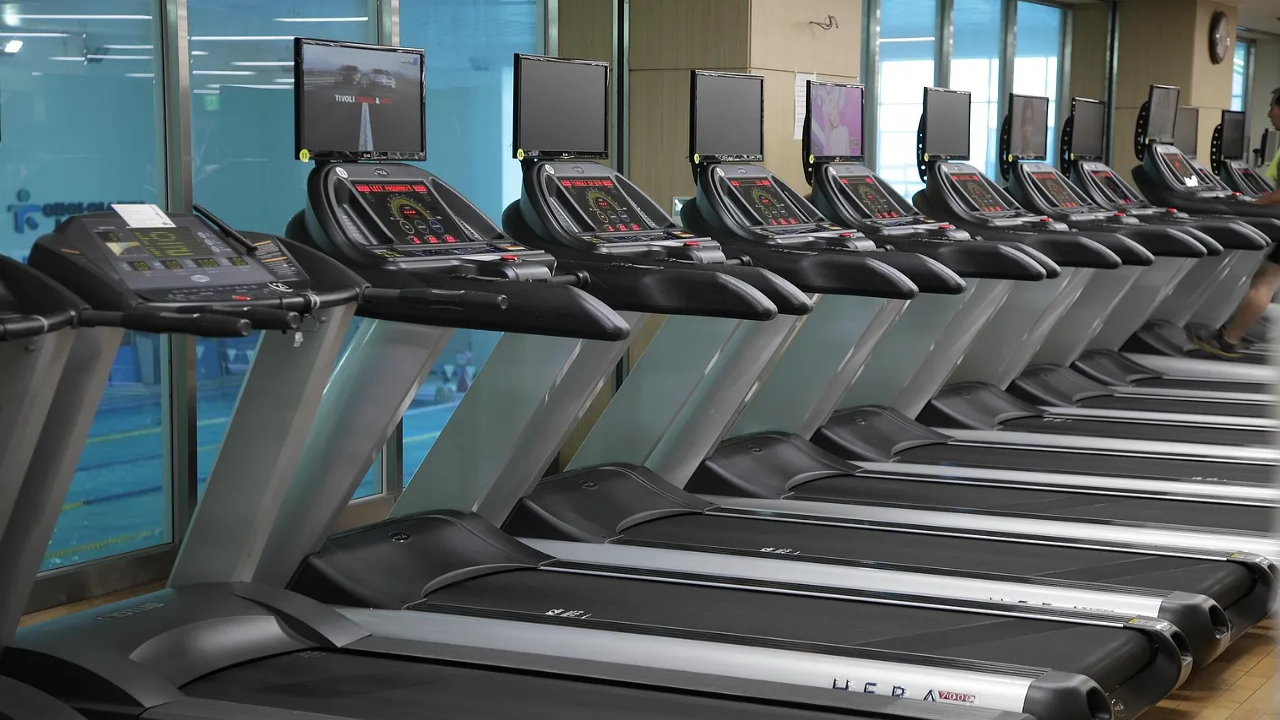
Introduction
Treadmills in 2025 are not just belts and motors. Modern units blend precise mechanics with adaptive software, turning speed and incline into variables guided by data. The shift matters in Dubai, where heat, dust, and apartment acoustics pressure both durability and daily usability. Choosing features by buzzwords risks mismatch; selecting by function-to-context produces reliable training and fewer service calls. The priority stack begins with hardware foundations—motor control, rollers, deck geometry, and cushioning—then moves to sensors and algorithms that read effort, infer gait, and auto-adjust sessions. Connectivity, displays, and content come later, once mechanical stability is secured.
The features highlighted here reflect how real sessions unfold: torque delivery during long intervals, thermal behavior at higher room temperatures, stride stability at pace, and signal quality from heart and motion sensors. A strong baseline enables the premium extras to shine without creating downtime or update headaches. NordicTrack options offered through Sea Wonders—such as T Series 7/8/10, Commercial 1250/1750/2450, and the incline-focused Elite X24i—map these trends into clear buyer paths for compact apartments or villa gyms.
Key takeaways
-
Hardware first: continuous-duty motor, roller diameter, deck stiffness, and cushioning dictate training quality.
-
Sensors shape accuracy: multi-sensor fusion beats single-sensor metrics and reduces drift.
-
Adaptive control must allow manual override and safe limits.
-
For Dubai, cooling, dust management, and surge protection turn features into long-term value.
-
Shortlist models by use case: space constraints, mileage, incline goals, and noise control.
Core Hardware Foundations: What Underpins New Features
Motor design anchors every premium feature. A stable continuous horsepower rating and clean torque curve prevent belt speed sag when incline increases or cadence rises. Brushless drive systems and refined control boards reduce cogging and heat, useful in warmer interiors. Large-diameter rollers lower belt flex, decreasing friction and extending lubrication intervals. When roller size scales with duty cycle, the deck runs cooler and steadier during back-to-back sessions in multi-user homes.
Deck geometry governs stride freedom and impact feel. Longer surfaces protect heel recovery for tall runners; wider belts reduce lateral edge contact during fatigue. Stiff frames shift resonance below the range that runners notice as “bounce,” improving foot strike consistency during speed work. Cushioning has moved from single-durometer pads to zoned and progressive systems that soften impact at touchdown and firm up through toe-off, keeping energy return predictable.
Power infrastructure deserves equal attention. Efficient cooling channels around the motor and controller slow thermal rise, preserving torque during long intervals. Clean cable routing and sealed vents limit dust ingress, important for apartments near balcony doors. Surge protection and voltage-stable power supplies protect boards during firmware updates and start-up spikes. Foldable designs should lock rigidly when open; hinges and gas assists must resist wobble at pace. This mechanical stack—motor control, rollers, deck, cushioning, and power integrity—forms the platform that makes smart features genuinely useful instead of fragile add-ons. In practice, units like NordicTrack Commercial 1750 or 2450 demonstrate how heavier frames and larger rollers translate into quieter, truer belt motion at training speeds, while T Series models prioritize compactness without discarding essential stability.
Advanced Sensor & Feedback Systems
Sensors convert motion and effort into actionable control. Optical heart rate on the console or grips offers convenience but suffers from motion artifacts; chest straps using electrical signals deliver cleaner beat detection during intervals. Newer designs pair inertial measurement units with cadence and contact-time estimation to infer stride symmetry, vertical oscillation, and foot-strike pattern. When fused with heart data, these signals allow adaptive pacing that holds a target effort rather than a fixed speed, useful in heat where heart rate drifts upward.
Accuracy depends on sampling rate, placement, and calibration. Optical arrays require firm contact and consistent ambient light; strap electrodes need moisture and proper fit. Drift emerges as sweat, dust, and vibration alter signal quality. Systems that expose calibration prompts—resting HR checks, belt speed verification, incline zeroing—retain accuracy long after unboxed shine. Safety sensing matters as well. Slip detection from sudden cadence drops, belt stall monitoring, and fast-acting stop logic reduce incident severity in shared households.
Feedback closes the loop. Real-time dashboards should elevate only the metrics that influence pacing: heart rate zone, cadence, ground contact pattern, and incline grade. Haptic cues or audible prompts work better than screen glances at higher speeds. Data integrity also feeds post-run analytics. Clean streams align with third-party platforms for trend tracking, while unreliable sensors create misleading fatigue signals and poor recommendations. NordicTrack’s iFit ecosystem leverages multi-sensor input for SmartAdjust-style control, yet retains manual overrides for precise intervals. For Dubai homes, reliable sensors, routine cleaning of optical windows, and periodic strap maintenance help the adaptive layer remain a coach, not a distraction, as sessions move from cool mornings to warmer, dust-prone evenings.
AI & Adaptive Algorithm Integration
Adaptive control shifts treadmills from fixed-speed devices to responsive training systems. Algorithms interpret live metrics—heart rate, cadence, stride variability—and adjust speed or incline to maintain a target effort. The promise is steadier workload, smoother intervals, and fewer form breaks as fatigue rises. Reliable implementations respect guardrails: capped acceleration rates, bounded incline jumps, and immediate manual override through tactile buttons. Without these constraints, auto-adjustments risk overshooting effort or unsettling foot placement.
Model quality hinges on input fidelity and control-loop tuning. Low-latency sampling prevents “rubber-banding” where the belt chases the metric and oscillates around the target. Smoother proportional-integral control avoids abrupt shifts that spike heart rate or ground contact time. Personalization layers learn preferred cadence bands, heat sensitivity, and recovery kinetics; over time, the system biases sessions toward sustainable ranges while still honoring goal pace. Session context matters as well. Hill work should privilege incline manipulation first, then speed, whereas tempo efforts should hold belt velocity steady and micro-tune grade to track heart rate drift in warmer Dubai rooms.
Fail-safes differentiate premium systems. A clear pause hierarchy, kill-switch precedence, and offline fallback keep workouts predictable during network drops. Transparency also builds trust. Exposed targets, adjustment magnitude, and upcoming changes let runners anticipate belt behavior rather than react to it. iFit-enabled NordicTrack models at Sea Wonders, including Commercial 1750 and 2450, exemplify this philosophy with SmartAdjust features that adapt while keeping physical controls front and center. For compact apartments, T Series 10 pairs lighter frames with adaptive coaching while preserving manual presets for classic interval structure. The strategic takeaway is simple: adaptive features add value when grounded in stable mechanics, trustworthy sensors, and human-checked control limits that privilege form, cadence, and safety over theatrical dynamism.

Ecosystem and Connectivity Features
Connected treadmills extend utility through data sync, content delivery, and peripheral pairing. Robust Wi-Fi enables on-demand classes, route simulations, and firmware updates; Bluetooth integrates straps, headphones, and external sensors. Cross-platform compatibility with Apple Health, Google Fit, or Strava preserves training history beyond a single vendor. Privacy and portability matter: exporting raw or summarized workout files ensures continuity if platform preferences change.
Resilience separates convenient ecosystems from brittle ones. Offline modes preserve core training when the network drops, maintaining manual control, saved workouts, and safety logic. Firmware hygiene is critical. Version control, staged rollouts, and rollback capability reduce the chance an update disables incline calibration or UI functions. Surge protection in Dubai’s high-rise power profiles protects control boards during update cycles and start-up inrush. Clear permissions and visible data policies support informed consent for telemetry sharing.
Open accessory support broadens function. ANT+ or Bluetooth straps improve heart detection over optical grips; external foot pods refine cadence and contact time. USB-C charging and clean cable routing reduce clutter on compact setups. Modular accessory mounts keep tablets, cameras, or secondary displays aligned without compromising belt visibility. NordicTrack’s iFit ecosystem provides the content backbone for T Series 7/8/10 and Commercial 1250/1750/2450 at Sea Wonders, while still honoring manual workflows for users prioritizing structured repeats. For endurance training in warm apartments, reliable sync and local caching prevent mid-run stalls, and profile management keeps multiple household users segmented with personal targets, histories, and device pairings. The guiding principle: choose ecosystems that operate gracefully under imperfect conditions—variable Wi-Fi, dust-prone rooms, and occasional voltage noise—so training cadence remains uninterrupted.
Display & User Interface Technologies
Display hardware sets the stage for comprehension at pace. Larger panels offer map overlays, split metrics, and route video without crowding, yet clarity should not invite distraction. Balanced UI stacks key numbers—pace or speed, heart zone, incline, elapsed time—in fixed positions with large typography. Secondary metrics ride below or fade until tapped. High refresh rates and responsive touch reduce input lag when jumping between segments or scrubbing class timelines. Tilt and swivel mounts help align viewing angle for taller runners and reduce glare from balcony light common in Dubai flats.
Physical controls remain a safety anchor. Dedicated speed and incline keys with predictable step sizes permit instant overrides of adaptive adjustments. Tactile differentiation prevents mis-taps at higher cadence. Haptic cues or short tones mark zone changes, letting eyes stay forward. For interval purists, quick-hit presets store common combinations—such as 12 km/h at 3%—to rebuild sessions without drilling menus. Accessibility matters: color contrast, font scaling, and icon labeling support inclusive use in low-light rooms.
Advanced UI concepts now include multi-window layouts for form cues, heart-rate trends, and route elevation profiles. Some premium systems experiment with AR-style overlays that call out cadence correction or foot strike symmetry. The value of these features depends on latency and relevance; data should lead action, not entertainment. NordicTrack’s portfolio sold via Sea Wonders spans compact touch displays on T Series units up to expansive panels on the Elite X24i, where steep incline profiles benefit from clear grade visualizations and longer sightlines. Regardless of panel size, the winning interface emphasizes legibility, fast overrides, and calm information hierarchy that supports consistent pacing and safer decision-making during fast blocks, inclines, and heat-affected sessions.
Energy Efficiency and Power Management
Energy traits shape real ownership cost and thermal stability. Power draw rises with speed, incline, and user mass; efficient drivetrains flatten that curve so belt velocity stays steady without current spikes. Continuous-duty motors with well-tuned controllers waste less energy as heat, which matters in Dubai rooms that warm quickly. Larger rollers reduce bend losses and friction, lowering amperage at the same pace. A clean, lubricated belt cuts drag further, translating to cooler operation and quieter sessions.
Practical modeling starts with typical sessions. At 10 km/h on 0% grade, mid-range treadmills often pull 700 to 900 watts with a 75 to 90 kilogram runner. Raising incline to 6% can add a third to that figure. Multiply average wattage by minutes per week and the local tariff to estimate AED per month. Efficient machines present smoother draw under auto-adjust workloads, avoiding the sawtooth profile that signals controller strain. Regenerative systems are rare in consumer treadmills, but intelligent coast-down logic and soft-start reduce inrush stress on electronics.
Stable voltage matters. Surge protection shields boards during firmware updates and start-up. Rooms with variable AC loads benefit from line conditioners that keep control logic within tolerance. Ventilation around the motor hood and the console’s rear ports preserves efficiency by keeping component temperatures in the sweet spot. Cable routing should avoid heat sources and allow service access for periodic dust removal.
Model mapping is straightforward. Compact buyers prioritizing economy can consider NordicTrack T Series 7 or 8 from Sea Wonders, pairing thoughtful cooling with manageable power needs. High-mileage runners who want broad incline without heat fade often gravitate to Commercial 1750 or 2450, where drivetrain and roller sizing stabilize wattage during long blocks. Consistent lubrication, belt centering, and periodic amp checks finish the picture, turning spec-sheet efficiency into day-to-day savings and reliability.
Durability, Maintenance, and Future-Proofing
Longevity begins with materials and continues with access for service. Thick decks, larger rollers, and reinforced frames resist flex that loosens fasteners over time. Bearings with proper seals keep dust away from grease channels, while belt compounds engineered for higher temperatures resist glazing in warm interiors. Serviceability accelerates every fix: removable motor hoods, reachable tension bolts, and clear alignment markers shorten downtime.
Maintenance cadence must match Dubai’s environment. Weekly deck wipes and vent vacuuming prevent abrasive dust from migrating to controllers. Lubrication keyed to usage hours, not calendar months, maintains low friction; 30 to 40 hours per application suits most home setups. Torque checks on frame bolts reduce squeaks and micro-shifts that amplify vibration. Console hygiene matters too. Clean optical windows and secure cable connectors protect sensor accuracy and prevent intermittent inputs that derail adaptive control.
Future-proofing focuses on software resilience and modularity. Reliable vendors document firmware history, allow staged updates, and provide rollback paths if new versions disrupt incline calibration or UI behavior. Offline training and quick-access manual control preserve usability during network drops. Hardware modularity—swappable consoles, accessible boards, standardized belts and rollers—extends life beyond a single product cycle and improves resale.
Product selection should reflect these principles. NordicTrack Commercial 1250, 1750, and 2450 stocked by Sea Wonders leverage heavier frames and larger rollers for multi-user demand, while the T Series 10 balances compact walls with straightforward service access in apartments. Accessories complete the plan: a dense isolation mat to limit resonance, a surge protector rated for local voltage, and a maintenance log to track hours and interventions. When durability, service access, and software hygiene align, treadmills remain predictable training tools year after year.
Emerging and Experimental Technologies
New interfaces and mechanics are redefining what treadmills can teach and simulate. AR overlays project cadence cues, stride symmetry prompts, or upcoming elevation changes directly within the visual field, reducing reliance on small numbers during fast efforts. VR integrations synchronize belt speed to virtual routes, provided latency stays low and motion sickness is addressed with stable update rates. Haptic feedback along the handrails or deck edges can nudge posture and cadence without breaking focus on the runway ahead.
Mechanically, incline extremes and lateral variability are expanding training specificity. Models with deep ascent capabilities, such as the NordicTrack Elite X24i carried by Sea Wonders, create uphill stress that targets posterior chains and cardiovascular capacity simultaneously. Experimental decks that introduce micro-tilts or controlled lateral shifts train stabilizers and may help correct asymmetries when paired with gait analytics. Safety systems evolve alongside these features, adding slip detection, predictive stop logic, and perimeter sensors that moderate adjustments near the belt’s tail.
Data architecture underpins the frontier. Sensor fusion blends accelerometers, gyros, optical heart rate, and sometimes pressure mapping to estimate ground contact patterns and vertical oscillation. The value depends on calibration and drift control. Transparent dashboards that surface sensor quality, calibration status, and confidence intervals help coaches interpret trends rather than chase noise. Privacy and portability must keep pace; exportable files and clear consent screens support long-term training histories across platforms.
For Dubai buyers, adoption should be strategic. High-immersion features perform best in well-cooled rooms with stable Wi-Fi and enough space for safe head movement. Apartment users may prioritize compact AR prompts and haptic cues over full VR rigs. Runners chasing hill strength can pair incline-rich hardware with adaptive control that edges effort via grade rather than abrupt speed changes. Emerging capabilities shine when layered on a proven mechanical base, with clean power, good cooling, and reliable servicing to keep experiments productive instead of disruptive.
Buyer Decision Framework for 2025 Models
Choosing the right treadmill in 2025 requires matching technology to actual use conditions instead of chasing trend lists. The process begins by clarifying intent—fitness level, workout frequency, and environment—then narrowing by essential mechanical strength, adaptive software maturity, and service accessibility.
1. Identify the usage profile.
Light users walking or jogging up to four hours weekly can prioritize compact frames, lower continuous horsepower, and simple connectivity. Moderate and high-mileage runners benefit from heavier frames with continuous-duty motors above 3.0 CHP, larger rollers, and precision cooling. Multi-user households should consider dual cooling fans, extended duty ratings, and reinforced decks to absorb mixed loads across sessions.
2. Evaluate environment and noise constraints.
Apartments favor folding systems with vibration isolation mats and moderate motor wattage to limit sound transmission. Villas or dedicated gyms accommodate fixed frames, broader decks, and incline extremes. Consider ventilation and proximity to dust sources; positioning near AC vents or balcony doors can shorten electronics life if filtration is absent.
3. Analyze feature relevance.
AI training, AR displays, and immersive classes hold value when usage is consistent. If routines are self-directed or connectivity unreliable, prioritize manual controls, stable firmware, and clear data export. Adaptive pacing is most effective when sensor calibration remains tight; buyers unwilling to maintain sensors may fare better with simpler feedback modes.
4. Project cost and lifespan.
Combine purchase price, expected electricity cost, subscription fees, and parts availability to forecast total cost of ownership. Machines with proven local support reduce downtime and extend life expectancy to seven or eight years under normal maintenance.
5. Map features to models.
Sea Wonders’ lineup covers all tiers.
-
T Series 7/8/10: folding compact design, efficient motors, core connectivity, ideal for apartments.
-
Commercial 1250/1750/2450: sturdy frames, quiet drive, deeper incline range for endurance training.
-
Elite X24i: extreme incline and advanced display for athletes seeking hill simulation and visual immersion.
By scoring priorities—space, noise, durability, software trust, and cost—buyers clarify which specification offers genuine benefit rather than transient novelty.
FAQs
Which treadmill features matter most in 2025?
Durable continuous-duty motors, reliable sensor calibration, adaptive pacing with manual override, energy efficiency, and verified regional service access carry the most weight.
How reliable are adaptive AI treadmill algorithms?
Quality models learn user cadence and fatigue trends accurately if sensors remain clean and calibrated. Manual controls ensure safety when algorithmic adjustments feel aggressive.
Can firmware updates damage treadmills?
Improperly interrupted updates can corrupt console software. Stable Wi-Fi and surge protection prevent most failures, and reputable brands include rollback options.
How much electricity does a treadmill consume?
Moderate home sessions average 700–1000 W. At Dubai rates, monthly cost remains modest but rises with steep incline use or multiple users.
Is AR or VR treadmill tech practical for home use?
AR cues integrated into console displays are practical; full VR systems require space and cooling. Low-latency performance prevents disorientation during runs.
What distinguishes sensor fusion from basic tracking?
Sensor fusion combines heart rate, acceleration, and stride data for refined pacing control. Single-sensor tracking only measures one variable, limiting feedback precision.
Are NordicTrack treadmills available in Dubai with full warranty?
Sea Wonders supplies NordicTrack models with local warranty coverage and service infrastructure, ensuring quick part replacement and support.
Conclusion
Treadmills in 2025 merge engineering reliability with intelligent automation. Hardware integrity—motor torque consistency, roller sizing, deck rigidity—still forms the foundation, while sensors and AI control layers translate motion data into adaptive pacing that responds like a coach. Displays, connectivity, and immersive features expand engagement but depend on stable firmware and clean power. Energy efficiency, dust protection, and responsive local service decide how long sophistication remains functional under Dubai’s heat and humidity.
A thoughtful buyer matches feature depth to practical usage rather than marketing scope. Compact T Series units suit urban living; Commercial and Elite ranges answer endurance and simulation demands. Regardless of model, proper maintenance, surge protection, and periodic calibration sustain both precision and comfort. In 2025’s fitness landscape, the high-tech treadmill becomes less about novelty and more about mechanical trust, smart adaptation, and day-to-day dependability built for local conditions.
Related Blogs


Bose SoundLink Bluetooth Speaker
£50.00£60.00
Canon's press material for the EOS 5D states that it 'defines (a) new D-SLR category', while we're not typically too concerned
- Availability :In Stock