Locate Our Store
 +971 562162730
 AED
AED SAR
SAR KWD
KWD QAR
QAR BHD
BHD OMR
OMR


NordicTrack T Series vs. Commercial Series: Which Treadmill Is Right for You?
Introduction
NordicTrack’s two home treadmill lines occupy distinct roles in the brand’s hierarchy. T Series targets entry to mid-range buyers seeking essential features at a manageable price. Commercial Series positions itself as a step up in frame rigidity, motor duty cycle, incline capability, and interactive training, appealing to heavier use and multi-user households. The comparison becomes more nuanced in Dubai, where heat, humidity, and fine dust put extra stress on belts, decks, and electronics, and where apartment living raises the stakes on footprint and noise.
A clear decision depends on mapping line-level design choices to real training patterns. Deck length, motor torque under load, and cushioning geometry define running comfort for tall users and sustained speeds. Console hardware and iFit automation influence training structure and day-to-day engagement, but also introduce software dependency and recurring subscription cost. Long-term value hinges on energy consumption, belt wear rates, parts availability in the UAE, and warranty terms honored by regional distributors.
The sections below define each line’s intent, then break down the features that matter most in Dubai. The goal is simple: identify where T Series satisfies walking and light jogging, where Commercial Series meaningfully raises durability and performance ceilings, and where hidden costs tilt the long-term equation.
Key takeaways
-
T Series fits walking and light to moderate running; Commercial Series suits higher mileage, heavier users, and multi-user households.
-
Commercial models typically add decline, wider decks, stronger continuous-duty motors, and stiffer frames that hold form at faster speeds.
-
In Dubai’s climate, Commercial Series generally tolerates heat and dust better due to heavier components, but requires the same maintenance cadence.
-
Subscription and firmware choices matter. iFit elevates training yet adds recurring cost and a dependency on software updates.
-
For apartments, folding T Series saves space and weight; noise and vibration mitigation still require mats and proper placement.
1. Definition and positioning of the two product lines
1.1 NordicTrack T Series: scope and audience
T Series is engineered as an accessible gateway into guided treadmill training. Typical traits include compact frames, folding designs, moderate motor output suitable for brisk walking and steady jogs, and deck lengths that prioritize space savings. Cushioning systems aim to reduce joint impact without the heft of commercial frames. Consoles vary from basic LCDs to touch displays with iFit streaming, but component selection remains aligned to budget control. The result is a practical fit for limited spaces, lighter users, and intermittent training schedules.
1.2 NordicTrack Commercial Series: purpose and promise
Commercial Series scales up structural rigidity, continuous-duty motor capacity, and training envelope. Wider decks, higher weight limits, larger rollers, and incline plus optional decline aim to deliver stable footing at faster paces and longer sessions. Touch consoles are more capable, and integration with iFit typically unlocks automatic speed and incline changes for structured workouts. The line targets consistent runners, heavier athletes, and households sharing a single machine.
1.3 How the two lines evolved within the brand
NordicTrack’s portfolio design separates affordability from performance ceilings. T Series maintains approachable price points for general fitness while Commercial Series absorbs the cost of heavier frames, upgraded drivetrains, and richer interfaces. This segmentation clarifies the upgrade path: start with T Series for compact, cost-controlled training, then step into Commercial Series when mileage, speed, or user count outgrow entry constraints. In regions like the UAE, the split also reflects differing tolerance to environmental stress and service demands.

2. Side-by-side feature and specification comparison
Motor and duty cycle
T Series motors commonly prioritize efficiency and space. They support walking and steady jogs but can feel taxed during long intervals or when heavier users approach top speed. Commercial Series increases continuous-duty output and thermal headroom, helping the belt hold pace under sustained load and reducing torque sag during incline work.
Deck and running surface
T Series platforms tend to be narrower and slightly shorter, with cushioning tuned for comfort at lower speeds. Commercial decks widen the landing zone, lengthen stride accommodation for taller users, and pair thicker decks with larger rollers to reduce belt heat and wear.
Speed, incline, and decline
Both lines reach typical home treadmill max speeds, but Commercial units pair those speeds with stronger acceleration and more stable incline transitions. Decline appears on select Commercial models, expanding training specificity for downhill simulation and quad conditioning.
Load capacity and stability
Commercial frames offer higher user weight ratings and less flex at pace. Under sprint or hill repeats, the added mass translates into a more planted feel. T Series stability suits walking and moderate running in compact spaces.
Console, interactivity, and iFit
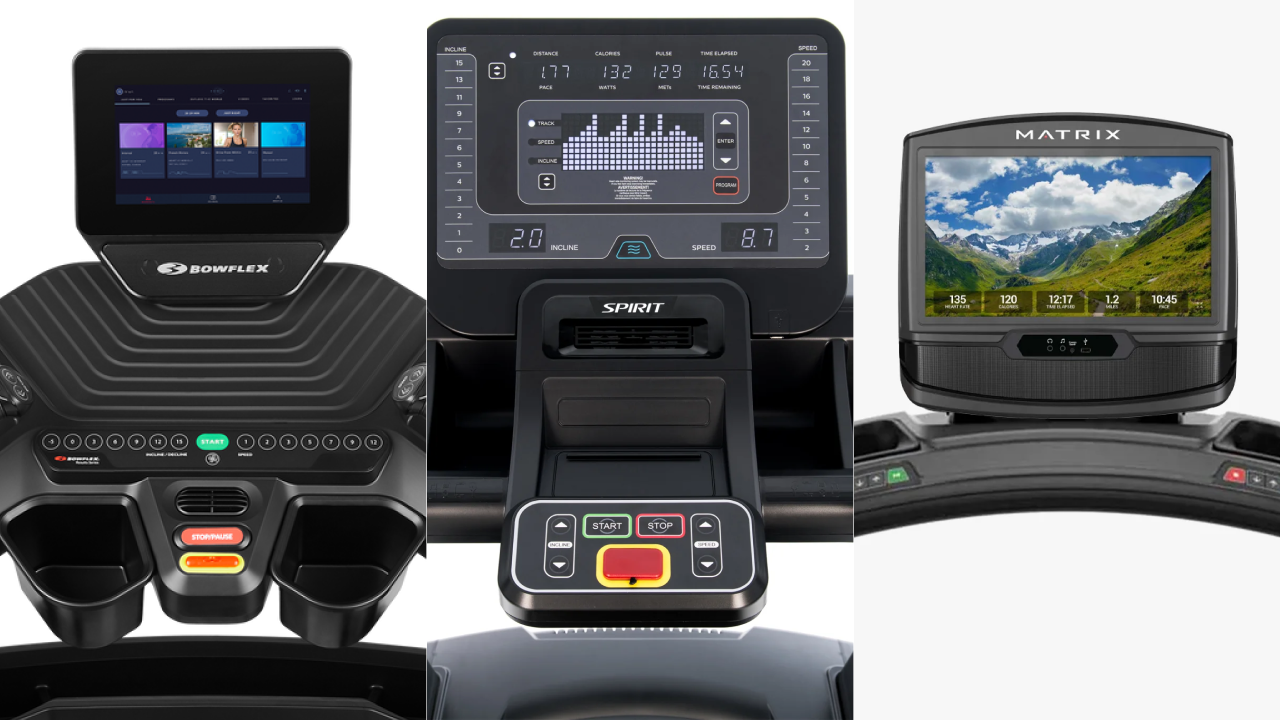
T Series ranges from simple metrics displays to touchscreen units with class content. Commercial consoles scale screen size and processor quality, improving map courses and SmartAdjust automation. Both lines rely on iFit for content depth; cancellation converts usage to manual control with reduced guidance.
Folding, footprint, and storage
T Series often folds smaller and weighs less, fitting apartments and shared living rooms. Commercial units may fold but still demand more floor space and ceiling clearance.
Noise, vibration, and comfort
Heavier frames in Commercial models dampen vibration at higher speeds. In apartments, both benefit from thick mats and careful placement to limit sound transfer through concrete or tile.
Energy consumption
Higher output motors draw more power under load. Over a multi-year horizon, Commercial models can incur higher electricity costs, offset by performance stability for frequent runners.
3. Use case matching and buyer profiles
Light walking and casual cardio
For step count goals, low-impact rehab, or short daily walks, a T Series model aligns with needs and floor space. Moderate motor output sustains brisk walking without heat buildup, and compact decks fit smaller rooms. Folding frames and lower mass simplify storage. A single adult under moderate weight, training three to five times per week, typically finds cadence and stride supported on T Series 7 or 8 units. Taller walkers benefit from T Series 10 for added deck length. In Dubai apartments, an anti-vibration mat and evening sessions help manage sound transfer.
Steady jogging and mixed conditioning
For 5K to 10K pace work, hills at moderate grades, and circuit training, an upper T Series or entry Commercial model reduces torque dip during longer intervals. Commercial 1250 suits moderate runners who want incline breadth with improved belt tracking and roller size. Households sharing one treadmill, or runners over mid-90s kg bodyweight, see clearer gains from Commercial frames that resist flex at pace.
High-mileage runners and multi-user households
For half-marathon prep, speedwork with repeated accelerations, or sprints at higher bodyweights, Commercial 1750 or 2450 maintains belt speed under load and tolerates back-to-back sessions. Wider decks support natural foot placement when fatigue alters gait. Decline training on select Commercial units widens specificity for outdoor course simulation. Villas with dedicated fitness rooms handle footprint and ventilation demands more comfortably than compact city flats.
Dubai-specific scenarios
In tower apartments with tile or marble floors, T Series reduces mass and footprint, but a dense rubber base layer remains vital. In villas where room temperature can rise during midday, Commercial models’ heavier flywheels and larger rollers better tolerate ambient heat. Dust intrusion from balcony doors or desert winds affects both lines; consistent cleaning and belt lubrication protect decks and electronics. When young athletes and adults share a machine, Commercial platforms buffer variability in cadence, weight, and stride length, prolonging alignment and deck integrity over a season.
4. Long-term durability, maintenance, and risk
Belt, deck, and frame wear
Belt fibers stretch with mileage and temperature cycles. Thicker decks and larger rollers on Commercial models slow thermal buildup, which helps reduce micro-tears at the belt seam. T Series cushioning is tuned for comfort but relies on lighter frames; under higher speeds, resonance can rise sooner as bushings and fasteners loosen. Regular torque checks on frame bolts and roller alignment prevent edge fray.
Heat, humidity, and dust in Dubai
Warm interiors, HVAC cycling, and fine dust accelerate abrasion and static charge. A cleaning cadence that includes weekly deck wipe-downs, monthly vacuuming around the motor hood, and periodic lubrication sustains belt glide and lowers amp draw. Door drafts and balcony access require extra attention to dust filters and electronics vents.
Warranty, parts access, and service logistics
Warranty terms specify coverage for frame, motor, electronics, and labor windows. Practical uptime depends on spare part availability through UAE distributors and lead times for consoles, controllers, or belts. Buyers who prioritize minimal downtime should prefer models with common part inventories and straightforward belt swap procedures.
Software dependency and firmware risk
Both lines gain training depth from iFit but inherit a reliance on cloud content and updates. When subscriptions lapse, manual modes continue, yet guided programming and auto-adjust lose depth. Firmware updates can introduce instability if power interruptions occur; surge protection and scheduled updates reduce risk.
Five-year maintenance budgeting
A realistic plan includes mats, periodic lubricant, occasional belt realignment, and, for heavy use, belt replacement. Commercial models may defer major service longer due to roller size and heat dispersion, yet budget line items remain similar across both lines. The key variable is mileage: higher weekly hours accelerate wear regardless of series, making cadence discipline and routine checks more valuable than any single specification.

5. Total cost of ownership, resale, and upgrade path
Upfront versus hidden costs
Headline price covers the frame, drivetrain, and console, but total cost includes delivery, installation, voltage protection, and subscription fees. In Dubai high-rises, elevator booking and tight corridors can add handling charges. A quality mat reduces floor transmission and protects tiles, preventing secondary costs from surface repairs.
Electricity and usage cost model
Power draw rises with speed, incline, and user weight. A simple model multiplies average wattage during a typical session by minutes per week and local kWh rates, then projects across months. Commercial units often consume more under load yet hold speed with fewer surges, which can smooth energy profiles during structured intervals. Consistent lubrication and proper belt tension lower friction and reduce draw for either line.
Resale value dynamics
Resale depends on remaining warranty, hours of use, cosmetic condition, and software state. Commercial models tend to retain a higher percentage because wider decks, stronger motors, and recognizable model numbers attract runners seeking an upgrade from entry-tier machines. Units with documented maintenance and low console errors sell faster in secondary markets.
Upgrade timing and pathway
A clear trigger for moving from T Series to Commercial is regular training that exceeds five hours per week or performance goals that require stable sprints, steep hills, or downhill simulation. Within Commercial, step-ups from 1250 to 1750 or 2450 reflect needs for wider decks, bigger screens, or longer duty cycles. Accessories that carry forward, such as mats and heart-rate accessories, reduce switching friction. When space planning allows, retaining a T Series for walking and recovery while dedicating a Commercial unit to pace work can extend service life for both and balance noise across different rooms in a Dubai home.
6. Performance, user experience, and feedback
Independent review insights
Third-party testing consistently highlights differences that stem from frame engineering and control responsiveness. Reviewers often note that T Series models deliver reliable walking and jogging stability but can show vibration under full stride at higher speeds. Commercial units maintain belt traction and console stability when impact forces rise, preserving rhythm during sprints. Testers also report improved incline transitions and fewer temperature-related slowdowns during extended use.
User sentiment and long-term impressions
Aggregated user commentary reflects predictable themes. Owners of T Series units appreciate compactness, price-to-feature ratio, and easy storage, though some mention belt alignment drift after several months of heavy running. Commercial users frequently cite quieter operation under load, smoother acceleration, and more consistent incline calibration. Console issues such as Wi-Fi lag or firmware crashes appear across both lines, often tied to network interruptions rather than hardware defects. Many buyers view the Commercial 1750 as a sweet spot between price and professional feel, while T Series 10 holds appeal for mixed family use.
Contextual relevance for Dubai buyers
In Dubai’s conditions, performance distinctions extend beyond specs. High ambient temperatures can soften lubricants, requiring tighter maintenance intervals to prevent belt slip. Commercial frames, built with denser alloys, dissipate heat more effectively during prolonged sessions. Noise ratings remain sensitive in high-rise apartments; heavier Commercial bases help reduce resonance but transmit deeper low-frequency hum through floors if mats are thin. For villas or ground-level setups, these issues ease, and longer stride users benefit fully from Commercial deck length. Across both lines, adherence to cleaning and lubrication schedules has a stronger impact on real performance longevity than model tier alone.
7. Recommendation framework and decision flow
Decision matrix by training priority
When durability and stability rank highest, the Commercial Series occupies the leading position. Users prioritizing compact design or budget control align with T Series. Those seeking a middle ground can evaluate upper T Series models that include improved cushioning and touch consoles.
|
Priority |
Recommended Series |
Rationale |
|
Space-saving, light use |
T Series 7–8 |
Foldable frame, compact deck |
|
Regular running, mixed household |
Commercial 1250 |
Moderate footprint, stronger motor |
|
Heavy mileage, hill training |
Commercial 1750 or 2450 |
Stiffer frame, decline feature |
|
Apartment noise control |
T Series with vibration mat |
Lower mass, manageable footprint |
|
Multi-user or athlete training |
Commercial 2450 |
Durable components, extended duty cycle |
Stepwise buyer logic
-
Define training frequency and total weekly mileage.
-
Measure ceiling height and available floor area to confirm model fit.
-
Identify weight of primary user plus secondary users.
-
Estimate electricity cost at expected usage intensity.
-
Match results to the model that sustains speed and incline range with minimal maintenance risk.
Dubai-specific recommendation
Buyers in high-rise settings favor T Series for compactness if walking and jogging predominate. For villas or garages with controlled climate, Commercial 1750 and 2450 deliver greater long-term value despite higher upfront cost. Reliable regional servicing should influence final selection as much as horsepower or display size; quicker access to belts and motors reduces downtime and preserves resale potential.
Conclusion
The comparison between NordicTrack’s T Series and Commercial Series defines a clear spectrum of use. T Series fulfills practical home fitness needs with smaller footprints and competitive pricing, aligning with casual walking, recovery workouts, and moderate running in compact spaces. Commercial Series extends into long-term durability, stronger motor performance, and a premium feel that supports higher mileage and shared use.
In Dubai, environmental realities—heat, dust, humidity—intensify the value of sturdy frames, large rollers, and consistent maintenance. Commercial units demonstrate better endurance in such conditions, but disciplined cleaning, lubrication, and surge protection keep both lines functioning well. The right treadmill depends less on prestige and more on daily use patterns, available space, and after-sales support.
For residents in high-rise apartments, the T Series remains a balanced option. For villas or households with multiple runners, Commercial Series models like the 1750 or 2450 justify their premium. Long-term satisfaction comes from aligning model selection with lifestyle, maintenance habits, and environmental context rather than headline specifications alone.
FAQs
Which treadmill is better for daily running?
Commercial Series models, such as the 1750, sustain continuous runs and high inclines more reliably due to stronger motors and wider decks.
Can T Series treadmills handle heavy users?
They support moderate weights effectively but may show increased belt wear for users above 95 kg running frequently.
Is iFit mandatory to use the treadmill?
No, both lines operate in manual mode; subscription enhances interactive workouts and auto-adjust features.
How often should maintenance be done in Dubai’s climate?
Light dusting after each session, lubrication every 40 hours of use, and full cleaning monthly maintain performance.
Do both lines fold for storage?
All T Series models and some Commercial units fold; however, Commercial frames remain heavier and require more space.
How long do these treadmills typically last?
With regular care, T Series lasts 4–6 years under moderate use; Commercial Series often exceeds 8 years with timely servicing.
Are spare parts available in the UAE?
Authorized distributors in Dubai carry belts, motors, and consoles; delays can occur for less common components.
What about electricity consumption?
Average weekly usage of 3–4 hours at moderate intensity adds roughly 10–15 AED per month to electricity bills.
Related Blogs