Locate Our Store
 +971 562162730
 AED
AED SAR
SAR KWD
KWD QAR
QAR BHD
BHD OMR
OMR


Energizer vs Duracell for Commercial Procurement in the GCC: An Objective Comparison
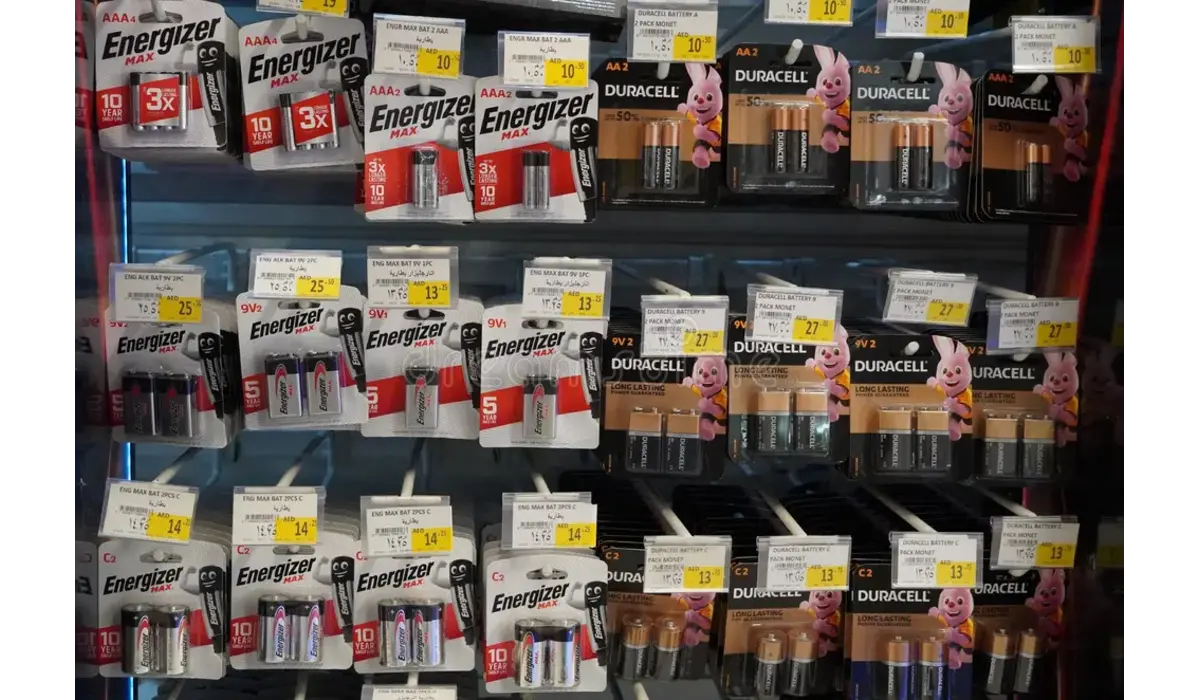
If you manage battery procurement for a hotel group, FM company, security contractor, or industrial facility in the GCC, you have probably defaulted to Duracell because it is the name you recognise. Or you have been told to use Energizer by a regional manager. Either way, the decision was rarely made on data.
Both Energizer and Duracell produce industrial-grade commercial battery lines: Energizer Industrial and Duracell Procell. They are genuinely comparable products with minor but meaningful differences that become important at scale, in high temperatures, and in specific device categories. This guide gives you the technical comparison you need to make or justify the procurement decision properly.
Sea Wonders General Trading LLC is an authorised distributor of both Duracell and Energizer batteries, supplying B2B customers across the GCC from our Bur Dubai base. We have no financial preference between the brands. Our recommendation is always based on your device type, operating environment, and procurement structure. If you want a quote for either brand, WhatsApp +971 56 216 2730.
Why Comparing Energizer and Duracell Matters for B2B Buyers
The consumer market treats Energizer and Duracell as interchangeable. You buy whatever is on offer at the supermarket. In commercial procurement, this approach leaves money and performance on the table.
At scale, small differences in battery life compound significantly. If your hotel estate has 2,000 room remotes and door lock systems, a 10 percent difference in battery life across a year is 200 replacement cycles eliminated, or saved, depending on which brand you choose for that application. If your FM team manages 300 sites across the GCC, a brand that leaks more frequently is a device maintenance cost, not just a battery cost.
The comparison also matters because the commercial product lines, Energizer Industrial and Duracell Procell, perform differently from the retail consumer lines. Most online comparisons are written about Energizer Max versus Duracell Coppertop, which are the consumer products. This guide focuses on the commercial lines that B2B buyers actually procure.

The Commercial Product Lines Explained (Procell vs Energizer Industrial)
Before the head-to-head comparison, it is worth confirming which products are being compared. Both manufacturers offer tiered commercial ranges.
|
Brand |
Product Line |
Key Specification |
Target Application |
|
Duracell |
Procell |
Standard commercial alkaline; multi-year shelf life |
Offices, hospitality, retail — moderate drain devices |
|
Duracell |
Procell Intense |
High-power alkaline; rated to 54 degrees C; 9-18% more capacity than Coppertop |
High-drain devices: CCTV, door locks, sensors, field instruments |
|
Energizer |
Industrial |
Industrial alkaline; 7-year shelf life (AA/AAA); designed for bulk carton supply |
Oil & gas, FM, security, hospitality — all commercial applications |
|
Energizer |
Ultimate Lithium |
Lithium chemistry; rated -40 to 60 degrees C; 20-year shelf life |
Extreme heat or cold, long storage, high-drain field instruments |
In most commercial GCC comparisons, the relevant matchup is Duracell Procell Intense versus Energizer Industrial. Both are industrial-grade alkaline batteries sold in bulk carton format. The comparison below addresses these two product lines specifically unless otherwise noted.
Performance Comparison: High-Drain Applications in GCC Conditions
High-drain devices consume battery power rapidly and continuously. In GCC commercial environments, the most common high-drain applications are CCTV systems, electronic door locks and access control readers, motorised valve controllers, intrusion sensors, and handheld gas detectors. Battery life in these applications is the most commercially significant performance variable.
|
Performance Factor |
Duracell Procell Intense (AA) |
Energizer Industrial (AA / EN91) |
|
High-drain capacity |
9-18% more capacity than standard alkaline at high discharge rates |
Strong high-drain performance; consistent output across battery life curve |
|
Discharge curve |
Maintains voltage well at high drain before rapid drop-off |
Gradual, predictable discharge curve — better for devices that warn of low battery |
|
Performance at 50 degrees C |
Rated to 54 degrees C operational; Procell Intense specifically engineered for high-drain at elevated temperature |
Industrial alkaline rated to 54 degrees C; Ultimate Lithium rated to 60 degrees C for extreme conditions |
|
Recommended high-drain verdict |
Slight edge for maximum capacity in single high-drain cycle |
Better for predictable replacement scheduling in managed estates |
For facilities managers running large estates where battery replacement is planned on a schedule rather than a failure basis, the predictable discharge curve of Energizer Industrial is often preferable. You replace before failure, not because of it. For applications where maximum runtime per battery is the priority, Duracell Procell Intense's higher rated capacity at high drain rates is the stronger specification.
Performance Comparison: Low-Drain Applications (Remote Controls, Clocks, Smoke Alarms)
Low-drain devices draw small amounts of current over extended periods. Room remote controls, wall clocks, smoke detectors, wireless keyboards, and standby sensors are the most common examples in hotel and FM environments. In low-drain applications, the performance gap between the two brands narrows considerably.
Both Energizer Industrial and Duracell Procell perform reliably in low-drain applications. The meaningful variables in this category are shelf life and leakage resistance rather than capacity output, as low-drain batteries are typically replaced on a scheduled cycle long before they are exhausted.
For low-drain applications in climate-controlled environments such as hotel rooms and office buildings, standard Duracell Procell (not Intense) is often the cost-optimised choice. Energizer Industrial AA and AAA are equally well-suited. For low-drain devices in outdoor or high-temperature environments, such as smoke detectors in warehouse areas or clocks in non-air-conditioned plant rooms, the higher temperature rating of Procell Intense or Energizer Industrial becomes relevant.
|
Both Energizer Industrial and Duracell Procell are available from Sea Wonders. We supply bulk cartons to all GCC countries from Bur Dubai. WhatsApp +971 56 216 2730 with your device list and quantity for a same-day quote. |
Operating Temperature: Which Brand Handles the GCC Heat Better?
Operating temperature is not a marketing specification in the GCC. It is an operational necessity. Ambient temperatures in the UAE, Saudi Arabia, Oman, and Qatar regularly reach 50 to 55 degrees C during summer months. In direct sunlight, on rooftops, in outdoor equipment enclosures, and in non-air-conditioned plant rooms, temperatures exceed this regularly.
Standard consumer alkaline batteries are typically rated to 54 degrees C maximum. At temperatures approaching this threshold, battery capacity degrades measurably and shelf life shortens. Batteries stored in un-air-conditioned site stores during GCC summer will lose rated capacity before they are even installed.
|
Product |
Min Operating Temp |
Max Operating Temp |
GCC Suitability |
|
Duracell Procell (standard) |
-20 degrees C |
54 degrees C |
Good for indoor/climate-controlled |
|
Duracell Procell Intense |
-20 degrees C |
54 degrees C |
Strong for high-drain outdoor GCC applications |
|
Energizer Industrial Alkaline |
-20 degrees C |
54 degrees C |
Strong for all standard GCC commercial applications |
|
Energizer Ultimate Lithium |
-40 degrees C |
60 degrees C |
Best choice for extreme heat above 54 degrees C |
For most GCC commercial applications where equipment operates in air-conditioned environments, both Procell and Energizer Industrial are adequate. Where equipment sits in direct sun, outdoor enclosures, or industrial spaces without cooling, Energizer Ultimate Lithium's 60 degrees C rating provides an important margin of safety above the standard alkaline maximum.
Cold storage facilities in the GCC including food logistics warehouses and pharmaceutical storage represent the opposite challenge. For these environments, Energizer Ultimate Lithium's -40 degrees C minimum rating is the correct specification. No standard alkaline battery performs well at very low temperatures.

Shelf Life Comparison: Critical for Remote Sites and Seasonal Stock
In commercial procurement, shelf life matters for two reasons. First, for remote sites where batteries are stored for months before use, short shelf life means waste. Second, for organisations that stock up before Ramadan and Eid, when supplier access is reduced, a longer shelf life gives you flexibility in your purchasing cycle.
|
Product |
Shelf Life |
Storage Conditions |
|
Duracell Procell (standard) |
Up to 10 years |
Cool, dry storage below 40 degrees C; original sealed packaging |
|
Duracell Procell Intense |
Up to 10 years |
Cool, dry storage below 40 degrees C; original sealed packaging |
|
Energizer Industrial Alkaline (AA/AAA) |
7 years (AA/AAA); varies by size |
Cool, dry storage; FIFO rotation recommended for site stores |
|
Energizer Ultimate Lithium |
20 years |
Broad temperature tolerance; ideal for remote or unmanned site storage |
Duracell Procell has a shelf life advantage over standard Energizer Industrial alkaline at the AA/AAA sizes most commonly procured. For organisations with long storage cycles, this is a meaningful differentiator. If you are ordering a six-month or annual battery supply for remote sites, the difference between a seven-year and a ten-year shelf life translates directly into procurement flexibility.
For the longest shelf life requirements, particularly remote offshore platforms or unmanned facility stores, Energizer Ultimate Lithium's 20-year shelf life removes restocking risk almost entirely for the battery category. The premium cost of lithium is generally justified at these remote sites when logistics cost per delivery run is factored into total cost of ownership.
Leakage Resistance: Which Brand Protects Your Equipment?
Battery leakage is the failure mode that procurement managers underestimate until it causes a device repair bill. Alkaline batteries that are left in a device beyond their useful life, or stored in high-temperature conditions, can vent electrolyte that corrodes battery contacts and renders the device inoperable. In a hotel with 500 room remotes, or an FM estate with hundreds of smoke detectors, leakage events are a maintenance cost.
Both Duracell and Energizer engineer leakage resistance into their commercial lines. Duracell Procell and Procell Intense carry Duracell's guarantee against leakage damage to devices when used as directed. Energizer Industrial similarly provides leakage resistance specifications for the commercial range.
The practical advice for both brands is the same: remove batteries from devices when replacing, do not mix old and new batteries in multi-battery devices, do not mix brands or chemistries, and follow the recommended replacement schedule for your device type. GCC heat accelerates leakage risk in batteries left in devices past their useful life, regardless of brand.
Anti-Leakage Best Practice for GCC Commercial Estates
- Set maximum battery age in device policy: typically 12 to 18 months for high-drain applications in warm environments
- Check and replace batteries before seasonal shutdowns, particularly in unoccupied or low-use buildings during summer
- Standardise on a single battery size per device category where possible: eliminates accidental mixing
- For critical devices such as fire alarms and emergency lighting, use lithium batteries for longer life and superior leakage resistance
|
Want to assess which battery line suits your estate best? Sea Wonders can match Energizer Industrial or Duracell Procell to your device list. WhatsApp +971 56 216 2730 with your device types and quantities. |
Price-Per-Unit at Commercial Quantities in the UAE
Sea Wonders does not publish pricing, as commercial pricing varies by volume, SKU mix, delivery destination, and account terms. However, the following pricing structure observations are accurate for GCC B2B procurement.
At equivalent commercial quantities, Energizer Industrial and Duracell Procell are competitively priced with each other. Neither brand consistently undercuts the other across all SKU sizes. The price-per-unit dynamic is more heavily influenced by carton quantity than by brand, meaning a large order of Duracell Procell AA is typically priced competitively with a comparable Energizer Industrial AA order.
Duracell Procell Intense commands a modest price premium over standard Procell, reflecting the higher-capacity specification. This premium is justified for high-drain applications but adds unnecessary cost for low-drain device categories. Selecting the right product line for each application category, rather than standardising on Procell Intense across the entire estate, is the most cost-effective approach.
For organisations comparing total cost of ownership rather than unit price, the relevant variables are battery life per cycle (longer life means fewer replacements and lower labour cost for change-outs), leakage events (each leakage event is a potential device repair cost), and procurement administration (a single supplier for both brands eliminates duplicate supplier management overhead).
The GCC Device Matching Guide: Energizer or Duracell for Your Application?
The practical answer to 'Energizer or Duracell?' is: it depends on your device. The table below maps common GCC commercial device categories to the recommended product line. Both brands are available from Sea Wonders.
|
Device Category |
Drain Level |
Recommended: Duracell |
Recommended: Energizer |
|
Hotel room remotes, TV controllers |
Low |
Procell AA/AAA |
Industrial EN91/EN92 |
|
Electronic door locks and safes |
High |
Procell Intense AA/AAA |
Industrial EN91/EN92 or Ultimate Lithium AA |
|
Wireless access control readers |
High |
Procell Intense AA |
Industrial EN91 or Ultimate Lithium AA |
|
CCTV PTZ cameras (battery backup) |
High |
Procell Intense AA/C/D |
Industrial EN91/EN93/EN95 |
|
Smoke and fire detectors |
Low |
Procell AA/AAA or Procell 9V |
Industrial EN91/EN92 or EN22 (9V) |
|
Handheld gas detectors (oil & gas sites) |
High |
Procell Intense AA/C |
Industrial EN91/EN93 or Ultimate Lithium AA |
|
Two-way radios and walkie-talkies |
High |
Procell Intense AA |
Industrial EN91 |
|
Wall clocks, desk devices, keyboards |
Low |
Procell AA/AAA |
Industrial EN91/EN92 |
|
Emergency exit signs and torches |
High |
Procell Intense C/D or Procell 9V |
Industrial EN93/EN95 or Ultimate Lithium |
|
Remote site storage or offshore platforms |
Varies |
Procell Intense (10-yr shelf life) |
Ultimate Lithium (20-yr shelf life; 60 degrees C rating) |
|
Cold storage facilities (below 10 degrees C) |
Varies |
Not recommended — use lithium chemistry |
Ultimate Lithium (-40 degrees C rating) |
Verdict: Should You Standardise on One Brand or Use Both?
The short answer is: use both, strategically. Standardising your entire estate on a single brand because of brand familiarity is a procurement shortcut that costs money in high-drain device categories and misses performance benefits in extreme temperature applications.
The more useful approach is to standardise by device category rather than by brand. Your hotel rooms might run on Duracell Procell AA as the standard line. Your access control systems and door locks get Procell Intense or Energizer Industrial EN91. Your remote site stores or offshore facilities get Energizer Ultimate Lithium for the extended shelf life and temperature tolerance.
The One-Brand Argument
There is a legitimate procurement simplification case for standardising on a single brand across your estate. It reduces supplier management complexity, simplifies your SKU list, and makes bulk pricing negotiation cleaner. If you operate across four or five GCC countries and want one framework agreement covering your entire battery category, a single-brand approach makes the commercial structure simpler.
If this is your preference, Energizer Industrial is a strong choice for most GCC commercial estates due to its combination of heat tolerance, shelf life, and bulk carton format availability. Duracell Procell is equally defensible if your estate is predominantly low-to-medium drain devices in climate-controlled environments.
The Two-Brand Approach
A two-brand approach matched to device type optimises performance and cost. It adds modest complexity to your procurement SKU list, but if your estate has both low-drain office devices and high-drain field instruments, matching the product to the application delivers better battery life and lower replacement frequency in each category.
Sea Wonders supplies both brands from a single point of contact. You receive one commercial invoice, one delivery, and one documentation package regardless of how many SKUs your order contains. This removes the operational downside of a two-brand approach.
Frequently Asked Questions
How do Energizer Industrial and Duracell Procell compare in performance at 50 degrees C and above?
Both products are rated to 54 degrees C operational maximum for standard alkaline lines. At temperatures approaching this threshold, capacity degrades in both brands comparably. For applications where operating temperatures regularly exceed 54 degrees C, Energizer Ultimate Lithium (rated to 60 degrees C) is the correct upgrade regardless of brand preference.
Which brand lasts longer in high-drain devices such as CCTV and door locks?
Duracell Procell Intense has a documented 9 to 18 percent higher capacity at high discharge rates compared to standard alkaline, giving it a slight edge in maximum runtime per battery. Energizer Industrial offers a more gradual discharge curve, which is better for planned replacement schedules. For maximum runtime per cycle, Procell Intense; for predictable scheduled replacement, Energizer Industrial.
Which brand is better for low-drain devices such as remote controls and smoke detectors?
Both brands perform comparably in low-drain applications. The meaningful variables in this category are shelf life and leakage resistance rather than capacity. Duracell Procell's 10-year shelf life gives it a slight advantage for organisations with long storage cycles.
What is the shelf life difference between Energizer Industrial and Duracell Procell?
Duracell Procell and Procell Intense carry up to a 10-year shelf life. Energizer Industrial AA and AAA are rated to 7 years. For most commercial applications this difference is not material. For remote sites or long-cycle stocking, the Procell 10-year rating provides more flexibility.
Does brand choice affect equipment warranty or compliance in the GCC?
For most commercial and industrial devices, the manufacturer specifies battery chemistry (alkaline, lithium) and size rather than a specific brand. Using Energizer Industrial or Duracell Procell in a device that specifies alkaline AA does not affect the device warranty. The exception is where a device manufacturer specifically names a battery brand or model in their documentation, which is rare for portable consumer-format batteries.
Can I use both brands in the same estate, or should I standardise on one?
You can use both brands strategically. Standardising by device category rather than by brand, using Procell for low-drain office devices and Energizer Industrial for high-drain field instruments, for example, is a sound procurement approach. Sea Wonders supplies both brands from a single order, so there is no added logistical complexity.