
 Locate Our Store
 +971 562162730
 AED
AED SAR
SAR KWD
KWD QAR
QAR BHD
BHD OMR
OMR


Energizer Industrial vs Energizer Max in KSA: Which Line Should Procurement Teams Standardize On?
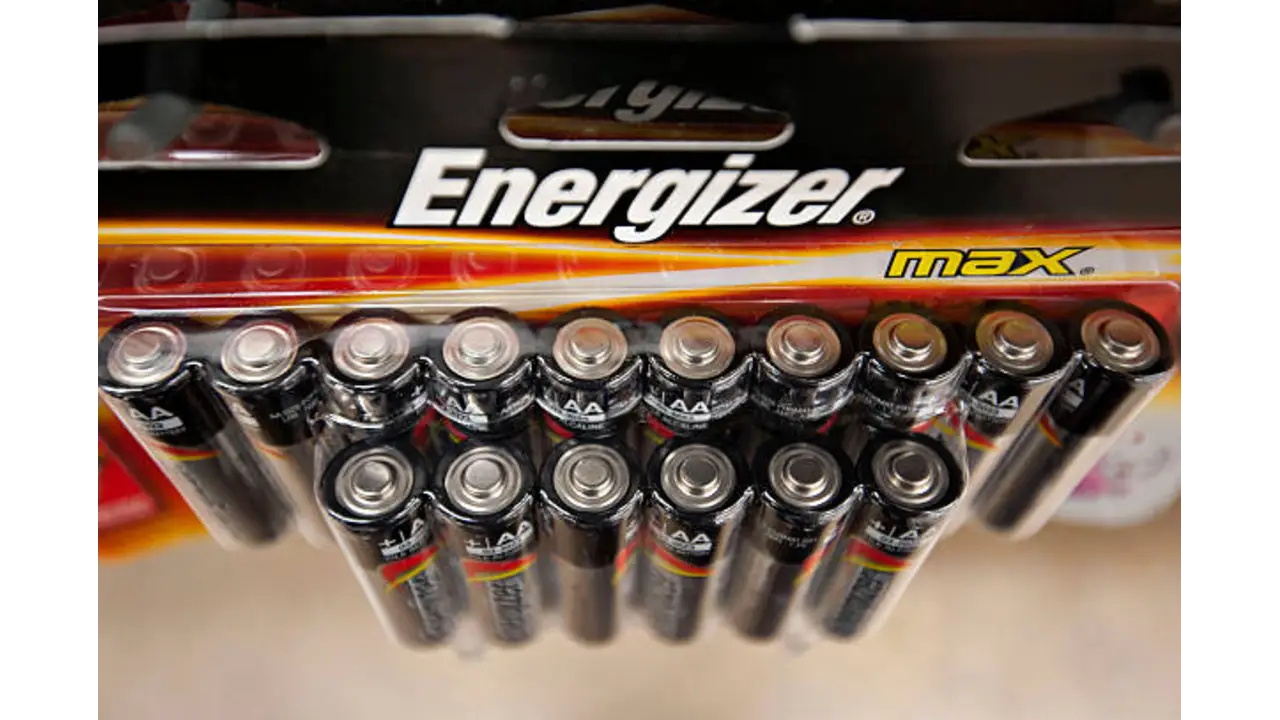
If you buy batteries for multiple sites in Saudi Arabia, the bigger problem is rarely “which brand is best.” It’s what happens after purchase: wrong sizes issued to technicians, mismatched packs across branches, emergency buying when stock runs out, and devices failing at the worst moment.
That’s why line selection matters. Standardizing on one Energizer line (and adding lithium only where it genuinely helps) reduces mistakes and makes replenishment predictable.
This guide is written for procurement and operations teams choosing between Energizer Industrial and Energizer Max, with simple rules you can use across offices, hospitality, facilities, and security.
Why Energizer line selection matters for KSA operations
Replacement cycles, downtime, team errors
Most battery costs in business are “hidden” costs:
-
Downtime cost: a sensor, access point, POS peripheral, or handheld device goes offline.
-
Labor cost: technicians do multiple trips because the first battery was the wrong size or wrong chemistry.
-
Procurement noise: urgent purchases, inconsistent brands, and “whatever is available” orders.
-
Branch variation: each site buys differently, so central teams can’t forecast accurately.
Line selection is a control lever because it shapes how batteries enter the system: how they’re packed, stored, issued, and replenished. When your packaging matches your operating model, the whole workflow becomes calmer.
High heat/storage notes (brief)
Saudi operations have an extra reality: storage and transport can involve heat, and battery care gets more important.
Energizer’s own battery care guidance (in a training PDF used in retail education) emphasizes storing batteries in a cool, dry location at room temperature, avoiding extreme temperatures, avoiding storage with metal objects, and keeping them in the original package until use.
For professional devices, Energizer Industrial AA (EN91) is rated for an operating temperature range of -18°C to 55°C.
That does not mean “store them anywhere.” It just means you should still keep storage conditions stable and controlled so your inventory behaves predictably.
Energizer bulk procurement in Saudi Arabia
Energizer Industrial vs Max — what changes for business buying
Procurement teams often assume “Industrial must be stronger.” In many cases, the practical difference is less about performance marketing and more about how the product is packaged and managed.
Packaging/standardization mindset (procurement view)
Here’s the clean way to think about it:
-
Energizer Industrial is commonly positioned for volume users and professional environments, and the Industrial AA datasheet itself clearly notes “NOT INTENDED FOR RETAIL TRADE.”
That single line is a useful procurement clue: it’s built for bulk handling, not shelf display. -
Energizer Max is positioned as a premium alkaline for everyday device usage, and Energizer has publicly highlighted Max features like Power Seal Technology and holding power up to 10 years in storage (plus leak protection statements) in official communications.
That aligns with how Max is typically purchased: smaller retail packs are easier for ad-hoc distribution.
Also, multiple business suppliers and distributors explicitly describe Industrial and Max as being technically similar with the key differences mainly in packaging and buying format (bulk vs retail packs).
You do not need to over-interpret that. For procurement, it reinforces a simple point: choose the line that best matches your issuing and replenishment workflow.
Simple comparison table (business buying)
| What you care about | Energizer Max | Energizer Industrial |
|---|---|---|
| Best fit | Day-to-day replacements, smaller distribution | Standardization across teams/sites, bulk operations |
| How it’s typically handled | Pack-level distribution to departments | Case-level procurement + storeroom control |
| Operational benefit | Convenience, easy to hand out | Predictable replenishment, fewer exceptions |
| Storage planning | Energizer has highlighted up to 10 years power retention for Max in storage (public comms). | EN91 datasheet notes shelf life and “not intended for retail trade,” aligning with volume ops. |
| Why procurement teams like it | Simple for office and hospitality usage | Better for branch rollouts and central forecasting |
If you want one sentence that procurement can live by:
Max is a strong baseline for everyday departmental use. Industrial is the cleaner choice when you want strict standardization at scale.
Best-fit recommendations by department
This section is the “do this, not that” part. It’s not about perfect engineering. It’s about reducing exceptions and support tickets.
Offices and hospitality: Max baseline
For offices and hospitality, the most common requirement is a clean baseline that covers:
-
remotes
-
clocks
-
wireless peripherals
-
basic handhelds
-
guest-facing devices
In these environments, what hurts you is not “battery chemistry.” It’s inconsistent issuing. Max works well as a baseline because it tends to be easier to distribute in smaller packs and is widely recognized across teams. Energizer has also emphasized Max’s storage life (up to 10 years) and leak protection messaging in official announcements.
Standardization tip for offices/hospitality:
Pick your baseline sizes (typically AA + AAA, plus 9V if needed), then publish one simple rule: “Only these SKUs are approved for routine replacement.”
Facilities: Industrial for standardization
Facilities teams suffer from multi-site variance: different branches buy different things, store them differently, and label them differently.
Industrial fits better when you want:
-
bulk buying
-
consistent stock levels
-
controlled issuance
-
clean forecasting
Industrial packaging also tends to map well to operations: the EN91 Industrial spec sheet shows typical bulk units like 24 units per inner carton and 144 units per case for AA, which is exactly how facilities storerooms think.
Also, the EN91 Industrial datasheet identifies the line as not intended for retail trade, which is consistent with “business handling, not consumer shelf” thinking.
Standardization tip for facilities:
Centralize the battery store and issue to branches using the same case/inner carton logic. Stop each branch from buying its own retail packs.
Security and high-drain teams: add Lithium where needed
Security teams often deal with:
-
critical devices
-
high usage patterns
-
temperature exposure (cars, guard rooms, outdoor touchpoints)
-
complaint-driven replacements (“it died too soon”)
This is where procurement should allow a second tier: Energizer Ultimate Lithium (AA/AAA) for specific device groups, not for everything.
The L91 (AA) lithium datasheet shows why lithium can be a strong fit for high-demand environments: it supports -40°C to 60°C storage and operating temperature ranges, has a 20-year shelf life at 21°C, and supports higher continuous/pulse discharge specs than typical alkalines.
Standardization tip for security:
Make lithium an approved “exception SKU” for listed device categories (for example: high-drain devices, outdoor exposure, critical uptime), and keep alkaline as the baseline.
Use-case recommendations summary (fast rules)
If you want quick rules you can put into a one-page SOP:
-
Max = baseline for offices + hospitality day-to-day usage.
-
Industrial = baseline for facilities standardization and multi-branch forecasting.
-
Lithium = exception tier for high-drain, temperature-exposed, or uptime-critical devices.
Get an Energizer wholesale quote for KSA → /energizer-battery-supplier-saudi-arabia
High-drain devices (POS, sensors, access control): alkaline vs lithium rules
Procurement teams usually hear “high-drain” as a complaint: “These batteries don’t last.” Your job is to prevent underperformance complaints without over-buying lithium for everything.
Alkaline vs lithium: decision rules that work
Use alkaline (Max or Industrial) when:
-
device is low to moderate drain (remotes, clocks, basic peripherals)
-
device is indoors in stable conditions
-
replacement labor is low-cost and routine
Consider lithium when:
-
device has higher drain or pulse-heavy usage
-
device sits in temperature extremes (vehicle kits, outdoor touchpoints)
-
a failure causes a service incident or escalations
-
you want fewer changeouts and more stable output over time
Energizer’s lithium AA datasheet supports this logic: it is explicitly designed for wide temperature operation and long shelf life, plus high discharge capability.
Avoiding underperformance complaints (the real root causes)
Many “battery doesn’t last” complaints are not chemistry issues. They are process issues:
-
Wrong size issued (AA vs AAA confusion)
-
Mixed batteries in one device (old + new, or different chemistries)
-
Loose storage leading to shorts (contact with metal objects)
-
Heat-stressed inventory (stored near hot zones)
Energizer’s battery care guidance warns against mixing old/new or mixing different types, and advises avoiding loose storage with metal objects.
If you fix those four, you often reduce complaints without changing the product line at all.
Receiving checklist (avoid wrong SKUs across branches)
This is the checklist your receiving team can actually follow. It prevents “we bought the right thing but issued the wrong thing.”
AA vs AAA controls
-
Two-bin receiving: AA and AAA must be opened and checked separately.
-
Label-first verification: verify size on carton, then on inner packs, then on a sample unit.
-
Branch allocation labels: if you split shipments by branch, label cartons “AA only” or “AAA only” before they leave central stores.
Coin-cell code controls
Even if your main standardization is AA/AAA, coin cells create the most mistakes because codes look similar.
-
Record coin cells by exact industry code (CR2032, CR2025, CR2016, etc.).
-
Never accept “equivalent” substitutions unless your device list explicitly approves them.
-
Store coin cells in a separate labeled tray to stop technicians from grabbing the wrong one.
FIFO storage basics
-
Use FIFO (first in, first out) so older inventory is issued first.
-
Store batteries in a cool, dry location at room temperature, avoid extreme temperatures, and keep them away from metal objects.
-
Keep batteries in original packaging until use to reduce accidental shorts and confusion.
Copy/paste RFQ template (KSA)
Subject: Energizer Battery RFQ (KSA) | Industrial vs Max | AA / AAA / 9V + Lithium (if required)
Company name:
City / Area (KSA): (Riyadh / Jeddah / Dammam / etc.)
Delivery type: HQ / Warehouse / Multi-branch split
Receiving hours:
Requested delivery timeline: (e.g., 3–5 working days)
Preferred standardization line (choose one):
-
Energizer Industrial (bulk standardization)
-
Energizer Max (department baseline)
SKU list (quote by pack and by carton/case where applicable):
-
AA alkaline: ______ packs, preferred pack size: ______
-
AAA alkaline: ______ packs, preferred pack size: ______
-
9V alkaline (if needed): ______ packs
-
Lithium AA/AAA (exception tier, if needed):
-
AA lithium: ______ packs
-
AAA lithium: ______ packs
Coin cells (if included, exact codes required):
-
CR2032: ______ packs
-
CR2025: ______ packs
-
CR2016: ______ packs
Notes / requirements:
-
Confirm packaging format (packs, inner cartons, cases)
-
Confirm lead time and delivery terms
-
Mention if you need branch-wise labeling or split delivery
Contact person / phone / email:
FAQs
1) Industrial vs Max: which is better for standardization?
If you mean “standardization across branches, storerooms, and technicians,” Industrial usually fits better because it aligns with volume handling and bulk procurement (the Industrial datasheet even indicates it is not intended for retail trade).
If you mean “a simple baseline for office and hospitality departments,” Max is a practical baseline because it maps well to departmental distribution and Energizer highlights long storage life in official messaging.
2) Which line should we choose for high-drain devices?
Use alkaline (Max or Industrial) as your baseline, then add lithium for listed high-drain or uptime-critical device categories. Lithium AA (L91) supports wide operating temperatures and high discharge capability, which is useful when devices draw more current or operate in harsher conditions.
3) What is a good MOQ planning approach for KSA?
Start from operations, not from “what’s cheapest”:
-
count devices by type (AA, AAA, 9V, coin cells)
-
estimate replacement frequency by department
-
set a minimum stock level per branch
-
reorder on a monthly or quarterly cycle based on usage volatility
4) Packs vs cartons: what should procurement request?
-
Packs for smaller departments or unpredictable usage
-
Cartons/cases for facilities and multi-site operations where you want stable replenishment and clean forecasting
Industrial packaging often maps naturally to case and inner carton workflows.
5) How do we avoid wrong SKUs across branches?
Do three things consistently:
-
enforce AA vs AAA receiving controls
-
label shelves and issue points clearly
-
stop mixed battery practices (mixing old/new or different chemistries)
Energizer’s battery care guidance explicitly warns against mixing old and new batteries or mixing different types/makes.
6) What should we do about heat and storage in Saudi warehouses?
Keep it simple and consistent: store batteries in a cool, dry place at room temperature, avoid extreme temperatures, and keep them away from metal objects.
7) If we need RFQ help, what details should we include to get accurate quotes?
Include your city/area, exact SKU list, preferred packaging units (packs/cartons), receiving hours, and timeline. The more specific your line choice and packaging preference, the fewer follow-ups you need.
Related Blogs


Bose SoundLink Bluetooth Speaker
£50.00£60.00
Canon's press material for the EOS 5D states that it 'defines (a) new D-SLR category', while we're not typically too concerned
- Availability :In Stock