3.7
Inclusive of VAT
Free Installation
We provide free installation for all standard locations. For remote or hard-to-reach areas, additional charges may apply. To avoid any inconvenience, kindly confirm with our sales team before placing your order.Quick Service
Request Price Match
Delivery Within : 08 Dec 2025
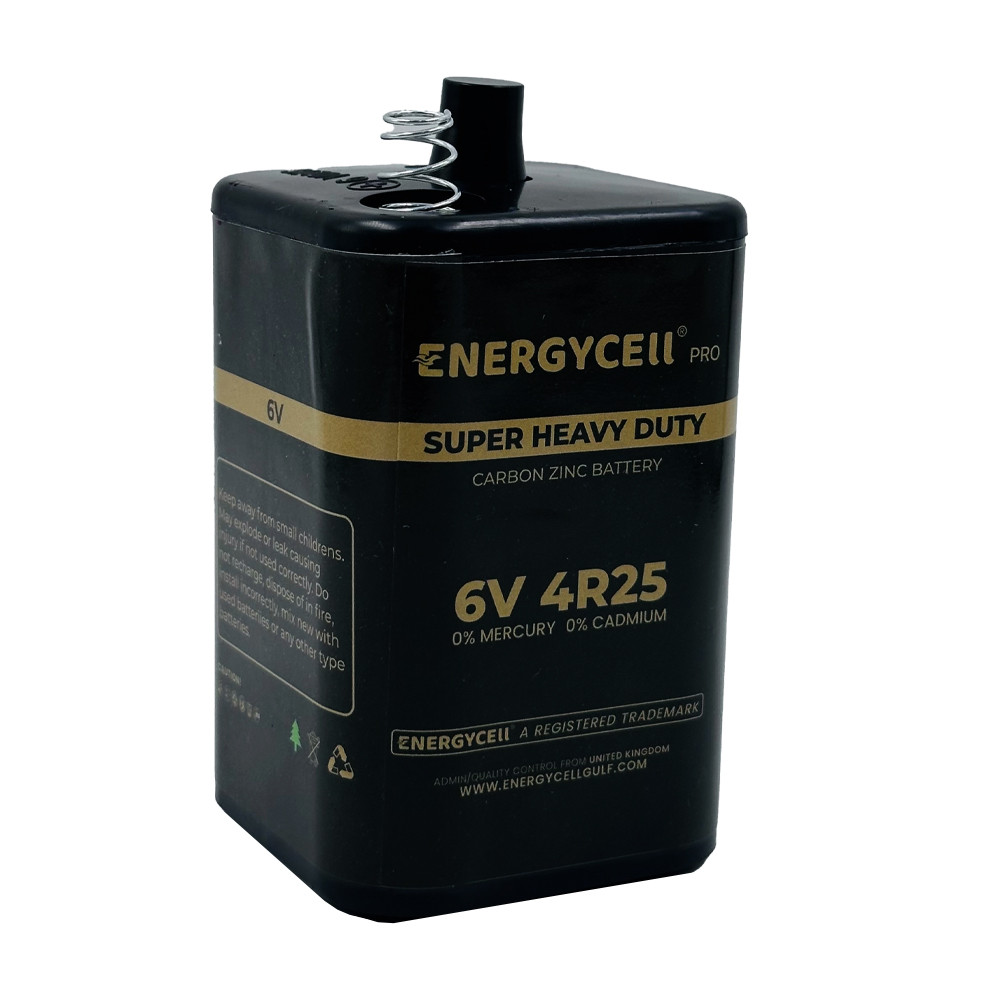
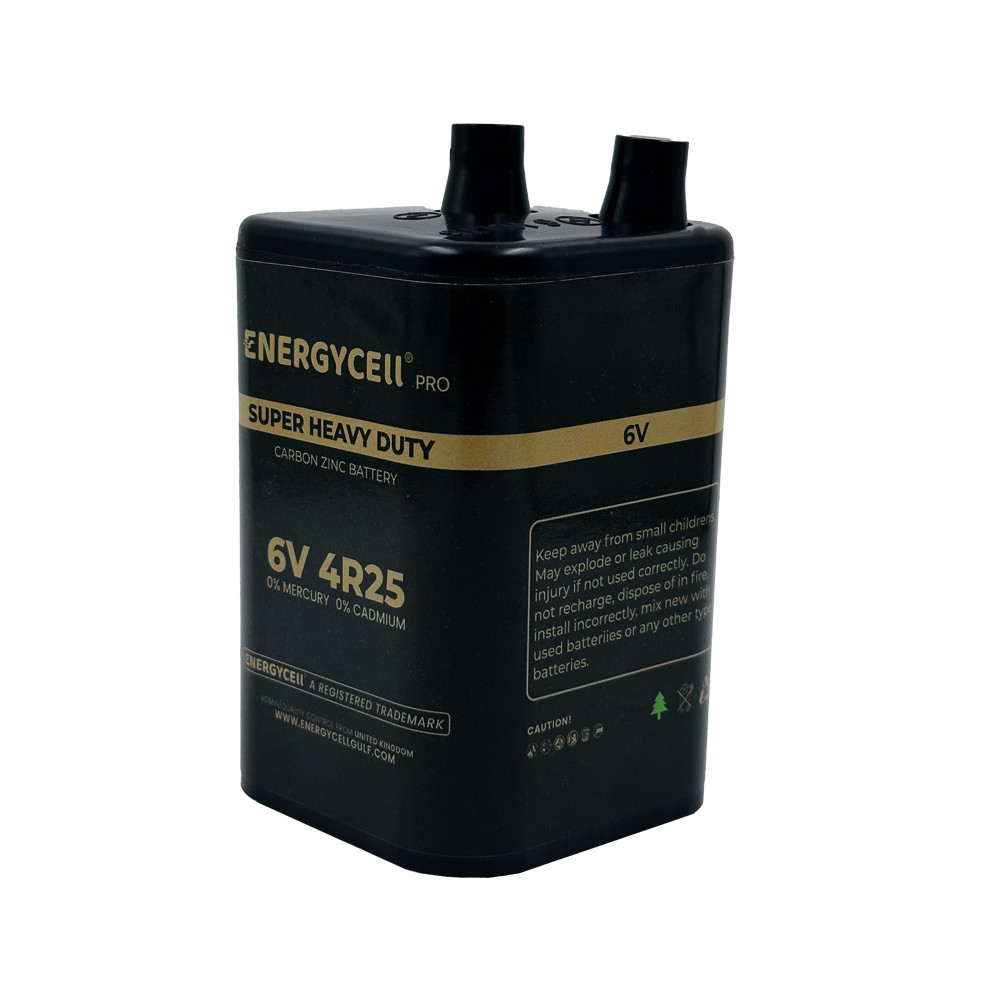
Product Name: Energycell 4R25 6V Lantern Battery
Brand / Trademark: Energycell
Item Category: Battery (Dry Cell Lantern Battery)
Voltage: 6 V
Cell Type: 4R25 / Carbon-Zinc (heavy duty / dry cell)
Typical Capacity: Manufacturer-stated (example specs referenced: up to ~9000 mAh under low drain)
Terminals: Spring / snap terminals (compatible with standard lanterns and torches)
High Energy Density: Designed for steady voltage until depletion
Use Cases: Lanterns, emergency lights, portable torches, household devices, low-to-moderate drain electronics
Dimensions / Weight: Manufacturer generic (check product label for exact mm/grams)
Price (AED): 20
Origin / Manufacturer: Generic / Energycell trademark

The Energycell 4R25 6V Lantern Battery offers an economical, dependable power source for lanterns, emergency lights, portable torches and other single-cell 6V devices. Designed with high energy density in mind, this carbon-zinc style lantern cell provides a stable voltage profile and predictable performance for the duration of its useful life — an important trait when relied upon for emergency illumination.
Reliable End-to-End Voltage
One of the key advantages of the Energycell 4R25 is its ability to maintain usable voltage until near depletion, minimising dimming mid-operation. This makes it particularly useful for emergency lighting applications and intermittent-use devices where consistent output matters.
Compatibility & Fit
The battery uses standard spring/snap terminal fittings common to lantern housings and many torch designs. That means simple, tool-free installation in a wide variety of consumer and commercial lamps without modifications. If terminal type or device fit is uncertain, check the device manual or compare the battery’s terminal style with the existing cell.
Designed for Low-to-Moderate Drain Devices
While rechargeable solutions and sealed lead-acid batteries are preferable for heavy-duty cycling loads, the Energycell 4R25 excels where steady, moderate drain is required — e.g., incandescent lanterns, LED emergency units (with appropriate driver), and alarm clocks. Under low-drain conditions the effective capacity can be very usable, and the total lifecycle cost remains attractive.
Storage & Handling
Store unopened batteries in a cool, dry place. Avoid prolonged exposure to heat or direct sunlight, which can accelerate self-discharge. For best results, keep spare batteries in their packaging until needed and rotate stock periodically to ensure fresh cells are available for emergencies.
Safety & Disposal
Follow local and manufacturer recommendations for safe handling. Do not short-circuit terminals, open, or incinerate. Dispose of used cells according to UAE recycling and hazardous-waste guidelines.
Why choose Energycell 4R25?
For households, campers, maintenance teams, and small businesses in the UAE needing a dependable, low-cost 6V lantern battery, the Energycell 4R25 balances affordability, compatibility and consistent runtime — a practical addition to emergency kits and everyday portable lighting equipment.
The Energycell 4R25 6V Lantern Battery is a reliable dry-cell solution for lanterns, emergency lighting and portable torches used across homes and worksites in the UAE. Built for high energy density and steady output, this 6V lantern cell delivers consistent voltage to keep lights bright until the battery reaches end-of-life. Spring/snap terminal compatibility ensures quick fitment into common lantern housings and emergency units. Compact, affordable and purpose-designed for low-to-moderate drain devices, the Energycell 4R25 is a practical replacement battery for household emergency kits, camping gear and commercial flashlights.
How to Install, Use and Maintain an Energycell 4R25 6V Lantern Battery
Step 1 — Check Device Compatibility
Confirm your lantern, torch or emergency unit accepts a single 6V 4R25 cell (spring/snap terminal). Check polarity markings and the device manual; if uncertain, compare the old battery’s size and terminal type to the Energycell 4R25.
Step 2 — Power Down the Device
Turn off the lantern or device before replacing the cell to avoid sparks or incorrect seating while the circuit is live. Remove any detachable housings carefully.
Step 3 — Remove Old Battery Safely
Open the battery compartment and carefully remove the spent battery. Use gloves if leaking or corroded. Inspect the compartment for corrosion, dirt or damaged contacts and clean them with a dry cloth or isopropyl alcohol if necessary.
Step 4 — Install the Energycell 4R25
Align the spring/snap terminals with the device contacts and insert the battery with correct polarity. Press gently until the cell seats securely. Ensure the spring terminal is under tension for a reliable contact.
Step 5 — Test Operation
Power the device on and verify normal operation. Observe brightness and run a short functional check (switch through brightness settings if applicable). If dim or inconsistent, re-seat the battery and retest.
Step 6 — Store & Rotate Spares
Keep spare Energycell 4R25 batteries in their original packaging in a cool, dry place. Rotate stock so the oldest batteries are used first. For emergency kits, note install/restock dates and replace older cells per manufacturer advice or every 3–5 years.
Troubleshooting
Device won’t turn on: Recheck polarity and ensure terminals are clean and free of corrosion. Test battery with a multimeter for ~6V output.
Intermittent contact or flicker: Check spring tension and contact cleanliness; reseat battery and ensure compartment lid is secure.
Visible leakage or damage: Remove battery safely, clean the compartment, and dispose of the cell according to local regulations. Do not use damaged batteries.
Safety & Disposal
Do not short-circuit, puncture or incinerate. Dispose of used cells at licensed collection or recycling facilities per UAE hazardous-waste rules. For installations requiring rechargeable backup, select a compatible rechargeable pack instead of primary cells.
Following these steps ensures safe installation, reliable runtime, and long-term readiness for emergency lighting and portable illumination needs.
Q1: What is a 4R25 battery for?
A 4R25 (6V) battery is a lantern-style dry cell commonly used in portable lanterns, emergency lighting units, large torches and some low-power instrumentation. Its 6V output and spring/snap terminal format make it suitable for applications that require a single-cell 6V source with reasonable energy density. In many consumer devices the 4R25 supplies reliable illumination for hours under low-to-moderate drain conditions, making it popular for camping and household emergency kits.
Q2: Can a 6V lantern battery be recharged?
Most 6V lantern batteries of the 4R25 carbon-zinc or alkaline primary type are non-rechargeable and must not be recharged. Attempting to recharge a primary dry cell is hazardous and can cause leakage, rupture, or fire. If you need a rechargeable 6V solution, choose purpose-built rechargeable battery packs (NiMH/lead-acid/Li-ion) and a compatible charger as recommended by the device manufacturer.
Q3: How long does a 6V lantern battery last?
Runtime depends heavily on device current draw. Under low-drain uses (LED lantern on low setting), a 4R25 can provide many hours of useful illumination; under high-drain incandescent loads the life will be shorter. Manufacturer-rated capacities vary; a practical approach is to test a sample in your device and maintain spare stock. For emergency preparedness, replace stored batteries every 3–5 years or earlier if specified by the manufacturer.
Q4: How many amps does a 6V lantern battery supply?
A 4R25 battery’s available current depends on its chemistry and internal resistance. It can deliver short bursts of higher current for lamp filaments but sustained high-current draws will significantly reduce run time. Typical usable continuous currents for long runtimes are modest (tens to a few hundred milliamps), while short peak currents can be higher. For precise amp capability and expected runtime, refer to the battery datasheet or test under expected load.
Q5: Are Energycell 4R25 batteries safe for emergency lighting?
Yes — when used as specified, the Energycell 4R25 is appropriate for emergency lanterns and backup lighting. Ensure the device is designed for primary dry cells and that contacts are clean. Store batteries correctly, do not short terminals, and follow disposal regulations. For installations requiring long-term standby or rechargeability, consider dedicated rechargeable systems or sealed lead-acid/VRLA batteries as advised by the equipment manufacturer.
Energycell
4.4
Request Price Match