
 Locate Our Store
 +971 562162730
 AED
AED SAR
SAR KWD
KWD QAR
QAR BHD
BHD OMR
OMR


Why “10-Year Shelf Life” Matters in Dubai Warehouses: How to Rotate Duracell Stock Properly
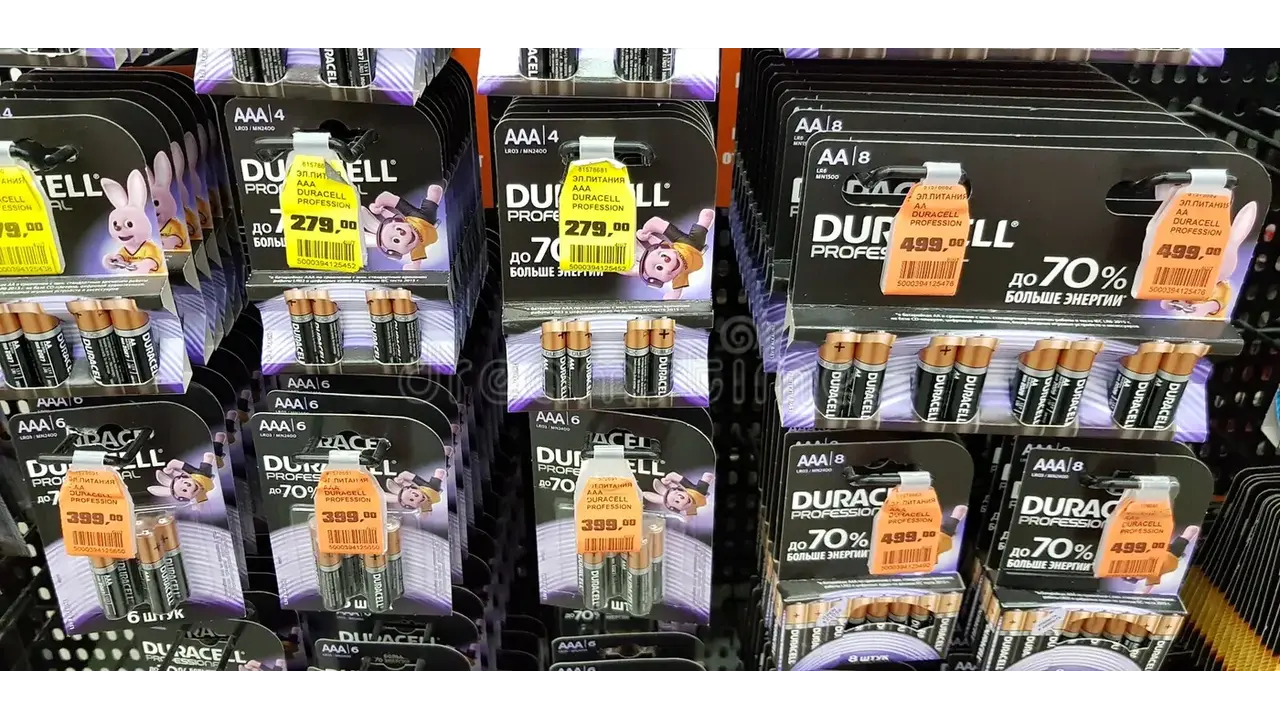
Introduction
“10-year shelf life” sounds like a marketing line until you manage a Dubai warehouse, a back-of-house storeroom, a facilities inventory cage, or a hotel engineering store—and you realize how quickly “good stock” can become “problem stock” if rotation and storage discipline aren’t tight.
In practice, long shelf life is valuable because it gives businesses flexibility: you can buy in bulk, avoid stockouts, and standardize across multiple sites. But in Dubai’s warehouse reality—heat exposure risks, loading bay delays, mixed batches, and multi-branch consumption patterns—shelf life only delivers value if you manage it correctly.
This guide explains:
-
what “10-year shelf life” really means (and what it doesn’t),
-
why Dubai conditions make battery rotation more important than most teams expect,
-
and a practical, step-by-step method to rotate Duracell batteries using FEFO (First Expiry, First Out) so you avoid dead stock, leakage risk, and inconsistent performance.

What “10-Year Shelf Life” Actually Means (And What It Doesn’t)
When a battery is described as having a “10-year shelf life,” the useful, warehouse-friendly interpretation is:
-
If stored properly, the battery should remain usable up to the stated “best before/expiry” timeline printed on the pack or carton.
It does not mean:
-
the battery will perform the same after years of poor storage,
-
the battery can be left in sun-exposed areas or hot containers with no impact,
-
or that you can ignore rotation and still get consistent results across devices.
Why this matters:
Shelf life is a benefit you earn through storage and rotation—not a benefit you automatically receive just by buying the product.
Why Dubai Warehouses Make Shelf-Life Discipline Non-Negotiable
Dubai’s logistics ecosystem is fast, but the environment introduces special risks for battery inventory.
1) Heat exposure during transport and unloading
Even if you store inventory well, risk spikes when:
-
cartons sit near loading bays,
-
deliveries wait outside,
-
stock is moved during the hottest part of the day,
-
or boxes are stored temporarily in non-ventilated areas.
2) Hot zones inside warehouses and back rooms
Not all “indoor storage” is equal. High-risk areas include:
-
near warehouse doors and sunlight entry points,
-
top mezzanine levels where heat accumulates,
-
storerooms with poor ventilation,
-
areas near machines or hot equipment.
3) Mixed batches and mixed expiries are common in real procurement
Even good suppliers may deliver mixed expiries unless you explicitly control for it. Without a rotation method designed for expiry, teams tend to:
-
put new stock on top of old stock,
-
forget what’s in the back,
-
and discover near-expiry inventory only when devices start failing or finance flags write-offs.
4) Multi-branch operations amplify waste
In multi-branch businesses, one branch might burn through AA/AAA quickly while another uses them slowly. Without a proper system, slow sites become “expiry dumps,” and your “10-year shelf life” advantage turns into dead inventory.
FEFO vs FIFO: The Rotation Method That Actually Works for Batteries
Most warehouses know FIFO (First In, First Out). It’s useful when:
-
all inventory is identical in shelf life,
-
and incoming stock is always newer than existing stock.
Batteries break that assumption.
-
You can receive stock that has less remaining shelf life than what you already have.
-
You can receive mixed-expiry cartons.
-
You can receive older stock in one delivery and newer stock in another.
That’s why the correct method for batteries is:
FEFO (First Expiry, First Out)
You pick and issue stock based on earliest expiry first, not “oldest received first.”
If you use FIFO for batteries, you can still accidentally keep near-expiry stock buried in the back—especially when deliveries arrive irregularly or come from different batches.
If you use FEFO, you protect your inventory value and device reliability.
The Practical Warehouse SOP: How to Rotate Duracell Stock Properly (Step-by-Step)
This is a simple SOP that works whether you stock Duracell AA/AAA cartons for branches or a mixed set of coin cells for facilities.
Step 1: Receiving inspection (5-minute habit that prevents big problems)
When Duracell stock arrives, check:
-
Carton condition: no crushing, no water exposure, no torn seals
-
Packaging integrity: no opened packs, no resealed blisters
-
Expiry visibility: expiry/best-before marking should be readable
-
Batch consistency (quick glance): packs in the carton should look uniform
Rule: If cartons are damaged or packs look tampered, quarantine immediately before they enter general stock.
Step 2: Record the expiry and batch reference in a simple log
You don’t need a complex WMS to do FEFO correctly. A simple log works:
-
date received
-
item (AA/AAA/9V/CR2032 etc.)
-
line (if relevant)
-
quantity
-
expiry month/year (or best-before)
-
storage location (bin/rack)
This log becomes your “truth source” when teams ask:
-
“Do we have fresh stock?”
-
“Which carton should we pick first?”
-
“Why are we seeing early failures in one branch?”
Step 3: Label cartons with BIG, readable expiry
Make expiry visible from a distance. Don’t rely on tiny print.
Best practice:
-
Write the expiry month/year clearly on the carton exterior (label or marker)
-
Use a consistent format: MM/YYYY
-
If you store individual packs in bins, label the bin with the earliest expiry inside
This one step prevents 80% of “we didn’t notice it was near expiry” outcomes.
Step 4: Set up your storage layout for FEFO (the simplest bin strategy)
You want a layout that makes the right behavior easy.
-
Front/left = earliest expiry
-
Back/right = latest expiry
That’s it. Your goal is to create a physical habit:
-
pick from the “earliest expiry zone” first,
-
replenish from the “latest expiry zone.”
If you use racks
-
Assign each SKU (AA, AAA, 9V, CR2032) a dedicated area
-
Within that area, arrange cartons by expiry date order
If you use bins for packs
-
Only place one expiry range per bin where possible
-
If you must mix, clearly label the bin with the earliest expiry and keep packs grouped by expiry inside the bin
Step 5: Picking and issuing stock (FEFO every time)
Train the team on one rule:
Always pick the carton/packs with the earliest expiry first.
To make this foolproof:
-
keep the FEFO layout consistent
-
keep expiry labels visible
-
keep a “do not pick from back” sign if needed during early adoption
This is where the system succeeds or fails. FEFO is not a theory—it’s a picking habit.
Step 6: Manage partial cartons and loose packs properly (common failure point)
Partial cartons and loose packs are where rotation usually breaks.
Do this:
-
Keep partial cartons sealed as much as possible
-
Store partial cartons in a clearly marked “Open Carton” area for each SKU
-
Label the open carton with the same large expiry label
-
Never combine loose packs from different expiries into one unmarked box
Why it matters:
Loose packs are easy to lose track of, and near-expiry stock hides there.
Step 7: Quarantine rules (the “protect the rest of your inventory” step)
Have a clear quarantine process for:
-
damaged cartons
-
packs with seal issues
-
any sign of leakage or corrosion
-
suspicious mixed packs that don’t look uniform
Quarantine should be:
-
physically separate
-
clearly labeled
-
not accessible for normal picking
Do not allow “maybe it’s fine” stock to re-enter normal inventory. A small issue can become a large device-damage problem.
Step 8: Issue rules for branches and service teams (multi-site control)
Rotation can fail when central warehouses do FEFO but branches don’t.
To prevent that:
-
issue stock to branches in smaller, controlled quantities (based on consumption)
-
avoid dumping large quantities into slow branches “because we have it”
-
use branch min/max levels (PAR levels) for AA/AAA and any coin cells
Key idea:
Long shelf life doesn’t mean “send lots everywhere.” It means “hold centrally, distribute smartly, keep stock fresh.”
Storage Best Practices for Dubai Warehouses (Simple, Realistic Rules)
You don’t need a perfect climate-controlled facility to store batteries well, but you do need discipline.
1) Keep Duracell stock away from sun and hot zones
-
don’t store near windows or doors with sun exposure
-
avoid the hottest mezzanine corners
-
keep away from heat-producing equipment
2) Elevate off the floor and protect cartons
-
use pallets or shelving
-
avoid water risk from floor cleaning or leaks
-
prevent carton crushing by controlling stack height
3) Avoid chemical proximity and contamination
Don’t store batteries near chemicals or corrosive materials. Even packaging can absorb odors or degrade when stored poorly.
4) Control access to reduce shrinkage and “drawer stock”
Batteries disappear easily. When they do, teams often reorder early, creating overstock and expiry risk.
Use:
-
controlled issue points
-
sign-out rules for service teams
-
clear ownership of stock areas
Procurement Rules That Protect Your Warehouse from Aged Stock
Rotation works best when incoming stock is controlled. Include these requirements in your purchasing process:
Minimum remaining shelf life on delivery
Set a rule like:
-
“Minimum remaining shelf life on delivery: ___ months.”
This prevents:
-
receiving stock that is already halfway through its shelf life,
-
wasting time rotating near-expiry inventory,
-
or pushing risk downstream to branches.
Single-expiry cartons preferred
Mixed-expiry cartons can be managed with FEFO, but they increase handling complexity. Prefer single-expiry cartons whenever possible.
No substitutions without approval
Substitutions can introduce mixed shelf-life expectations, mixed performance, and mixed packaging formats—all of which complicate warehouse control.
Receiving inspection window
Define an inspection window (e.g., within ___ hours of delivery) to reject:
-
damaged cartons
-
unclear expiry markings
-
mixed packs that don’t match the order
-
suspected repacked stock
Multi-Branch Strategy: How to Stop “Expiry Dumping” and Reduce Write-Offs
A common multi-branch mistake is using slow branches as storage extensions. That kills shelf life value.
Do this instead:
-
Hold the bulk stock centrally where rotation is controlled
-
Set branch min/max levels (PAR) so branches carry only what they consume
-
Replenish branches on a schedule (weekly/bi-weekly for high movers like AA/AAA)
-
For coin cells, keep smaller quantities and replenish based on actual usage
A simple rule that works:
-
High-velocity SKUs (AA/AAA): distribute frequently in manageable quantities
-
Low-velocity SKUs (coin cells, specialty): centralize more, distribute carefully
Monthly Audit Checklist (Warehouse Manager Friendly)
Once a month (or bi-weekly for high-volume operations), do a quick audit:
1) Check your top SKUs
Typically:
-
AA
-
AAA
-
9V (if you stock it)
-
CR2032 (if you stock coin cells)
2) Verify FEFO layout integrity
-
Are earliest expiry cartons still at the front/left?
-
Are new receipts being placed behind/later expiry zones?
3) Identify near-expiry risk
-
flag cartons within 6–12 months of expiry (based on your usage speed)
-
plan distribution to high-consumption sites first
4) Inspect for damage and leakage risk
-
crushed cartons
-
compromised seals
-
any sign of corrosion or leakage (quarantine immediately)
5) Review slow-moving items
-
coin cells and specialty sizes
-
adjust reorder quantities so you don’t build dead inventory
6) Reconcile usage vs ordering
If you keep ordering the same quantity but usage is falling, overstock is coming—long shelf life won’t save you from poor forecasting.
FAQs
Does “10-year shelf life” mean batteries last 10 years in a hot Dubai warehouse?
No. Shelf life assumes appropriate storage conditions. Heat exposure and poor handling can reduce practical reliability and increase risk. The label is valuable, but only if storage and rotation are controlled.
Should I use FIFO or FEFO for Duracell stock?
Use FEFO for batteries. Expiry-based rotation prevents near-expiry inventory from hiding behind newer receipts.
What minimum shelf life should I request when buying in bulk?
Set a minimum remaining shelf life requirement on delivery based on your consumption speed. High-velocity operations can accept a lower minimum than slow-moving branches, but you should define a standard.
How do I reduce leakage risk in Dubai storage?
Store away from sun/heat zones, avoid crushing cartons, rotate using FEFO, quarantine damaged stock, and prevent long storage of partial packs without clear expiry labels.
Do these rotation rules apply to Energizer batteries too?
Yes. FEFO, shelf-life control, storage discipline, and quarantine rules are good practice for any premium battery brand.
Final Takeaway
“10-year shelf life” is a real advantage—especially for businesses that want to standardize and buy in bulk. But in Dubai warehouses, that advantage only becomes real when you operate with:
-
FEFO rotation (first expiry, first out)
-
clear expiry labeling on cartons and bins
-
disciplined storage away from heat and sun exposure
-
monthly audits to catch near-expiry risk early
-
procurement acceptance rules that prevent aged stock from entering your system
Get these basics right and your Duracell stock becomes predictable, reliable, and cost-effective—rather than a hidden source of waste, device issues, and emergency reorders.
Related Blogs


Bose SoundLink Bluetooth Speaker
£50.00£60.00
Canon's press material for the EOS 5D states that it 'defines (a) new D-SLR category', while we're not typically too concerned
- Availability :In Stock