
 Locate Our Store
 +971 562162730
 AED
AED SAR
SAR KWD
KWD QAR
QAR BHD
BHD OMR
OMR


Procell vs Plus Power for Gulf Hotel Chains: The Multi-Property Standardization Guide
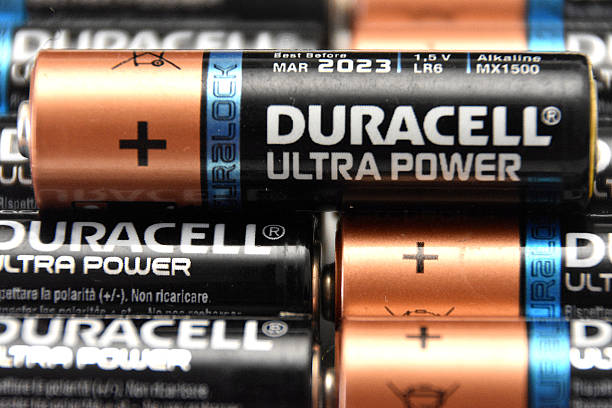
Most multi-property hotel groups in the GCC have a battery problem they have not yet named. Each property makes its own purchasing decision. One uses Procell. Another uses Plus Power. A third uses whatever housekeeping ordered last quarter from the nearest hypermarket. There is no group standard, no policy document, and no way to compare costs across properties because nobody is tracking the same thing.
For a regional procurement director managing ten or more properties across the UAE, Qatar, Saudi Arabia, Kuwait, Oman, and Bahrain, this inconsistency costs more than the difference between battery variants. It costs supplier management overhead, it costs inconsistent guest experience when locks fail at some properties and not others, and it makes a group supply negotiation impossible.
This guide addresses the battery standardization question at a level that matches the seniority of the people who need to answer it. It covers the technical case for Procell over Plus Power, the CFO-level ROI argument, how to write a group battery specification document, and how to structure a single-supplier arrangement across GCC markets.
Why Battery Standardization Matters for Multi-Property Hotel Groups
The case for standardization is not primarily about batteries. It is about what unstandardized procurement costs a group-level operation.
When each property in a hotel group makes independent battery decisions, four problems compound:
- Procurement fragmentation. Your accounts payable team processes invoices from five or six different battery suppliers across ten properties. Each has different terms, different documentation formats, and different SKU nomenclature. This is invisible overhead, but it is real cost.
- Inconsistent specifications. A property in Doha using consumer-grade Plus Power in its door locks will have more lock failures than a property in Dubai using Procell Intense. The guest experience is different. The engineering team's workload is different. The root cause is a battery purchasing decision made by a housekeeping manager with no guidance from regional procurement.
- No leverage in supplier negotiations. A group buying 50,000 AA batteries per year across ten properties has significant negotiating power with a single supplier. That power disappears entirely when those 50,000 batteries are purchased in dribs and drabs from twelve different sources.
- Policy gaps create compliance risk. For smoke detectors and emergency devices, battery specification is a safety compliance matter. Dubai Civil Defence and Qatar's Civil Defence Department have requirements around battery backup standards. A group policy removes the risk of individual properties making uninformed decisions about safety-critical devices.
The solution is a group battery standard: a one-page specification document that tells every property which product to use in which device, with a single approved supplier for the GCC region.
Duracell Plus Power vs Procell: Technical Differences That Matter to Hotels
Duracell Plus Power is a consumer alkaline battery sold through retail channels. It is designed for general household use at a competitive retail price point. Duracell Procell is a commercial alkaline battery engineered for professional and institutional applications. They share Duracell's core alkaline chemistry, but the specifications diverge in ways that matter directly to hotel operations.
|
Duracell Plus Power |
Duracell Procell (Constant / Intense) |
|
|
Designed for |
Consumer / household use |
Professional / commercial / institutional use |
|
Operating temp range |
Standard alkaline range (typically to ~40°C) |
-20°C to +54°C (stated specification) |
|
Shelf life |
5 years (typical consumer alkaline) |
7 years (Procell specification) |
|
High-drain performance |
Standard alkaline |
Procell Intense: 9-18% more capacity than Coppertop in high-drain tests |
|
Batch traceability |
Not standard |
Available with commercial documentation |
|
Commercial pack format |
Retail blister packs |
Bulk cartons (10, 20, 24 packs by SKU) |
|
VAT invoice / procurement docs |
Retail receipt only |
Commercial invoice, packing list, COO available |
|
Procurement channel |
Hypermarket, retail |
B2B distributor only |

The temperature specification is the most operationally significant difference for GCC hotel groups. Ambient temperatures in hotel corridors, storerooms, and outdoor-adjacent mechanical spaces can exceed 40 degrees C in summer months across the Gulf. A battery rated to 54 degrees C operates within specification in these conditions. A standard consumer alkaline does not.
The 7-year shelf life on Procell is also meaningful for group procurement. If you are buying on a quarterly or semi-annual basis and storing at properties in Riyadh, Muscat, and Kuwait City, a longer shelf life reduces the risk of stock expiring before use at lower-volume properties.
Procell Constant vs Procell Intense: The Policy Decision Every Hotel Group Must Make
A group battery standard requires you to choose between Procell Constant and Procell Intense for each device category. Using one across the board is not the right approach: the two products are engineered for different applications, and using the wrong one costs money without delivering benefit.
|
Device Category |
Correct Procell Specification |
Reason |
|
Door locks (ASSA ABLOY, VingCard, dormakaba) |
Procell Intense AA |
High-drain electromechanical device; peak current demand on every lock cycle |
|
In-room safe (Elsafe, Yale, Phoenix) |
Procell Intense AA |
Electromechanical lock mechanism; same high-drain profile as door locks |
|
Wireless microphone / conference system |
Procell Intense AA/AAA |
High-drain transmitter device; failure during events is unacceptable |
|
TV remote (LG, Samsung hotel models) |
Procell Constant AA |
Low-drain, steady signal device; Constant is correctly specified and more cost-effective |
|
Alarm clock / clock radio |
Procell Constant AA/AAA |
Minimal current draw; Constant is correct |
|
Minibar sensor (Bartech, Minibar Systems) |
Procell Constant AA |
Low-power IoT sensor; periodic transmission only |
|
Touchless soap / sanitizer dispenser |
Procell Constant AA/D |
High cycle but low drain per activation; Constant suitable |
|
Smoke detector (battery model) |
Procell Constant 9V or Duracell Lithium AA |
Check detector model specification; some require lithium for compliance |
The practical takeaway for a group battery policy: specify Procell Intense for any device with a motor, solenoid, or electromechanical locking mechanism. Specify Procell Constant for everything else. This two-line decision covers 95% of your hotel estate.
For a group procurement director, this specification also simplifies supplier conversations. You are buying two SKUs in AA as your core stock (one Intense, one Constant), plus Constant AAA, Constant D, and Constant 9V for secondary applications. Five SKUs covers a full-service hotel portfolio.
The CFO's Guide: ROI on Procell vs Plus Power Across 10+ Properties
The finance objection to Procell is predictable: it costs more per unit than Plus Power. The ROI argument is also straightforward, but it requires labour cost data that most hotel groups have not assembled.
The framework below uses conservative estimates. Adjust the numbers for your own property and labour context.
|
Cost Assumption |
With Plus Power |
With Procell Intense |
|
Door lock battery replacement cycle (AA x4) |
9-12 months (GCC heat + high drain) |
18-24 months (rated to 54°C) |
|
Replacements per lock per year (300 rooms) |
1.0 to 1.3 |
0.5 to 0.7 |
|
Batteries replaced per year (door locks only) |
1,200 to 1,600 AA |
600 to 840 AA |
|
Engineering labour per replacement (mins) |
8 minutes average |
8 minutes average |
|
Annual engineering labour hours (door locks) |
160-213 hours |
80-112 hours |
|
Labour cost at AED 25/hr (conservative) |
AED 4,000-5,325 |
AED 2,000-2,800 |
|
Battery unit cost differential (per AA) |
Lower unit cost |
Higher unit cost (offset by fewer replacements) |
|
Incident cost (1 major lock failure event) |
AED 500-2,000 (engineering + guest comp) |
Near zero on pre-emptive schedule |

The labour argument alone typically closes the case. Engineering time replacing door lock batteries is not free. At a 300-room property, switching from Plus Power to Procell Intense on a pre-emptive 18-month cycle reduces annual door lock battery changes by roughly 40%, freeing around 80 to 100 engineering hours per year.
Across ten properties, that is 800 to 1,000 engineering hours per year returned to productive maintenance. At any realistic labour cost, the unit price difference between Plus Power and Procell is recovered inside 12 months.
The incident cost argument is harder to put a precise number on, but finance teams understand it: one guest compensation event triggered by a door lock failure at a Dubai five-star property costs more than the annual premium between Plus Power and Procell for that room's lock battery.
|
Need a Procell group pricing quote for your GCC hotel portfolio? Sea Wonders supplies Procell Constant and Intense across all GCC markets from Dubai. WhatsApp +971 56 216 2730 with your property count and SKU list. Quote within 2 hours. |
Building a Group Battery Specification Document for Your Hotel Portfolio
A group battery specification document does not need to be complex. The goal is a single reference that any property in your portfolio can use to make the right purchasing decision without calling regional procurement.
A complete group battery spec should contain:
Section 1: Approved Products
List the approved SKUs by name and application. Two lines covers most portfolios:
- Duracell Procell Intense AA: all electromechanical locking devices including door locks, in-room safes, and access controllers.
- Duracell Procell Constant AA, AAA, C, D, 9V: all other hotel battery applications including remotes, clocks, dispensers, minibar sensors, and smoke detectors.
Section 2: Non-Approved Products
Name the products that are not approved for use in the portfolio. At minimum, this should include any consumer retail alkaline batteries (Duracell Plus Power, Energizer Max in retail packs) and any unbranded or unknown-origin batteries. The reason is not brand snobbery. It is that consumer retail pack format lacks the commercial documentation your finance and compliance teams need, and the specifications are not suitable for critical hotel devices in GCC conditions.
Section 3: Device Reference Table
A one-page table listing every battery-powered device category in your properties, the correct battery size, the correct Procell line, and the target replacement cycle. Properties can adapt this table for their specific device models, but the SKU choices remain fixed.
Section 4: Approved Supplier
Name your approved battery supplier for the GCC region, including their contact details and ordering process. For hotel properties, the ordering process should be as frictionless as possible: WhatsApp or email with battery type, quantity, and delivery location should be sufficient to generate a quotation.
Section 5: Review Cycle
Specify how often the battery standard is reviewed, typically annually at the same time as your broader approved vendor list review. Include a process for properties to flag device changes or specification questions between review cycles.
Negotiating a Group Supply Agreement with a Single GCC Battery Supplier
A group supply agreement with a single GCC battery supplier gives you two things: consolidated invoicing and the ability to negotiate on volume. Both require that you know your annual consumption before entering a negotiation.
Calculating Your Group Volume
Aggregate your annual battery consumption across all properties. If you do not have this data centrally, a reasonable estimate for a full-service hotel is 600 to 800 AA equivalent batteries per month per 100 rooms. Across ten properties averaging 300 rooms, that is 18,000 to 24,000 AA per month, or 216,000 to 288,000 AA batteries per year. This is meaningful procurement volume.
What to Ask a GCC Battery Supplier
When approaching a single-supplier arrangement for a GCC hotel group, the key questions are:
- Can you supply Procell Constant and Intense across all six GCC markets: UAE, Qatar, Saudi Arabia, Kuwait, Oman, and Bahrain?
- Can you issue a single consolidated invoice for the group, or do you invoice per property?
- What is your lead time to each market, and do you offer DDP (Delivered Duty Paid) so our properties do not manage customs?
- Can you support LPO/PO procurement workflows for properties in Kuwait and Oman where this is standard?
- What commercial documentation do you provide as standard: commercial invoice, packing list, certificate of origin, UN38.3 for lithium?
- What is your minimum order quantity per SKU, and can you ship mixed-SKU orders to individual properties?
Sea Wonders supplies Procell Constant and Intense across all GCC markets from our Bur Dubai base. We support group pricing, consolidated invoicing, LPO/PO workflows, and DDP delivery. For a group covering multiple GCC markets, a single Dubai-based supplier simplifies your logistics and supplier management significantly.
Implementation: Rolling Out a Battery Standard Across GCC Properties
The most common reason group battery standards fail is that they are issued as a policy document without an implementation plan. Properties receive a PDF, acknowledge it, and continue ordering as before. Changing purchasing behaviour at property level requires more than a document.
A four-step implementation that works:
Step 1: Audit Current Stock at Each Property
Before issuing the new standard, ask each property to complete a simple battery stock audit: what they currently hold, in what quantities, and from which supplier. This gives you a baseline and identifies properties that will need an immediate resupply of the correct Procell SKUs to implement the new standard.
Step 2: Issue the Standard with a Transition Period
Give properties a 90-day transition period to run down non-approved stock before the standard takes full effect. This avoids waste and gives procurement teams time to qualify the new supplier and set up ordering processes.
Step 3: Connect Properties to the Approved Supplier
Introduce each property's housekeeping manager or engineering supervisor directly to the approved supplier's contact. For hotels using WhatsApp-based ordering, this is a five-minute task: add the supplier to the relevant WhatsApp group, share a one-line brief on how to order. Remove friction from the first order.
Step 4: Review at Six Months
Check that all properties are ordering through the approved channel, that stock levels are being maintained, and that no properties have reverted to retail purchasing. A simple email survey to housekeeping managers takes 30 minutes and gives you the compliance picture.
FAQ: Hotel Group Battery Procurement Questions
What is the performance difference between Procell and Plus Power in GCC hotel conditions?
The key differences are temperature rating, shelf life, and pack format. Procell is rated to 54 degrees C versus a standard consumer alkaline's approximately 40 degrees C. Procell carries a 7-year shelf life versus 5 years for Plus Power. Procell Intense delivers 9 to 18% more capacity than standard alkaline in high-drain applications like door locks. In GCC hotel conditions, where summer ambient temperatures regularly exceed 40 degrees C, these differences are operationally significant.
How do I justify Procell's price premium to a hotel group finance team?
Build the case on labour cost reduction and incident avoidance. Procell Intense on a pre-emptive 18-month cycle requires approximately 40% fewer door lock battery changes than Plus Power on a reactive cycle in GCC conditions. Across 300 rooms, that returns 80 to 100 engineering hours per year. The unit price premium is recovered within 12 months in labour savings alone, before accounting for guest incident costs.
Which Procell variant should a GCC hotel group specify for door locks?
Procell Intense AA. Door locks from ASSA ABLOY, VingCard, and dormakaba are high-drain electromechanical devices. Procell Intense is engineered for this application. Procell Constant, while excellent for remotes and clocks, is not the correct specification for locking mechanisms.
How do I create a battery policy document for a multi-property hotel group?
A complete group battery policy needs five sections: approved products (Procell Intense and Constant by application), non-approved products, a device reference table, approved supplier contact details, and a review cycle. The document should be a single page that any property can use without calling regional procurement. Sea Wonders can provide a template specification document for hotel groups on request.
Can one Dubai-based supplier cover all six GCC markets for a hotel group?
Yes. A Bur Dubai-based authorised distributor with GCC-wide shipping capability can supply all six markets: UAE, Qatar, Saudi Arabia, Kuwait, Oman, and Bahrain. Transit times range from same-day for Dubai properties to two to four working days for Kuwait and Bahrain. DDP delivery is available across all markets, removing customs management from property teams.
What is the ROI timeline for switching a 10-property GCC hotel group from Plus Power to Procell?
At a conservative estimate, positive ROI on the unit price premium is achieved within 12 months through reduced engineering labour on battery replacement cycles. The full ROI case, including incident avoidance, supplier consolidation savings, and reduced procurement overhead, is typically positive within six months of full implementation.
How do I negotiate a group supply agreement for Procell across GCC properties?
Start by aggregating your annual consumption across all properties. A rough estimate for a full-service hotel is 600 to 800 AA equivalent batteries per month per 100 rooms. Then approach a single authorised Procell distributor with your volume estimate and ask specifically about group pricing, consolidated invoicing, DDP delivery capability, and LPO/PO support. Sea Wonders handles all of this for GCC hotel groups. WhatsApp +971 56 216 2730 to start the conversation.
Related Blogs




Bose SoundLink Bluetooth Speaker
£50.00£60.00
Canon's press material for the EOS 5D states that it 'defines (a) new D-SLR category', while we're not typically too concerned
- Availability :In Stock