
 Locate Our Store
 +971 562162730
 AED
AED SAR
SAR KWD
KWD QAR
QAR BHD
BHD OMR
OMR


Oman Corporate Battery Supply: How to Set Up a Monthly Drop Schedule with a Dubai Supplier
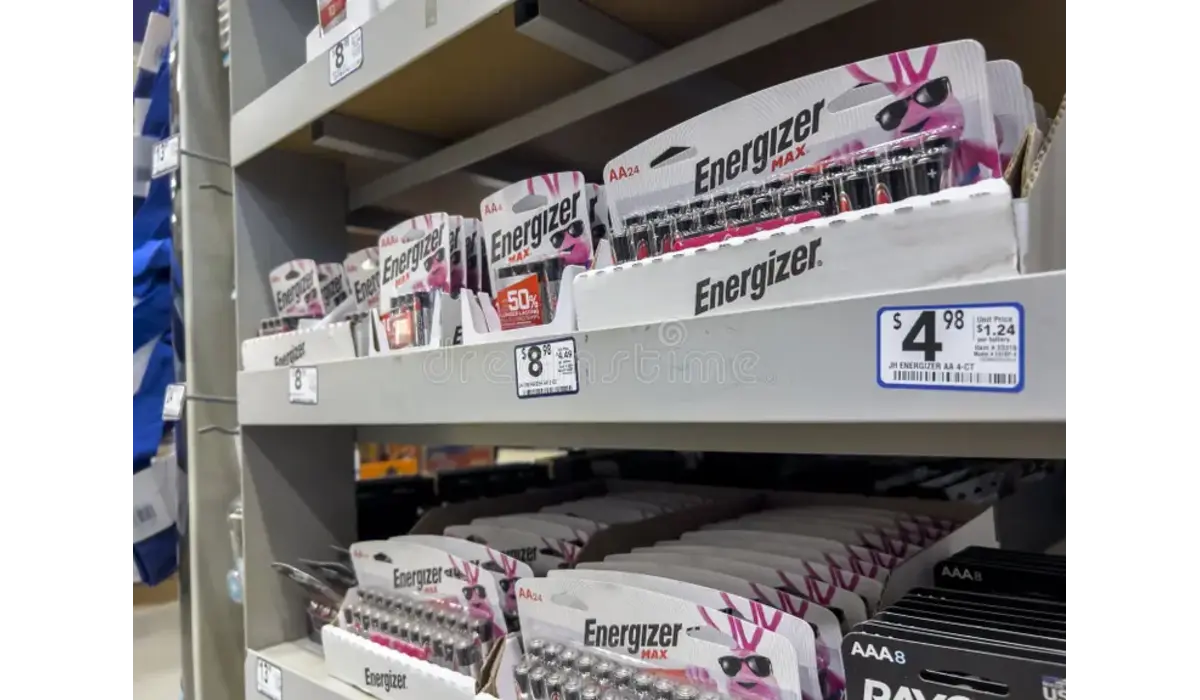
Most facilities managers in Oman have a battery problem that looks different from what it actually is. On the surface, it looks like a procurement problem: the right size is not in stock, a device has failed, and someone is on the phone asking for an urgent order. In reality, it is a supply cadence problem. The batteries were always going to run out. What was missing was a system to ensure they were replaced before that happened.
A monthly drop schedule from a Dubai-based supplier solves this. It replaces reactive emergency orders with a predictable, documented cycle. For multi-site Oman operations, covering Muscat, Sohar, and Salalah, it also consolidates procurement under one supplier relationship and one blanket purchase order.
This guide walks through exactly how to set one up: from calculating monthly quantities per site to structuring the PO, managing shelf life, and what to expect in the first three months. Sea Wonders General Trading LLC ships Duracell and Energizer batteries from Dubai to all three regions, with scheduled delivery arrangements available for corporate accounts.
Why Monthly Battery Drops Beat Ad-Hoc Emergency Orders
The operational and commercial case for a scheduled supply arrangement is straightforward. The table below shows how the two approaches compare across the factors that matter most to a facilities or procurement manager.
|
Factor |
Ad-Hoc Emergency Orders |
Monthly Drop Schedule |
|
Order frequency |
Irregular — triggered by stockout |
Fixed monthly date — planned in advance |
|
Price per unit |
Higher — small urgent orders |
Lower — bulk carton pricing |
|
Shipping cost |
Repeated individual freight charges |
Consolidated freight — one delivery per site per month |
|
Admin burden |
New PO each order, repeated approvals |
Single annual blanket PO, auto-renew |
|
Operational risk |
Stockouts, device failures, site downtime |
Consistent stock level maintained |
|
Shelf life management |
Random batch dates — harder to rotate |
Consistent batch schedule — easy FIFO rotation |
|
Documentation |
New invoice/COO per urgent order |
Standard invoice and COO per scheduled drop |

The financial case is often underestimated. Emergency orders carry a double cost: the premium price for small-quantity urgent orders, and the logistics cost of repeated individual shipments. A single monthly consolidated delivery to each site is almost always cheaper per unit than multiple smaller orders across the same month.
For operations in Salalah, which is over 1,100 km from Dubai, the logistics argument is even stronger. An unplanned urgent order to Salalah can cost significantly more in freight than building the same quantity into a scheduled monthly drop.
Step 1: Calculating Your Monthly Battery Requirement Across Sites
Before issuing any PO, you need a realistic monthly quantity per SKU per site. Over-estimating wastes budget and storage space. Under-estimating recreates the stockout problem you are trying to solve. Here is a practical method.
The Device Audit
Walk each site and list every battery-powered device: door locks, remote controls, smoke detectors, portable equipment, access control panels, emergency lighting, sensors, and wireless office devices. For each device type, record the battery size it uses and how often batteries are typically replaced.
Consumption Calculation
Monthly consumption = number of devices using that size x average replacements per year / 12. Add a 20% buffer for unexpected replacements, higher-than-average usage months, and devices added during the year.
Sample SKU Worksheet
The table below shows an example worksheet for a three-site Oman operation. Adapt the numbers to your actual device count.
|
Site |
Battery Size |
Brand/Line |
Devices Using It |
Units/Month |
Buffer Stock |
|
Muscat HQ |
AA |
Duracell Procell |
Door locks, remotes, wireless mice |
120 units |
1 month |
|
Muscat HQ |
AAA |
Duracell Procell |
TV remotes, small devices |
80 units |
1 month |
|
Muscat HQ |
9V |
Energizer Industrial |
Smoke detectors, sensors |
24 units |
2 months |
|
Sohar site |
AA |
Energizer Industrial |
Field equipment, torches |
200 units |
1 month |
|
Salalah site |
AA |
Energizer Industrial |
Remote sensors, site monitors |
160 units |
2 months |
Once you have this worksheet completed per site, you have the inputs for your blanket PO. Share it with Sea Wonders and we will confirm the best carton size per SKU and the pricing for your monthly volume.
|
Ready to calculate your monthly requirement for Oman sites? |
|
Send your site list and device types to Sea Wonders via WhatsApp +971 56 216 2730. |
|
We will help you build the right SKU worksheet and confirm pricing. Quote within 2 hours. |
Step 2: Structuring a Blanket PO for 12-Month Battery Supply
A blanket purchase order locks in pricing and delivery terms for the full year without requiring a new PO for each monthly delivery. It reduces admin on both sides and gives your finance team budget predictability. Here is what a well-structured battery blanket PO includes.
|
PO Element |
What to Include |
|
PO period |
12 months (state start and end dates) |
|
SKU list |
Each battery size and brand as a separate line item with unit price |
|
Monthly quantity per SKU |
Estimated monthly quantity per site, per size |
|
Delivery schedule |
Delivery date (e.g., first week of each month) and delivery address per site |
|
Incoterm |
DAP or DDP — specify which applies to this arrangement |
|
Documentation per delivery |
Commercial invoice, packing list, UAE Certificate of Origin |
|
Price review clause |
Agree on a price review trigger (e.g., annual, or if quantity changes more than 20%) |
|
Contact details |
Procurement contact in Oman + Sea Wonders WhatsApp account manager |
Sea Wonders supports LPO (Local Purchase Order) workflows, which are standard in Oman for B2B procurement. If your company requires a specific PO format or reference number system, share the template and we will align our invoices accordingly.
One practical tip: build a quantity tolerance clause into the PO, typically plus or minus 10% per month. This gives flexibility to accommodate seasonal demand spikes, such as Muscat hospitality occupancy peaks in December and January, without requiring a formal PO amendment each time.
Step 3: Setting Up Site-Specific Delivery Routes (Muscat / Sohar / Salalah)
Oman's geography means that a single monthly drop cannot serve all three regions on the same day. Each location has a different lead time from Dubai, and Salalah in particular requires more advance planning than the northern sites.
|
Location |
Distance from Dubai |
Transit Time |
Typical Freight Mode |
Planning Lead Time |
|
Muscat (Capital Area) |
~400 km |
1-3 working days |
Road freight via Hatta corridor |
Order 5 days before delivery date |
|
Sohar |
~300 km (via coast road) |
1-2 working days |
Road freight via UAE-Oman border |
Order 4 days before delivery date |
|
Salalah |
~1,100 km from Dubai |
4-6 working days |
Road freight or air freight option |
Order 8 days before delivery date |
|
Interior / PDO sites |
Varies by camp location |
3-5 working days to Muscat hub then onward |
Road freight to Muscat; local distribution |
Coordinate with Muscat delivery cycle |
The most efficient approach for multi-site operations is a staggered dispatch schedule. Sea Wonders dispatches Salalah orders first, then Muscat and Sohar orders later in the cycle, so all sites receive stock within the same calendar week.
Delivery Address and Contact Details
For each site, provide a named receiving contact and their mobile number. This ensures the logistics provider can confirm delivery without delays at the gate. For PDO contractor camps and remote industrial sites, also provide access gate procedures and GPS coordinates if the site is not easily found by address alone.
DDP vs DAP for Oman Deliveries
Under DAP (Delivered At Place), the buyer manages customs clearance at the Oman border. Under DDP (Delivered Duty Paid), Sea Wonders handles customs clearance and import duties, and your team simply receives the goods. For companies without an Oman import licence or customs agent, DDP is the simpler option. UAE Certificate of Origin is provided per delivery, which qualifies for the GCC preferential tariff and eliminates the standard 5% import duty.

Shelf Life Planning: How to Match Order Frequency to Storage Capacity
One of the most common objections to monthly battery ordering is storage: where do we keep three months of stock for a large site? The answer, for most B2B battery lines, is that shelf life is not the constraint you think it is.
|
Battery Line |
Shelf Life |
Recommended Order Frequency |
Notes |
|
Duracell Procell AA/AAA/C/D |
7 years |
Monthly or quarterly |
Safe to hold 3-month buffer stock at Oman temperatures |
|
Energizer Industrial AA/AAA/C/D |
7 years |
Monthly or quarterly |
7-year shelf life designed for stockpiling in hot climates |
|
Duracell Plus Power AA/AAA |
10 years |
Monthly or quarterly |
Long shelf life; standard commercial use |
|
Energizer Max AA/AAA |
10 years |
Monthly or quarterly |
Consumer and light commercial use |
|
Duracell Lithium AA/AAA |
10-12 years |
Quarterly or bi-annual |
Very long shelf life — ideal for emergency kit stocking |
|
Energizer Ultimate Lithium AA |
20 years (storage) |
Quarterly or bi-annual |
Longest shelf life in range; PDO field kit standard |
Duracell Procell and Energizer Industrial, the two product lines most commonly used by FM teams and oil and gas contractors in Oman, both carry a seven-year shelf life. This means holding a three-month buffer at ambient Oman temperatures (even in summer) is perfectly safe. You are not at risk of expiry if you have a sensible first-in, first-out (FIFO) rotation system.
FIFO Rotation in Practice
When a new monthly delivery arrives, move existing stock to the front of the shelf and put new stock at the back. Label each delivery batch with the receipt date. For sites with high turnover (like a busy hotel housekeeping store), this happens naturally. For sites with lower consumption, a quarterly stock check ensures nothing is sitting in the wrong rotation order.
Oman Climate Considerations
Oman summer temperatures regularly exceed 40 degrees Celsius outdoors. Battery storage should be in a shaded, ventilated indoor location, ideally below 30 degrees Celsius. Alkaline batteries stored at consistently high temperatures will lose capacity faster than the rated shelf life suggests. Industrial and warehouse battery stores at most Oman facilities are adequately air-conditioned for this purpose.
Battery SKU Standardisation: Reducing Variety, Reducing Cost
A common finding when auditing battery procurement for multi-site Oman operations: companies are buying five or six different battery brands and lines for essentially the same applications. One site uses Duracell Plus, another uses a generic brand, a third is on Energizer Max. The result is fragmented ordering, inconsistent performance, and missed bulk pricing opportunities.
SKU standardisation solves this. The goal is to select the fewest possible SKUs that cover all your applications, then standardise every site on that list.
Recommended GCC FM Standard
For most Oman FM and hospitality operations, two SKUs cover the majority of requirements: Duracell Procell AA and Duracell Procell AAA (or their Energizer Industrial equivalents). These cover door locks, remotes, housekeeping devices, office equipment, and general-purpose use. Supplement with Energizer Industrial 9V for smoke detectors and sensors, and Duracell Lithium AA for any field or high-drain applications.
Fewer SKUs means better carton pricing, simpler reordering, easier stock rotation, and one supplier relationship instead of several. Sea Wonders can help you build a standardised SKU list across all your Oman sites before the first monthly order.
|
Supplying Duracell and Energizer batteries to Oman with monthly drop capability. |
|
Sea Wonders ships from Dubai to Muscat, Sohar, and Salalah under blanket PO arrangements. |
|
WhatsApp +971 56 216 2730 to discuss your site requirements. |
Documentation for Each Delivery Run (Invoice, Delivery Note, COO)
Each monthly delivery from Dubai to Oman requires a standard documentation package. This is not burdensome under a standing arrangement because the format is identical every month — only the quantities and dates change.
Per-Delivery Document Set
- Commercial invoice: itemised per SKU, shows CIF value, UAE TRN, Oman consignee details, and HS codes
- Packing list: carton count, weights, dimensions, and shipping marks per consignment
- Certificate of Origin (UAE): issued per delivery to qualify for GCC preferential tariff at the Oman border
- Delivery note: site-specific document signed by the receiving contact, returned to Sea Wonders as proof of delivery
For lithium battery lines, a UN38.3 test report is also provided on request. For DDP deliveries, Sea Wonders handles customs clearance documentation on the Oman side and provides proof of clearance on request.
All documents are provided in English. For Oman customs, English documentation is accepted for standard commercial goods. Arabic versions are available on request for specific procurement requirements.
What to Expect in the First 3 Months of a Supply Arrangement
Setting up a new standing supply arrangement has a short calibration period. Here is how the first three months typically look for a new Sea Wonders Oman account.
|
Period |
Milestone |
What Happens |
|
Week 1-2 |
Setup |
Share site list, battery SKUs, quantities, and delivery addresses with Sea Wonders. Sea Wonders confirms pricing and delivery schedule. |
|
Week 2-3 |
Blanket PO issued |
Your procurement team issues the annual blanket PO. Sea Wonders sends back a signed order acknowledgement. |
|
Month 1 delivery |
First drop |
Delivery to all sites per agreed schedule. Sea Wonders provides invoice, packing list, and COO per site. You review documentation and confirm receipt. |
|
Month 1 review |
Stock check |
After Month 1, review actual consumption vs estimate. Adjust quantities for Month 2 if needed. |
|
Month 2-3 |
Calibration |
Fine-tune quantities per site based on real consumption data. Identify any SKU gaps. Lock in the standard monthly order. |
|
Month 3+ |
Steady state |
Routine monthly drops with minimal admin. Single WhatsApp confirmation per month to your account manager. |
By Month 4, most clients are running on minimal admin. A WhatsApp message to confirm the month's delivery date, an automatic invoice and COO package per site, and a delivery to each location. The procurement work is done in the first two months of setup.
For large multi-site operations, Sea Wonders assigns a dedicated WhatsApp account manager for standing order clients. This is a single point of contact for all queries, delivery changes, and SKU adjustments — avoiding the need to explain your setup to a new person each time.
FAQ: Oman Monthly Battery Supply Questions
How do I calculate the right monthly quantity for a multi-site facility in Oman?
Start with a device audit at each site: list every battery-powered device, the size it uses, and the average replacement frequency. Monthly quantity equals device count multiplied by annual replacements divided by 12, plus a 20% buffer. Share your device list with Sea Wonders and we can help you build the calculation.
Can a Dubai supplier do scheduled monthly drops to multiple locations across Oman?
Yes. Sea Wonders ships monthly to Muscat, Sohar, and Salalah. Each site has a different lead time from Dubai, so dispatch is staggered to ensure all sites receive stock within the same week. Delivery addresses and receiving contacts are maintained per site under the standing arrangement.
How should I structure a blanket PO for 12-month battery supply?
A blanket PO should specify the PO period, SKU list with unit prices, estimated monthly quantity per site, delivery schedule, Incoterm (DAP or DDP), and documentation requirements. Sea Wonders supports LPO workflows standard in Oman procurement. Share your PO format and we align our invoices accordingly.
What is the shelf life of Duracell and Energizer batteries and how does it affect ordering?
Duracell Procell and Energizer Industrial both carry a seven-year shelf life. Duracell Plus Power and Energizer Max are rated to ten years. This means holding two to three months of buffer stock at any Oman site is entirely safe, provided storage is in a ventilated indoor space below 30 degrees Celsius. You do not need to order hand-to-mouth to avoid expiry.
How do I prevent both stockouts and wastage from over-ordering?
Build a consumption worksheet per site before the first order, then review after Month 1 against actual usage. The first three months of a new arrangement are a calibration period. Once real consumption data is established, quantities are locked in and the system runs without further adjustment unless something changes on-site.
Can I set different delivery schedules for Muscat, Salalah, and Sohar?
Yes. Each site can have its own delivery date and contact. Given the different transit times, Salalah orders are dispatched first (four to six working days transit), then Sohar and Muscat later in the cycle. All sites typically receive delivery within the same calendar week.
What documentation is needed for each regular delivery to Oman?
Each delivery requires a commercial invoice, packing list, Certificate of Origin (UAE), and a site-specific delivery note. For DDP deliveries, Sea Wonders also provides customs clearance documentation. For lithium battery shipments, a UN38.3 test report is available on request. The documentation format is identical every month — only dates and quantities change.
Does Sea Wonders offer DDP delivery to Oman?
Yes. Under DDP (Delivered Duty Paid), Sea Wonders handles customs clearance at the Oman border and pays all import duties. The UAE Certificate of Origin issued per delivery qualifies shipments for the GCC preferential tariff, which typically eliminates the standard 5% duty. Your team receives goods at the agreed delivery point without managing customs.
Related Blogs



Bose SoundLink Bluetooth Speaker
£50.00£60.00
Canon's press material for the EOS 5D states that it 'defines (a) new D-SLR category', while we're not typically too concerned
- Availability :In Stock