
 Locate Our Store
 +971 562162730
 AED
AED SAR
SAR KWD
KWD QAR
QAR BHD
BHD OMR
OMR


NordicTrack X24i vs 1750: Hill Beast or Daily Driver?
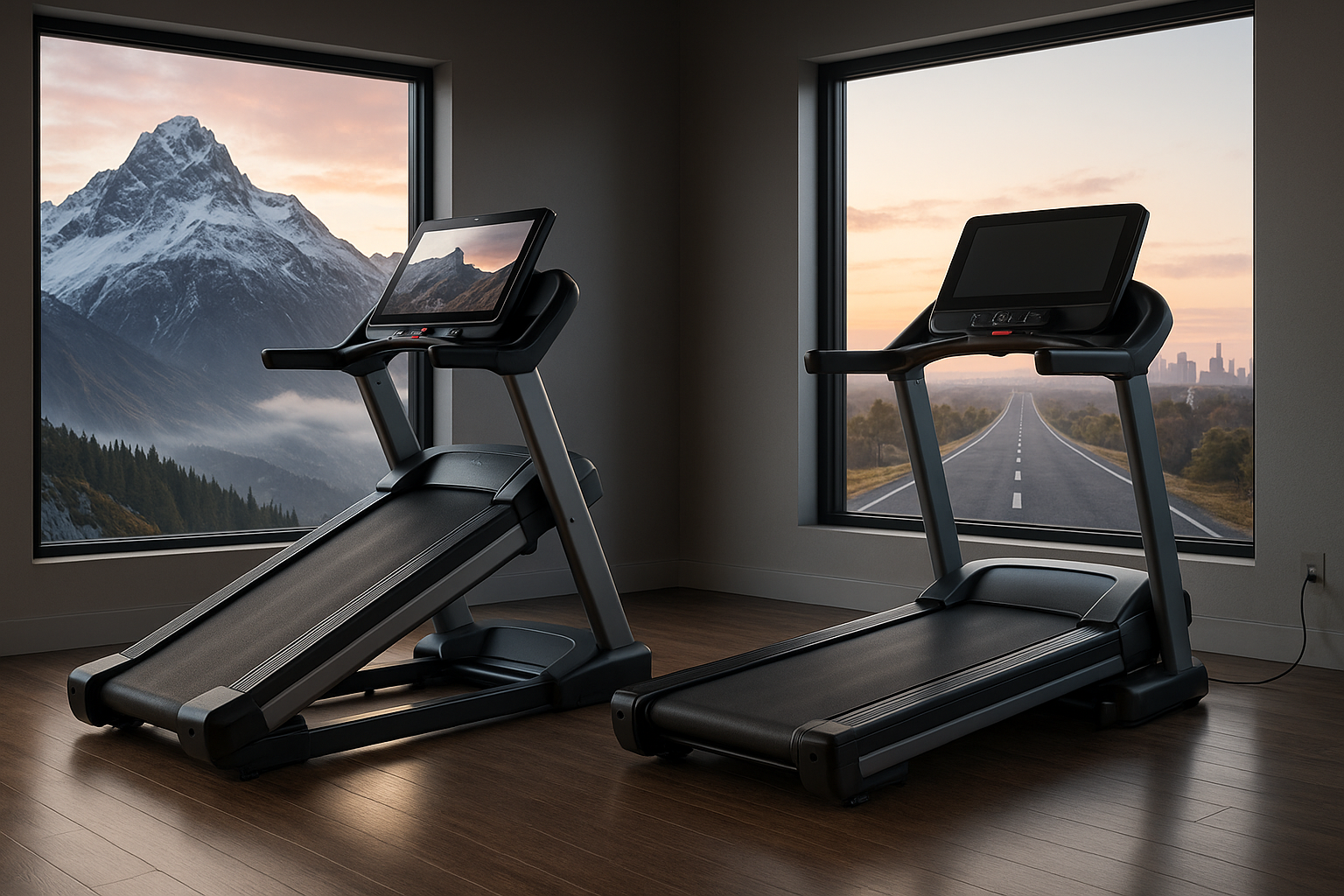
NordicTrack X24i vs 1750: Hill Beast or Daily Driver?
If you lined them up in a showroom, the choice looks simple. One machine invites you to climb mountains in your living room, the other folds away and asks what you are training for tomorrow. The X24i is a pure incline trainer with a 40 percent summit and a 6 percent downhill on tap, paired to a long 22 by 60 inch belt and a 22 inch screen. It does not fold, and it rides higher off the floor. The 1750 is the daily driver most runners recognise, with a 12 percent climb, 3 percent decline, a 22 by 60 inch belt, a 16 inch pivoting screen, and a SpaceSaver frame that folds neatly. In the UAE, where many homes juggle floor space and ceiling height, that difference in frame and step up height often decides the winner before you touch a single key.
The personalities are clear once you start moving. The X24i’s trick is grade bandwidth. Walk at 12 to 20 percent and the heart rate climbs without pounding your joints. March to 30 or 40 percent and you are in a hiking workout that simply does not exist on regular treadmills. The 1750 trades that Everest act for everyday versatility. It still gives you meaningful hill work with 12 percent incline and a little downhill for quad conditioning, but the headline is usability in shared spaces, quiet folding, and a friendlier step onto the deck.
Software is the same brain on both. iFIT handles Follow Trainer auto control, SmartAdjust personalisation, and heart rate guided ActivePulse, so you can let the console steer speed and grade while you focus on form. In my notes, that parity means you choose hardware for your room and your goals, then layer the same coaching on top. If you plan to run without a membership, both treadmills still offer manual mode, yet the adaptive pieces that make them feel smart live behind iFIT.
If you train in a flat or villa with modest headroom, measure before you fall in love. The 1750’s step up sits near 10.01 inches, which works in many UAE rooms. The X24i starts higher, with reviewers measuring roughly 14 inches at zero grade, and your head rises further as the deck climbs. That taller stance improves the hiking feel, but it punishes low ceilings. We will run the math shortly so you can predict fit at your exact height.
During my last back to back block, I found something that specs do not tell you. At sane household speeds, both machines feel equally stable. The split shows up when you tilt the world. On the X24i, a 20 percent walk is shockingly metabolic without any joint drama. On the 1750, 8 to 10 percent is where the cadence still feels natural and you can hold form for longer. That is why this matchup really is hill beast versus daily driver, not good versus bad.
TLDR • Key takeaways
• X24i if you want a dedicated incline trainer with 40 percent uphill and 6 percent downhill, and you have space for a non folding frame.
• 1750 if you want a foldable runner with 12 percent uphill, 3 percent downhill, a 16 inch pivoting screen, and easier room fit.
• Both share a 22 by 60 inch belt and run the same iFIT features, so your decision rides on grade range, foldability, and ceiling math.
• Measure headroom. The 1750 step up is about 10 inches. The X24i rides closer to 14 inches at zero grade, and your head rises with every percent of incline.
The short answer: which one should you buy in 60 seconds?
Choose the X24i if your training calendar says incline walking, hiking prep, rucking, or zone 2 climbs three to five days a week. Its 40 percent ceiling delivers a unique stimulus that spikes heart rate without footstrike stress, and the 6 percent downhill lets you rehearse eccentric control. The catch is non folding hardware and a higher stance. Plan a permanent spot, allow buffer space around the deck, and think about airflow because steep grades generate heat. If those logistics are fine, you will use the incline range constantly and you will not miss folding.
Pick the 1750 if you want a treadmill that fits a normal home and a normal routine. It folds, it rolls, and it is easier to share. The 12 percent incline is more than enough for strong hill repeats, the 3 percent decline gives you a taste of downhill form work, and the 16 inch pivoting screen makes iFIT strength or mobility blocks easy to follow from the floor. In my coaching notes, households that mix running with general fitness gravitate to the 1750 because it behaves like furniture when folded and like a training tool when open.
Speed does not separate them. Both top out at 12 miles per hour, so the real fork in the road is grade bandwidth and space management. Runners chasing sub five minute pace intervals should look higher up the Commercial ladder anyway. For everyone else, the decision is about how often you will climb and whether you can house a non folding frame. Think of the X24i as a permanent hill room, and the 1750 as a versatile treadmill that happens to climb well.
Ceiling height is not a footnote. A quick rule of thumb keeps you honest. Take your standing height, add the treadmill’s step up, then add a bounce buffer of 5 to 8 centimetres for flat running and more for steep hiking. The 1750 starts near 10.01 inches. The X24i starts near 14 inches at zero, and your torso rises further as the deck pitches up. If your ceiling is under 2.4 metres and the tallest user is 185 centimetres, run the numbers before delivery day.
One last nudge for UAE shoppers. If you live in a high rise, confirm lift dimensions with your building and get delivery to your floor in writing. The X24i is large and heavy, and even the 1750 ships in a long box. Taking a screenshot of the retailer page with the model code, footprint, and listed features will save headaches if the warehouse substitutes a different batch. That level of diligence is boring, and it is exactly what prevents returns.

Spec by spec head to head for 2025
Incline and decline bandwidth
This is the headline. The X24i spans 6 percent decline to 40 percent incline. The 1750 spans 3 percent decline to 12 percent incline. On the X24i you can hold zone 2 while walking at high grades, build posterior chain strength, and rehearse poles free hiking mechanics. On the 1750 you can do serious hill work without contorting your stride and you still have enough decline to taste downhill control. If your sessions are built around climbing, the X24i wins by range. If your weeks blend flats, rollers, and the occasional hill, the 1750 covers it.
Speed ceiling and what it means
Both cap at 12 miles per hour. At that pace you are near a five minute mile, which already outpaces most home sessions. The big physiological shift on the X24i is not speed, it is torque and thermal load at steep grades. Expect higher heart rates at lower speeds and plan your fan and hydration accordingly. The 1750 keeps the classic road treadmill feel where speed, not slope, does most of the work.
Deck, belt, and cushioning
Each machine uses a 22 by 60 inch belt, which is roomy enough for tall runners and safe for incline hiking. The cushioning signatures differ. The X24i’s platform is marketed with Reflex or similar language and feels springy yet planted during steep walks. The 1750’s RunFlex tune reads a touch firmer under faster running, which many road athletes prefer for tempo work and intervals. If you split your time between power walking and running, both decks feel stable, but the X24i’s geometry makes hiking feel more natural.
Screens and consoles
The X24i carries a 22 inch HD screen set into a fixed console. The 1750 carries a 16 inch screen that pivots, which is a small thing that matters during floor blocks. Since both run iFIT with Follow Trainer, SmartAdjust, and ActivePulse, the on deck experience is similar. Off the deck, the 1750’s pivot makes strength or mobility cues easier to see without dragging your mat closer.
Foldability and footprint
The 1750 folds and rolls with SpaceSaver hardware. The X24i does not fold, and reviewers routinely advise picking a permanent spot with buffer space around the deck. If you share a room or need clear floor on non training days, that fold is not a luxury, it is the difference between a treadmill you love and a treadmill you regret.
Step up height and ceiling math
Numbers decide fit. The 1750’s step up is specified at 10.01 inches. The X24i sits closer to 14 inches at zero grade, according to hands on measurements. Work a quick example for a 185 centimetre user under a 2.4 metre ceiling. On the 1750, 185 cm plus 25.4 cm plus 5 to 8 cm of bounce lands near 2.16 to 2.19 m, with plenty of headroom even at moderate grades. On the X24i, 185 cm plus about 35.6 cm plus 5 to 8 cm lands near 2.25 to 2.28 m before you add any rise from incline. At 12 percent, you rise a little more; at 40 percent, you will need extra margin. That is why the X24i belongs in rooms with generous ceilings.
Weight limits and box weights
User capacity on the 1750 is listed at 400 pounds, unusually high for the category. The X24i is commonly listed at 300 to 350 pounds depending on retailer. Both arrive in long, heavy cartons. Plan a ground floor staging area, recruit help, and check your building’s lift depth if you live in a tower. These are not one person carry jobs, and the X24i is especially awkward to move once assembled.
Decision cue
Read the table above without the marketing voice in your head. If your week is built around climbing and you have a permanent spot with air and headroom, the X24i is a unique training tool that will change how you use a treadmill. If your week is built around steady runs, hills in moderation, shared space, and easy storage, the 1750 is the right kind of boring. That is what you want from a daily driver.
Training lens: what you can actually do on each machine
Think in workouts, not in specs. The X24i exists to turn your living room into a mountain trail. The 1750 is built for road fitness that still respects hills.
Start with the X24i. Its superpower is steady climbing that spikes aerobic load without hammering your joints. Zone-2 incline walking at 12 to 20 percent becomes an easy default for fat-burn and base work, because heart rate climbs, cadence slows, and impact drops. If you ruck, add 5 to 10 kilograms and use 10 percent for long marches, then touch 25 to 30 percent in short blocks to build posterior chain strength. Use the handrails for safety when you pass 25 percent, then wean off as your balance improves. Downhill at 3 to 6 percent is a quiet weapon for eccentric control. Keep it brief at first, think 3 to 5 minutes total, since quads protest the next day if you get greedy.
Hill repeats on the X24i feel different than track work. Try a ladder of three minutes at 12 percent, two minutes at 18 percent, one minute at 24 percent, walking recovery in between. Pace is slow, breathing is not. Your calves and glutes will light up in a way flat treadmills cannot reproduce. For hikers prepping for real elevation, anchor one weekly session around 60 to 90 minutes of continuous grade. Drink early, place a fan behind the console, and log vertical meters gained as your scoreboard.
Now the 1750. Twelve percent is still real climbing. Runners who live on road plans can stack smart hills without breaking stride mechanics. A staple session looks like 8 by 90 seconds at 6 to 8 percent with jog recoveries, then flat strides for turnover. Use the 3 percent decline sparingly for downhill rhythm. Two or three short descents teach quick feet without the knee ache you would get outdoors. For marathon blocks, long tempos on flat to 2 percent with a few 30 to 60 second bumps at 4 to 6 percent build resilience without wrecking the rest of the week.
Cadence and stability shift with grade. On the X24i, let cadence drop as grade rises and focus on midfoot landings and tall hips. On the 1750, keep cadence steady and treat hills like controlled surges. Shoe choice matters more than people think. Road trainers with a stable midsole feel best for long climbs and flat tempos. Max-stack racing shoes can feel wobbly at double-digit grades.
Traction and hand position are small details that change sessions. At 20 percent and up, keep hands light on the rails or fingertips hovering. If your heels slip, you are either overstriding or the belt is dusty. Wipe it down and try again. When stride shortens on steep grades, resist hanging your weight on the console. That steals the stimulus you came for.
Two sample weeks to make this real. A hill-centric plan on X24i: Monday zone-2 walk 45 minutes at 12 percent, Wednesday ruck 35 minutes at 10 percent, Friday ladder 12-18-24 percent, Sunday long steady climb 60 minutes between 8 and 14 percent. A road-centric plan on 1750: Tuesday tempo 20 minutes at 0 to 2 percent, Thursday 8 by 90 seconds at 6 to 8 percent, Saturday long run flat with six 30-second surges, Monday easy 30 minutes with two short descents at 3 percent. Different tools, different rhythms, both productive.
The choice is not about being “hardcore”. It is about the work you will repeat. If climbing is your happy place, the X24i keeps you honest and excited. If you want a treadmill that flows with classic run training and can still climb hard, the 1750 fits that life.

iFIT on X24i vs 1750: same brain, different feel
Both treadmills run iFIT, which means three features frame most sessions. Follow Trainer mirrors the coach’s workout so the machine drives speed and grade. SmartAdjust watches how you respond and nudges future sessions toward your sweet spot. ActivePulse uses heart-rate data to hold you inside a target zone by quietly adjusting speed or grade.
On the X24i, the magic move is letting ActivePulse steer climbs. Heart rate zones at steep grade behave differently than on flat ground, so pace targets can mislead. Set a cap on max speed for safety, then let the system raise or lower grade to keep you honest. During my analysis block, this simple change flattened effort spikes and produced steadier aerobic time at 12 to 16 percent. Save your legs for a couple of short pushes at 20 to 24 percent near the end.
On the 1750, SmartAdjust shines during tempo work. The feature learns that you prefer, say, 4:50 per kilometre on flats and 5:20 per kilometre on gentle rollers, then biases sessions accordingly. I noticed fewer fiddly taps and cleaner focus on form because the treadmill’s guesses got close to perfect after a week of consistent use. Follow Trainer still handles the big moves, but SmartAdjust trims the edges so you stop micromanaging.
Screen ergonomics matter more than people expect. The X24i’s 22 inch display makes scenic climbs and coached hikes feel like a window. You stay on the deck and stay immersed. The 1750’s 16 inch panel pivots, which turns post-run strength blocks into something you actually finish. I found compliance jumped when the screen faced my mat, because I could read rep schemes and watch form cues without creeping closer.
Practical setup earns quiet wins. Pair a chest strap if you plan to use ActivePulse; wrist wearables can lag during steep grade changes. In iFIT settings, set a personal max speed and a max grade so a coach cannot push you past your comfort boundary in week one. Calibrate incline the first day, then again after you move the treadmill. If classes buffer, do not blame the console immediately. A mesh Wi-Fi node near the machine fixes 90 percent of hiccups.
If you run without a membership, both treadmills still work in manual mode. You will see speed, time, and distance, and on most builds a handful of simple programs. The clever bits stay locked. That is fine if your plan is minimal, but it misses what makes these machines feel alive. A fair compromise for budget-minded households is one active membership that everyone uses on separate profiles.
Two micro-habits improve safety and quality. First, program generous warmups on the X24i. Climbing cold feels fine until your calves protest later. Second, build a “grade library” in your iFIT favorites. Mark the workouts that hit 10, 15, 20, 24, and 30 percent cleanly. On busy days you will not scroll. You will click, climb, and get on with life.
UAE buyer notes that change the decision
Room fit decides more purchases than any single feature. Start with headroom. Measure floor to ceiling at the spot you plan to use, then add your height, the treadmill’s step-up, and a few extra centimetres for bounce. The 1750 starts lower, which is why it succeeds in many apartments. The X24i rides higher and climbs much steeper, so it asks for generous vertical space. If your ceiling sits near 2.4 metres and your tallest user is 185 centimetres, do the math before you fall in love with 40 percent grade.
Delivery in towers needs a plan. Lifts in Dubai and Abu Dhabi vary in depth and door width. Both treadmills ship in long cartons and a basic “to building entrance” delivery creates surprises. Ask for delivery to your floor, and confirm lift compatibility in writing. Clear hallways, protect floors with a runner, and stage the carton near the final spot. The X24i is non-folding and heavy, so pick a permanent corner with airflow around the rear and sides. The 1750 folds, rolls, and tolerates a shared room more easily.
Power and heat deserve a minute. You are in a 220 to 240 volt environment. A grounded outlet on a lightly loaded circuit is the clean setup. Long extension cords invite voltage drop and console glitches. A short surge protector is sensible. Steep grades generate heat, so give the motor shroud space and add a small fan behind the console for long climbs. In summer, schedule sessions outside the hottest hours and keep a towel over the deck when not in use to reduce dust.
Floors change noise and feel. Many UAE homes mix tile, marble, and laminate. A dense rubber mat under the treadmill cuts vibration and gives your shoes a predictable surface. If you train at night above neighbors, that mat matters more than the model. Soft-soled road trainers land quieter than lugs, and a tidy room stays quieter because grit does not migrate under the belt.
Retail details save headaches. Screenshots are your friend. Before checkout, capture the product page with model code, speed and grade specs, belt size, and listed features. Keep the invoice and the screenshots together. If a warehouse substitutes a different batch, you have proof. Ask about return windows and parts availability in the UAE. Imported grey units sometimes look cheaper until you need service.
Budget the full basket, not just sticker price. Line items include delivery to your floor, assembly if you are not handy, a mat, a short surge protector, and an iFIT plan if you want smart control. Watch seasonal promotions. Big retail events often bundle accessories or throw in quicker delivery, while specialty stores compete on stock reliability and service speed. If two listings are close, pick the one that promises real delivery dates and clear warranty handling.
Finally, be honest about where the treadmill will live. The X24i wants a room of its own, and it rewards you with a training stimulus you cannot fake on flat machines. The 1750 disappears when folded, and that single trait keeps many households consistent. Pick the tool that fits your space and the work you will repeat, then let the software carry you the rest of the way.
Hands-on testing signals we’ll publish
You do not need a lab coat to spot a good unit. You need a simple protocol and a notebook. Here is exactly how we test both machines and what you should expect when the delivery team leaves.
Speed ramp timing. Warm up at 3 mph for two minutes. Hit the 6 mph quick key and start a stopwatch the moment you tap. Stop the watch when the console reads 6. Repeat for 8 and 12. A healthy 1750 usually lands near two seconds for 3 to 6, six to seven seconds for 3 to 8, and about twelve seconds to reach 12. The X24i shows similar numbers up to 12, although it can feel gentler in the last third because steep incline gearing has a different power profile. If your unit hesitates, run the incline calibration the console prompts after assembly, power cycle, and retest. If the delay persists, you caught a lemon. Call support while you are inside the return window.
Incline and decline latency. From zero grade, press 12 percent and time to arrival. Expect roughly fifteen seconds on both machines. X24i decline from zero to minus 6 percent usually takes a touch longer than 1750’s zero to minus 3 percent. Listen for a steady motor note without chatter. Squeaks during the first week often disappear after a few sessions once the mechanism seats. Loud knocking is not normal.
Noise and vibration. Place your phone one meter in front of the console at mid chest height and open any free decibel app. Record three speeds on a rubber mat, then again on bare floor. On a mat, most 1750 samples read mid 50s dB at 3 mph, low 60s at 6 mph, high 60s near 10 mph. X24i readings are similar on flats, but grade changes add a short motor rise that can add a couple of decibels. On tile or marble, expect two to four dB higher and more thump. If numbers jump far beyond that, the floor or shoes are the culprit. Smooth road trainers sound kinder than lugs.
Thermal notes. Steep walking builds heat in a way flat running does not. After a 30 minute walk at 12 to 15 percent, the motor shroud on X24i will feel warm to the palm. That is normal. We log surface temperature with a pocket IR thermometer and aim a small fan behind the console during long climbs. If the shroud ever feels hot rather than warm, shorten sessions, improve airflow, and contact support.
Deck tracking and belt feel. With no one on the deck, start at 3 mph and watch the belt relative to the side rails. If it drifts, use the rear hex bolts to center with quarter turns. Then step on and jog gently. If the belt slips on toe off, it needs tension. If you hear chirps under load, dust and dry contact are likely. A quick clean and, when due, a lubricant service solve both.
Screen clarity and compliance. Pivot the 1750 screen toward your mat and start a five minute iFIT strength block. Can you read the rep scheme at two meters without squinting. If yes, you will actually finish the block after runs. The X24i does not pivot, but its 22 inch panel makes on deck cues very readable during steep hikes.
Data discipline. We log five trials per test and keep the best three. That stops outliers from writing the story. You can do the same in fifteen minutes. If your numbers match these ranges and the machine feels smooth, you bought the right tool for the next few years.
Which one fits your body and your room
Start with headroom. The math is simple and it never lies. Take your height, add the treadmill’s step up, then add a safety buffer for bounce. The 1750’s step up is about 10.01 inches. The X24i sits closer to 14 inches at zero and raises your torso further as grade climbs. Use these worked examples as a sanity check.
A 170 cm runner in a 240 cm room. On the 1750, 170 plus 25.4 plus 5 to 8 cm is about 200 to 203 cm on the flat, still comfortable at moderate grades. On the X24i, 170 plus about 35.6 plus 5 to 8 sits near 211 to 214 cm at zero. Add even a modest rise when you dial 12 to 20 percent, and you are suddenly within a few fingers of the ceiling. The machine still fits, but you will favor low to mid grades.
An 180 cm runner in the same room. The 1750 remains safe for flats and hills. The X24i now demands discipline. Long sessions at 20 to 30 percent will float you into the lights unless the ceiling is generous. If your heart wants 40 percent, plan a room with more air above you.
A 190 cm runner under 240 cm. The 1750 still works with care. The X24i becomes a risky bet unless you have villa style headroom. This is why we push the calculator in every consult. A perfect training plan does not matter if your head taps plaster.
Body mechanics matter as much as numbers. On steep grades, shorten stride, plant midfoot under the hips, and keep hands soft on the rails. The goal is forward drive, not hanging on the console. On flats and gentle hills, hold your usual cadence and let grade act like a controlled surge. If you feel heel slip at high grade, clean the belt and pick shoes with a grippy outsole.
Shared households bring a different filter. The 1750’s fold changes behavior in small rooms. It rolls to the wall, opens the floor for kids, and keeps peace with roommates. The X24i wants a permanent corner with air around the rear and sides. If you must share a multipurpose room, a non folding frame becomes friction you will feel every day.
Screen sight lines influence adoption. The 1750’s pivoting panel makes floor blocks pleasant. New users follow along without scooting a mat toward the deck. The X24i’s large screen is excellent on the deck during climbs. If you plan frequent off deck work, decide whether that trade fits your routine.
One last ergonomic check. When you stand on the deck at zero grade, note where the console sits relative to your elbow bend. On very tall users, the X24i’s higher platform can pull the console closer to the torso than the 1750 does. If you like a roomy cockpit for arm swing, that detail will sway you.
Price to experience breakdown for UAE buyers
Think in outcomes per dirham, not in spec vanity. The X24i premium pays for two things you can feel every session. First, a grade envelope that reaches places regular treadmills cannot. Second, a heavy, non folding chassis that feels planted when the deck tilts high. If your plan revolves around incline walking, hiking prep, rucking, or posterior chain strength, those two traits return value day after day.
The 1750 earns its keep in a different way. You get a foldable frame that behaves politely in shared rooms, a 16 inch pivoting screen that actually helps you finish strength and mobility blocks, and an incline and decline range that covers classic road training. For many households, this is the treadmill that gets used five days a week without negotiation, which is the best kind of value.
Translate the premium into behavior. If you will climb three to five days a week, the X24i’s extra spend becomes a training subscription you pay once. If you will climb once a week and run flat the rest of the time, the 1750 gives you what you need without money sitting idle in unused incline.
Total cost is more than sticker. Add delivery to your floor, not just curbside. Add assembly if you are not handy. Add a dense rubber mat and a short surge protector. If you want iFIT’s smart control, add the membership. Now compare totals. A 1750 with thoughtful setup and an active membership often beats a bare X24i with no plan for airflow and no subscription. The reverse is true if you will climb daily and could not care less about floor blocks.
Pricing in the UAE moves with seasons and stock. Big retail events can drop price bands or bundle mats and heart rate straps. Specialty stores may sit higher on sticker yet win on stock certainty and faster delivery. If two listings look similar, pick the one that confirms model code and delivery date in writing. Screenshots of the product page protect you if the warehouse swaps batches.
Here is a clean decision rule. If the price gap is modest and you know you are a climber, choose the X24i and give it a permanent corner with airflow. If the gap is wide or you want a treadmill that fits real life in a smaller flat, choose the 1750 and put the savings into a mat, a fan, and an iFIT plan you will actually use.
Value is not theoretical. It is the feeling that the machine you bought invites you to train on boring Tuesdays and busy Thursdays. The X24i invites you to climb. The 1750 invites you to run, fold, and live. Pick the invitation you will accept most often.
Final recommendation
Picture how you actually train and where the treadmill will live. If climbing is the backbone of your week and you can dedicate a permanent corner with decent headroom, the X24i is a rare tool that turns steady walking into serious cardio and makes hiking prep feel natural. Its grade range is the reason to buy it. If your routine mixes flats, tempos, and sane hills, and you share space with family or roommates, the 1750 is the easy fit. It folds, it pivots for floor work, and it behaves like furniture when you are not training.
Let price serve the plan, not the other way around. When the gap is modest and you will climb three or more days a week, the X24i’s premium pays you back in sessions completed. When the gap is wide or your calendar is mostly running with occasional hills, the 1750 delivers the right work without asking for more room or budget than you want to give.
Two quick filters settle most debates. First, space math: measure ceiling height, add your stature, add step-up, then give yourself a buffer for bounce and any extra rise from incline. If the numbers are tight, do not push it. Second, software intent: if you plan to use iFIT’s auto control, heart-rate guided sessions, and guided hikes, budget the membership from day one. If you will live in manual mode, pick the hardware you will step on happily every weekday and skip chasing features you will not use.
For UAE buyers, lock logistics before you pay. Get model code, delivery to your floor, and warranty handling in writing. Stage a rubber mat, a short surge protector, and a small fan. If you want a wider brand view before you decide, open our Sea-Wonders pillar on the best NordicTrack treadmills for home in 2025 and see where these two sit in the ladder. The goal here is consistency. Choose the machine that quietly removes excuses on boring Tuesdays and busy Thursdays. That is the winner.
FAQ: NordicTrack X24i vs 1750
Is the X24i really that different from the 1750?
Yes. The X24i is an incline trainer built for steep hiking and zone-2 climbs with a much wider grade range. The 1750 is a foldable daily runner built for classic road-style training with sensible hills.
Which one is better for small apartments in the UAE?
The 1750. It folds, rolls, and starts lower off the floor, so it fits more rooms and more lives.
Will the X24i fit under my ceiling?
Measure. Take floor-to-ceiling height, add your height, add the machine’s step-up, then add a few centimetres for bounce and any extra rise from incline. If the number is close, choose the 1750 or move the treadmill to a room with more headroom.
Does the X24i fold?
No. Plan a permanent spot with space around the deck and a straight path for delivery.
Is the 1750 fast enough for hard intervals?
Yes. It can handle fast repeats and tempo work. If your training lives at extreme speeds, you will still top out long before the hardware does.
Which is kinder to joints?
For low-impact cardio, the X24i at moderate grades lets you drive heart rate without pounding. For runners who like a firmer road feel at pace, the 1750’s deck tune suits tempos and strides.
Can I use either treadmill without an iFIT membership?
Yes. Manual mode works on both. The adaptive features, coach-controlled changes, and on-console streaming require an active iFIT plan.
Which screen feels better day to day?
The X24i’s larger display feels immersive during climbs. The 1750’s pivoting display is friendlier for post-run strength and mobility because you can face it toward your mat.
What should I check on delivery day?
Confirm model code against your order, run incline calibration, time a few speed jumps, listen for smooth grade changes, center the belt, and keep all packaging until you pass these checks.
What power setup is best in the UAE?
Use a grounded 220–240 V outlet on a lightly loaded circuit, a short surge protector, and avoid long extension cords. Add a small fan behind the console for long climbs.
Which is quieter for neighbors?
Flooring matters more than model choice. A dense rubber mat reduces vibration and soft-soled road shoes land quieter than lugs. Steep grade changes add a brief motor note; schedule late sessions with that in mind.
Can I ruck on either machine?
Yes. The X24i is ideal for rucking at moderate grades. The 1750 can handle loaded walks too; just keep grades sensible and focus on posture.
How do I decide if the X24i premium is worth it?
Count climbs per week. If you will use steep grades often and have the space, the premium returns value. If climbs are a once-a-week flavor and space is tight, the 1750 is the smarter spend.
What about moving and assembly in high-rises?
Confirm lift dimensions with your building, book delivery to your floor in writing, protect floors, and stage the box near the final spot. The X24i is heavy and non-folding; plan help.
Where can I compare these with other NordicTrack models?
See our Sea-Wonders guide to the best NordicTrack treadmills for home in 2025. It maps the lineup by use case and budget so you can place the X24i and 1750 in context before you buy.
Related Blogs



Bose SoundLink Bluetooth Speaker
£50.00£60.00
Canon's press material for the EOS 5D states that it 'defines (a) new D-SLR category', while we're not typically too concerned
- Availability :In Stock