
 Locate Our Store
 +971 562162730
 AED
AED SAR
SAR KWD
KWD QAR
QAR BHD
BHD OMR
OMR


Battery Procurement for GCC FM Companies: How to Build a Vendor-Approved Battery List Across Sites

If you manage category spend for a large Facilities Management (FM) company operating across the GCC, batteries are probably not the procurement challenge that keeps you up at night. They should be. A typical large commercial site running HVAC monitoring, access control, fire detection, and general maintenance equipment can consume AED 500 to 5,000 worth of batteries per month. Multiply that across 100 sites in three countries and you have a meaningful category with no formal vendor structure, no approved supplier, and site managers ordering from a Carrefour because it was easiest.
This guide covers the full process: how to conduct a battery spend analysis across your FM contract, how to build a battery Approved Vendor List (AVL), how to rationalize from 20 battery types down to five standard SKUs, and how to negotiate a single GCC-wide supply agreement. It is written for procurement directors and category managers who manage multi-site operations in the UAE, Saudi Arabia, Qatar, Kuwait, Oman, and Bahrain.
Why Battery Category Management Matters in a GCC FM Portfolio
FM procurement leaders have rationalized spend categories like PPE, cleaning chemicals, and HVAC consumables for years. Batteries rarely get the same attention. The result is a fragmented, uncontrolled category where small purchases accumulate into significant annual spend, counterfeit stock reaches critical sites, and finance teams cannot reconcile battery costs across contracts.
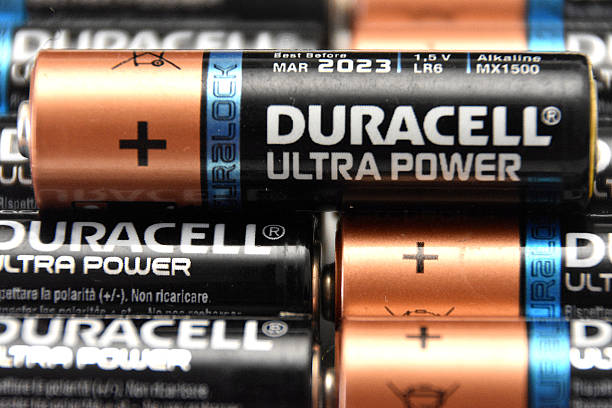
For a company like Imdaad, Farnek, EFS Facilities, Emrill, or Transguard managing thousands of sites across the GCC, battery category management is not a minor administrative exercise. It is a genuine cost control and risk management opportunity. Standardizing on two approved brands (Duracell and Energizer are the standard specification for FM-managed commercial properties across the GCC), two approved SKU sets, and one approved supplier per market reduces procurement complexity, eliminates grey market risk, and gives finance a clean audit trail.
The companies that have done this well report three outcomes: lower per-unit costs through volume commitment, faster reordering at site level, and zero counterfeit incidents after supplier consolidation.
The Real Cost of Ad-Hoc Battery Procurement Across Sites
Most FM companies do not know their true annual battery spend. It is distributed across dozens of cost centres, charged to maintenance budgets, and purchased by site supervisors with petty cash or corporate cards. This is the first problem.
The second problem is price inconsistency. A site manager in Abu Dhabi ordering 40 packs of Duracell AA from a local supermarket pays full retail. Your central procurement team, with volume leverage, could source the same product for significantly less in bulk carton format from an authorized distributor. The margin between retail and wholesale battery pricing in the GCC is substantial, and FM companies that have never formalized this category are routinely leaving that savings on the table.
The third problem is counterfeit exposure. Counterfeit Duracell batteries are a documented problem in the UAE and wider GCC market, with grey market product circulating through Deira traders and informal Al Quoz suppliers. On an FM-managed site, a counterfeit battery in a smoke detector or access controller is not just a procurement failure. It is a liability.

Step 1 — Conducting a Battery Spend Analysis Across Your FM Contract
Before you can build an AVL or negotiate a supply agreement, you need to know what you are actually buying. A battery spend analysis for a multi-site FM company has four components:
- Volume by SKU: How many AA, AAA, C, D, 9V, and coin cell batteries are consumed per month across all sites? Break this down by site type (commercial office, hotel, industrial, government).
- Brand mix: What proportion of spend is Duracell, Energizer, or generic/unbranded? Unbranded spend is the first category to eliminate.
- Procurement channel: What share of batteries is bought centrally versus ad-hoc at site level? The ad-hoc figure is your savings opportunity.
- Price variance: What are sites paying per unit? Document the range from lowest to highest. The gap is usually significant.
This analysis does not require months of data collection. In most FM contracts, maintenance management system (MMS) data and petty cash records contain enough information for a 90-day spend profile. That is sufficient to baseline the category and begin vendor qualification.
|
Spend Analysis Input |
Where to Find It |
|
SKU volume by site |
MMS / CAFM system maintenance logs |
|
Brand mix |
Petty cash receipts, corporate card statements |
|
Procurement channel split |
Central PO data vs site purchase records |
|
Unit price variance |
Supplier invoices and retail receipts from site supervisors |
|
Annual total |
GL / cost centre coding under maintenance materials |
Step 2 — Setting Vendor Evaluation Criteria for Battery Suppliers
Once you have a spend baseline, you need to define what a qualified battery supplier looks like. FM procurement standards in the GCC have matured significantly. ISO 9001-audited suppliers, VAT-compliant invoicing, and certificate of origin (COO) documentation are standard requirements. For cross-border supply within the GCC, add UN38.3 compliance for lithium batteries and the ability to provide Delivered Duty Paid (DDP) terms.
The vendor evaluation criteria for a battery AVL should cover five areas:
1. Brand Authorization
The supplier must be an authorized distributor of Duracell and/or Energizer. This is the single most important criterion for eliminating counterfeit risk. An authorized distributor can provide batch-level traceability and manufacturer-backed authenticity verification. A grey market trader cannot.
2. GCC-Wide Coverage
A single approved supplier covering the UAE, Saudi Arabia, Qatar, Kuwait, Oman, and Bahrain eliminates the need for country-by-country vendor qualification. Look for a supplier with active cross-border shipping capability and documented delivery times to each GCC market.
3. Documentation Capability
FM procurement teams require commercial invoices, packing lists, certificates of origin, and VAT-compliant documentation as standard. For lithium batteries, UN38.3 certification is required for cross-border shipping. Confirm the supplier provides all of these as part of their standard commercial process, not as special requests.
4. Procurement Workflow Flexibility
GCC FM companies operate on Local Purchase Order (LPO) workflows in Kuwait and Oman, standard PO/RFQ processes in Saudi Arabia and Qatar, and blanket order arrangements in the UAE. An approved supplier must be able to match your procurement workflow, not the other way around. Confirm they support: LPO processing, blanket purchase order arrangements, itemized quotations by site or cost centre, and recurring scheduled drops.
5. SKU Availability and Inventory Depth
Your approved supplier must be able to supply your full SKU list consistently, not just the fast-moving AA/AAA lines. Confirm availability of Duracell Procell (bulk carton commercial format), Energizer Industrial, specialist lithium batteries, and coin cells across the volume you need.
|
Need to qualify a battery supplier for your FM AVL? Sea Wonders is an authorised Duracell and Energizer distributor shipping to all GCC markets. We provide ISO-compliant documentation, DDP delivery, and LPO/PO workflow support across UAE, Saudi Arabia, Qatar, Kuwait, Oman, and Bahrain. WhatsApp +971 56 216 2730. Quotation within 2 hours. |
Step 3 — Building Your Battery AVL (Approved Vendor List)
The battery AVL is a formal document that lists the approved supplier(s), the approved brands and SKUs, the procurement process, and the documentation requirements. For most FM companies, one primary supplier and one backup is the right structure. Single-source dependency on a critical consumable is a risk, but over-fragmenting the category undermines the standardization benefit.
The AVL entry for a battery supplier should include:
- Company name, trade licence number, and UAE TRN (Tax Registration Number)
- Brand authorization confirmation (Duracell and/or Energizer authorized distributor status)
- Coverage map: which GCC markets can they supply, with documented transit times
- Standard documentation package: commercial invoice format, COO issuance capability, UN38.3 for lithium
- Pricing agreement reference: unit prices, carton prices, and volume tier structure
- Procurement contact and response time commitment (quotation within 2 hours is reasonable for a well-run battery supplier)
- Annual review date
Once the AVL entry is complete and approved through your supplier qualification process, site managers receive a single instruction: order batteries from the approved supplier only. Central procurement handles the blanket order and pricing; site managers raise reorder requests against the standing agreement.
Step 4 — Standardizing SKUs Across Sites (Reduce 20 Battery Types to 5)
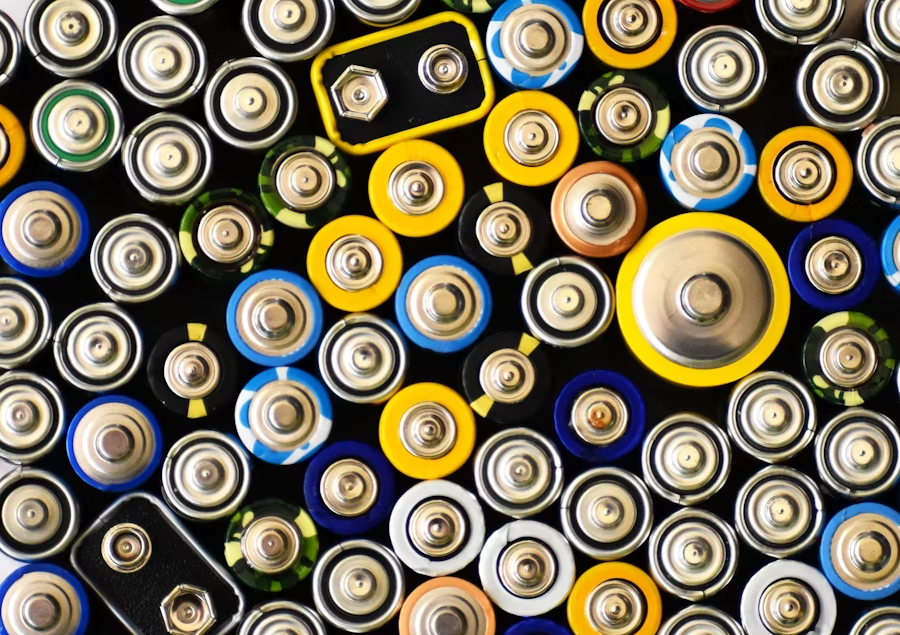
SKU proliferation is one of the biggest inefficiencies in FM battery management. A company that has never standardized its battery category will typically find 15 to 25 different battery SKUs in active use across its portfolio: multiple brands in the same size, different quality tiers for the same application, and specialty batteries that were specified for one site and somehow spread to others.
The goal of SKU rationalization is to reduce this to a manageable approved list, typically five to eight SKUs, covering all applications across your FM contract. A practical standard SKU set for a GCC FM portfolio looks like this:
|
Approved SKU |
Application |
|
Duracell Procell AA (bulk carton) |
General maintenance, office equipment, room remotes (hotels), handheld devices |
|
Duracell Procell AAA (bulk carton) |
Smaller remote controls, wireless devices, access control panels |
|
Energizer Industrial AA (bulk carton) |
High-drain devices, fire and safety equipment, sensors and detectors |
|
Duracell Lithium AA |
Extreme temperature environments (outdoor sensors, equipment in 50+ degrees C conditions) |
|
Duracell Coin Cell CR2032 |
Smart access controllers, key fobs, meters, small sensors |
|
Energizer Industrial 9V |
Smoke detectors, fire alarm devices, gas monitors |
This is a starting structure. Your actual approved SKU list will depend on your contract scope. The principle is the same: map every device type in your FM contract to one approved battery SKU, then cut everything else.
Once SKU rationalization is complete, purchasing becomes simpler, stock management at site level becomes predictable, and bulk pricing becomes achievable because volume is concentrated on fewer lines.
Step 5 — Negotiating a GCC-Wide Supply Agreement
With a spend baseline, an approved vendor, and a standardized SKU list, you are in a strong position to negotiate a GCC-wide supply agreement. The key commercial elements to structure are:
|
Commercial Element |
What to Negotiate |
|
Unit pricing by SKU |
Volume-based pricing tiers. Commit to a monthly or quarterly carton volume per SKU in exchange for a fixed unit price. |
|
Blanket PO arrangement |
A standing purchase order covering 12 months with monthly call-off. Reduces administrative load for both parties. |
|
Documentation standard |
Agree the exact invoice format, COO documentation frequency, and any site-specific coding requirements upfront. |
|
Lead time commitment |
Set maximum lead times by GCC market. UAE same or next day. Saudi 2-4 days. Kuwait/Oman/Bahrain 2-4 days. Qatar 2-3 days. |
|
Emergency supply protocol |
Agree a process for urgent site requests outside the normal reorder cycle. A quality supplier will quote and ship within 24 hours on request. |
|
Annual pricing review |
Lock the price for 12 months with a renegotiation clause at renewal. Avoid open pricing that exposes you to spot-market volatility. |
A well-structured supply agreement converts your battery category from an unmanaged, fragmented spend into a predictable cost line. Finance gets an audit trail. Site managers get a simple reorder process. Central procurement gets volume leverage and supplier accountability.
|
Ready to set up a GCC-wide battery supply agreement? Sea Wonders supports blanket PO arrangements, scheduled monthly drops, and full GCC coverage from our Bur Dubai base. We supply Duracell and Energizer to FM companies across the UAE, Saudi Arabia, Qatar, Kuwait, Oman, and Bahrain. WhatsApp +971 56 216 2730. We respond within 2 hours. |

Managing Multi-Country Battery Procurement (UAE, Qatar, Saudi, Kuwait, Oman)
GCC multi-country procurement introduces logistics and documentation complexity that a single-country supplier cannot resolve. Each GCC market has its own customs requirements, transit routes, and procurement norms. An approved GCC battery supplier needs to handle all of these without the FM company needing to manage country-by-country vendor relationships.
|
GCC Market |
Key Logistics and Procurement Notes |
|
UAE (Dubai) |
Same-day or next-day delivery from Bur Dubai. DDP standard. UAE VAT invoicing required. |
|
Saudi Arabia |
2-4 working days via Dammam or Riyadh freight. SABER product registration for regulated battery categories. PO/RFQ procurement standard. DAP or DDP available. |
|
2-3 working days. Air or road freight via Salwa border. Commercial invoice and COO standard. DDP available. |
|
|
Kuwait |
2-4 working days. Land freight via Al Nuwaisib/Abdali border. LPO procurement workflows standard. DDP available. |
|
1-3 working days to Muscat via Hatta corridor. DAP preferred by most Oman buyers. UN38.3 for lithium batteries as standard. |
|
|
1-2 working days via King Fahd Causeway. GCC customs union membership simplifies documentation. DDP available. |
A Dubai-based authorized distributor with active cross-border shipping to all GCC markets is the most practical single-source solution for FM companies managing multi-country portfolios. The alternative, qualifying a local battery supplier in each GCC country, multiplies vendor management complexity with no material benefit.
Counterfeit Battery Risk in the GCC FM Market
Counterfeit Duracell batteries are a documented problem in the UAE and GCC market. Grey market product enters through informal trading channels in Deira, Al Quoz, and parallel import routes. Counterfeit batteries typically have shorter actual shelf life than labeled, inconsistent voltage output, and no batch traceability. On a commercial FM site, this creates three categories of risk.
The first is operational risk. A counterfeit battery in a fire detector, access controller, or emergency lighting system that fails prematurely creates a safety incident and a liability exposure for the FM contractor.
The second is audit and compliance risk. If your FM contract specifies Duracell or Energizer and you are delivering counterfeit product, you are in breach of specification. A client audit that surfaces counterfeit batteries on an FM-managed site is a contract risk.
The third is financial risk. Counterfeit batteries often appear cheaper per unit but have shorter service life, meaning higher replacement frequency and higher total cost of ownership despite the lower sticker price.
The solution is supply chain control: buy from an authorized distributor who can provide batch-level traceability and a clear chain of custody from the manufacturer. Grey market price savings are not worth the operational and commercial risk on an FM contract.
FAQ — FM Battery Procurement and Vendor Management
What criteria should an FM company use to evaluate and approve a battery vendor?
The five core criteria are: brand authorization (must be an authorized Duracell and/or Energizer distributor), GCC coverage capability, documentation package (commercial invoice, COO, UN38.3 for lithium, VAT-compliant invoicing), procurement workflow flexibility (LPO, blanket PO, itemized quotations), and consistent SKU availability in the volumes you require.
How do you build a battery AVL for a multi-site GCC FM contract?
Start with a spend analysis to baseline volume, brand mix, and procurement channel. Define vendor evaluation criteria aligned with your FM procurement standards. Qualify one or two approved suppliers through your formal supplier approval process. Formalize the AVL entry with pricing, documentation requirements, and an annual review schedule. Communicate the approved supplier to site managers and require all battery purchases to route through the standing agreement.
What are the risks of using non-approved battery vendors on FM sites?
Counterfeit battery exposure is the primary risk: grey market Duracell in particular is a documented problem in the UAE and GCC. Additional risks include price inconsistency, documentation gaps for audit purposes, and the operational risk of sub-standard batteries in safety-critical devices such as smoke detectors, access controllers, and emergency lighting systems.
How do you consolidate from multiple battery suppliers to one approved GCC vendor?
Conduct a spend analysis first to understand what you are buying and where. Identify a single supplier capable of covering all GCC markets with appropriate documentation and procurement workflow support. Negotiate a GCC-wide blanket purchase order agreement with fixed pricing per SKU. Communicate the approved supplier to all site managers and phase out ad-hoc procurement over a defined transition period, typically 30 to 60 days.
What documentation should an approved battery supplier provide?
Standard documentation for GCC FM procurement includes: commercial invoice (VAT-compliant for UAE), packing list, certificate of origin (UAE for Dubai-based suppliers), and UN38.3 compliance certificates for lithium batteries. For cross-border shipments, confirm the supplier can provide Delivered Duty Paid (DDP) documentation covering customs clearance costs.
How do you calculate total annual battery spend across a large FM contract?
Pull 90 days of data from three sources: your maintenance management system (equipment servicing records often capture battery replacements), petty cash and corporate card statements by site, and any centrally processed battery purchase orders. Annualize the 90-day figure and apply a 10 to 15 per cent buffer for emergency and unplanned purchases. This gives you a workable spend baseline for category planning and supplier negotiation.
Why are Duracell and Energizer the preferred brands for FM-managed commercial properties?
Both brands are specified in the facility standards of most major commercial landlords and asset managers in the GCC. Duracell Procell Intense is rated to 54 degrees C, which is operationally important in a GCC climate where ambient temperatures regularly exceed 50 degrees C. Energizer Industrial has a seven-year shelf life, making bulk stockpiling safe and cost-effective. Both brands offer consistent batch traceability through authorized distributors, which is essential for FM audit and compliance purposes.
Can Sea Wonders supply batteries to all GCC countries under one FM supply agreement?
Yes. Sea Wonders ships Duracell and Energizer batteries from Bur Dubai to the UAE, Saudi Arabia, Qatar, Kuwait, Oman, and Bahrain. We support blanket PO arrangements, LPO workflows, monthly recurring drops, and full commercial documentation for each GCC market. WhatsApp +971 56 216 2730 to discuss a GCC-wide supply arrangement.
Related Blogs



Bose SoundLink Bluetooth Speaker
£50.00£60.00
Canon's press material for the EOS 5D states that it 'defines (a) new D-SLR category', while we're not typically too concerned
- Availability :In Stock