
 Locate Our Store
 +971 562162730
 AED
AED SAR
SAR KWD
KWD QAR
QAR BHD
BHD OMR
OMR


Duracell for Commercial Use: Building a Standard Battery List for Your Company
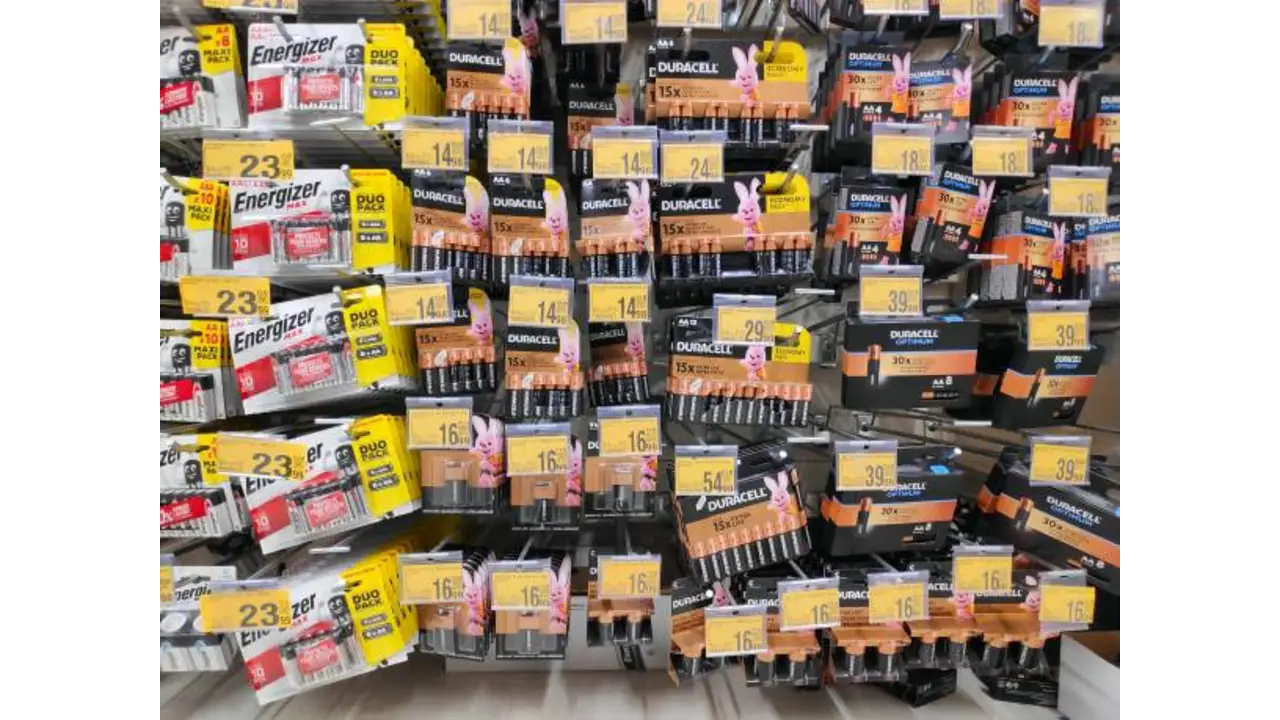
Introduction
If your company buys batteries regularly, you’ve probably felt the hidden costs: different branches buying different brands, staff grabbing “whatever is available,” devices failing at awkward moments, and procurement drowning in small invoices. In Dubai and across the UAE, battery buying becomes even more operationally sensitive because inventory often sits in storerooms, vans, and warehouses where heat exposure and rotation discipline matter.
The fix is not “buy more batteries” or “buy the most expensive battery.” The fix is a standard battery list: a small, approved set of Duracell batteries SKUs (plus clear rules) that covers 90–95% of your needs, keeps devices consistent, and makes replenishment predictable.
This guide gives you a practical, business-ready playbook to build your company’s standard Duracell battery list—whether you run an office network, hospitality property, facilities team, retail chain, or multi-branch operation.

What a “Standard Battery List” Means in Commercial Terms
A standard battery list is more than “AA and AAA.” It includes:
-
Approved SKUs (sizes + codes)
-
Approved line (e.g., Duracell Procell vs consumer packs)
-
Approved variants (alkaline vs lithium vs rechargeable where relevant)
-
Acceptance rules (minimum shelf life, no substitutions, packaging format)
-
Replenishment rules (min/max stock, FEFO rotation, scheduled deliveries)
If you only choose SKUs but don’t set rules, the list won’t stick. People will substitute, mix batches, and recreate chaos.
Why Standardization Saves Money (Even Before You Negotiate Price)
Standardization reduces cost in ways most finance teams don’t see on the unit price line:
-
Fewer emergency purchases (same-day orders cost more and invite substitutions)
-
Fewer device incidents (random low-quality or aged stock causes failures)
-
Less labor waste (fewer “battery runs,” fewer repeated replacements)
-
Cleaner invoicing (fewer vendors, fewer transactions, better itemization)
-
Better inventory accuracy (less “mystery stock” in drawers and toolkits)
Put simply: a standard list reduces friction, and friction is expensive.
Step 1: Audit Your Device Fleet (Fast Method)
You don’t need a full asset register to start. Use this practical audit method:
A) Create four device groups
Walk through your sites (or ask each department to report) and list devices by battery family:
-
AA devices
-
AAA devices
-
9V devices (only if present)
-
Coin/button cell devices (CR2032, CR2025, LR44, etc.)
-
Specialty devices (like CR123A if you use it)
You’ll usually discover that AA and AAA cover the majority of your consumption.
B) Identify your top battery consumers
Ask: which devices burn batteries fastest or cause the most downtime?
Examples:
-
scanners and handheld devices
-
high-use remotes in hospitality
-
security equipment
-
sensors that trigger repeated maintenance calls
C) Mark “critical devices”
Critical devices are those you can’t afford to fail:
-
safety alarms (device dependent)
-
security tools
-
access control and critical sensors
-
compliance-sensitive devices
These get stricter rules (no substitutions, more frequent checks).
Step 2: Choose the Right Duracell Line for Your Operating Style
Many companies fail standardization by mixing “whatever pack is available.” In commercial environments, the most common decision is:
Duracell Procell as the corporate baseline
Procell is typically favored for business standardization because it aligns with:
-
bulk purchasing
-
warehouse/engineering store inventory
-
multi-branch replenishment
-
consistent procurement
If your company has facilities teams, engineering stores, service vans, or multiple branches, a Procell baseline often makes the program easier to control.
Duracell Plus Power as a controlled convenience layer
Plus Power (consumer pack formats) can be useful when:
-
you have smaller offices with low consumption
-
you want limited emergency packs for reception or duty managers
-
you need retail-pack convenience for a controlled use case
Important rule: if you allow both, define a policy:
-
Procell = baseline standard (planned supply)
-
Plus Power = controlled exception (emergency or low-volume sites)
This prevents “retail pack drift,” where every department starts buying independently again.
Step 3: Build Your Core SKUs (Keep It Tight)
A commercial standard list should be lean. The goal is not to cover every possible battery ever made—it’s to cover what you actually use.
Start with the “Core 3–5”
Most organizations can cover the majority of usage with:
-
AA alkaline (Duracell, baseline line)
-
AAA alkaline (Duracell, baseline line)
-
CR2032 (only if you have devices that use it)
-
CR2025 (only if you have devices that use it)
-
9V (only if required)
That’s it. Many companies overcomplicate their list by adding C/D and multiple coin cell codes “just in case,” then they end up with dead inventory.
Add “Optional SKUs” only if you can prove usage
Optional SKUs might include:
-
C and D batteries (if you truly use them in torches or equipment)
-
CR123A (if you have cameras/security devices that require it)
-
LR44 (if you have thermometers/gadgets using it)
Decision rule:
If a battery type is used in only one device model in one location, keep it as a controlled “special order,” not a company-wide standard.
Step 4: Define an Exceptions Policy (This Prevents Chaos)
Even with a tight list, some devices will have special needs. The key is to control exceptions.
A) High-drain exceptions
If you have devices that burn through AA/AAA frequently (scanners, high-use tools), you may consider:
-
a different approved variant for that device set
-
or a rechargeable program if your operations can support charging discipline
Don’t let exceptions spread. Document them:
-
Which device model?
-
Which department?
-
Which sites?
-
Who approves changes?
B) Critical device policy (no substitutions)
For critical devices:
-
define the exact approved battery requirement
-
enforce “no substitutions without written approval”
-
avoid mixing old/new cells in the same device
C) Coin cells are “exact-code only”
Coin cells are where most wrong purchases happen. Your policy should be:
-
“Use the exact code printed on the device/old cell (CR2032 vs CR2025 is not interchangeable by default).”
Step 5: Procurement Acceptance Rules (Dubai/UAE Ready)
A standard list fails if incoming stock quality is inconsistent. Use these acceptance rules:
1) Minimum remaining shelf life on delivery
Set a standard such as:
-
“Minimum remaining shelf life on delivery: ___ months.”
Why it matters:
-
slow branches and storerooms hold stock longer
-
near-expiry inventory increases failure and leakage risk
-
e-commerce sellers face returns if customers receive older stock
2) Prefer single-expiry cartons
Mixed expiry is manageable but increases handling complexity. Prefer single-expiry cartons for corporate supply.
3) No substitutions without approval
Your PO should state:
-
“No substitutions without written approval.”
This protects your standard list and prevents drift.
4) Packaging format rules
Define what you want:
-
cartons/cases for warehouse supply
-
retail packs only for controlled use cases (if allowed)
5) VAT invoice line-item requirements
Require invoices to list clearly:
-
Duracell line (Procell or consumer line)
-
size/code (AA/AAA/CR2032/9V)
-
quantity and unit price
-
VAT and totals
This reduces invoice disputes and finance delays.
6) Receiving inspection window
Define a receiving inspection window to report issues:
-
damaged cartons
-
unclear expiry markings
-
inconsistent packs
-
leakage signs
Step 6: Inventory Controls That Make the List Work
Even a perfect list fails without simple inventory controls.
A) Use FEFO rotation (First Expiry, First Out)
Batteries should be rotated by expiry date, not only by “received date.” FEFO prevents near-expiry cartons from hiding behind newer stock.
B) Store correctly (Dubai heat discipline)
-
keep stock away from sun and hot zones
-
avoid storing near loading bay doors or windows
-
elevate cartons off the floor
-
avoid crushing cartons with uncontrolled stacking
-
keep partial cartons labeled and controlled
C) Central store vs branch store model
For multi-branch businesses:
-
keep the bulk inventory centrally (better control)
-
send branches only what they consume (prevents overstock and expiry waste)
D) Branch min/max levels (PAR)
Set min/max levels for each branch for the top SKUs:
-
AA and AAA usually need min/max in every site
-
coin cells might be centralized or limited to sites that actually use them
A simple approach:
-
Min = 1–2 weeks of usage
-
Max = 4–6 weeks of usage (for high movers)
Adjust based on consumption and delivery frequency.
E) Scheduled replenishment beats emergency buying
Same-day buying is useful as a backup, but as a default it leads to:
-
higher costs,
-
more substitutions,
-
and lower traceability.
Scheduled weekly/bi-weekly replenishment supports consistency.
The Standard Duracell Battery List Template (Commercial-Friendly)
Below is a structured template you can adapt. Keep it readable for procurement and operations—this is what gets adopted.
Tier 1: Core company-wide SKUs (most businesses)
Duracell AA (alkaline)
-
Typical uses: remotes, peripherals, many devices
-
Stocking rule: keep in all branches with min/max levels
Duracell AAA (alkaline)
-
Typical uses: smaller remotes, peripherals, sensors (device dependent)
-
Stocking rule: keep in all branches with min/max levels
Tier 2: Common optional SKUs (only if you use them)
Duracell CR2032 (3V coin cell)
-
Typical uses: key fobs, sensors, CMOS, small electronics
-
Stocking rule: keep centrally or in relevant branches only
Duracell CR2025 (3V coin cell)
-
Typical uses: some key fobs and remotes
-
Stocking rule: only if device audit proves usage
Duracell 9V (device dependent)
-
Typical uses: alarms/test devices (model dependent)
-
Stocking rule: keep only if required; treat as controlled SKU
Tier 3: Specialized SKUs (use-case driven)
Duracell C / D
-
Uses: torches/equipment (if applicable)
-
Stocking rule: don’t stock unless proven usage exists
Duracell LR44 (1.5V button cell)
-
Uses: thermometers, toys, small gadgets
-
Stocking rule: for specific departments/sites only
Duracell CR123A (3V cylindrical)
-
Uses: cameras, flash units, security devices
-
Stocking rule: critical if used; stock centrally with minimum level

Implementation Roadmap (30-Day Rollout That Actually Sticks)
Week 1: Audit and simplify
-
collect device battery requirements by department/site
-
identify top SKUs and eliminate rarely used types from “standard” list
-
choose baseline Duracell line (Procell for corporate supply in most cases)
Week 2: Lock procurement rules
-
set shelf-life acceptance rules
-
enforce no substitutions
-
confirm invoice formatting requirements
-
define packaging formats (cartons vs retail packs)
Week 3: Set branch min/max and storage layout
-
define min/max per branch for AA/AAA
-
centralize low-velocity coin cells if needed
-
set up FEFO layout and expiry labels in the central store
Week 4: Run the first replenishment cycle and review
-
execute scheduled replenishment
-
track consumption and adjust min/max
-
identify recurring exception devices and formalize policy
Within 30 days, most organizations see:
-
fewer emergency buys,
-
fewer device issues,
-
and cleaner procurement workflows.
Common Mistakes That Break Commercial Battery Programs
Mistake 1: Too many SKUs “just in case”
This creates dead stock and expiry risk.
Fix: Keep the list lean and add only what the audit proves.
Mistake 2: Allowing substitutions
Substitutions destroy standardization.
Fix: Require approval for any change.
Mistake 3: No shelf-life acceptance rule
Without it, you can receive aged stock that wastes your shelf-life advantage.
Fix: Minimum remaining shelf life on delivery.
Mistake 4: Branches buying independently
This reintroduces mixed brands and formats.
Fix: Centralize supply and replenish on schedule.
Mistake 5: Ignoring FEFO rotation
Batteries should rotate by expiry.
Fix: Label cartons clearly and pick earliest expiry first.
FAQs
What Duracell batteries should a company standardize on first?
Most companies start with AA and AAA alkaline as the core, then add coin cells (like CR2032) only if device usage requires it.
Procell vs Plus Power: which is better for facilities teams?
Facilities teams generally benefit from a Procell-style baseline because it aligns with bulk replenishment, consistent inventory control, and multi-site standardization.
How many battery SKUs should we keep?
As few as possible while covering your real device needs. Many businesses can run effectively with 3–6 SKUs total.
What shelf life should we accept for bulk orders?
Set a minimum remaining shelf-life requirement based on your consumption speed and storage conditions. Slow-moving sites should require more remaining shelf life than high-rotation sites.
Can we use Energizer batteries instead of Duracell?
Some organizations standardize on Energizer batteries or keep them as a controlled alternative. The same standardization principles apply: keep a tight SKU list, enforce no substitutions, and rotate using FEFO.
Final Takeaway
Commercial battery purchasing gets expensive when it’s unstructured. The solution is a standard Duracell battery list backed by rules:
-
start with a small set of core SKUs (AA/AAA first),
-
choose a baseline line that fits corporate operations,
-
define exceptions and critical device policies,
-
enforce shelf-life and no-substitution rules,
-
and run inventory with FEFO rotation and branch min/max levels.
Do that, and batteries stop being a recurring operational problem—and become a predictable, controlled consumable across your company.
Related Blogs


Bose SoundLink Bluetooth Speaker
£50.00£60.00
Canon's press material for the EOS 5D states that it 'defines (a) new D-SLR category', while we're not typically too concerned
- Availability :In Stock