Locate Our Store
 +971 562162730
 AED
AED SAR
SAR KWD
KWD QAR
QAR BHD
BHD OMR
OMR


Bulk Battery Buying in Dubai: MOQ, VAT Invoice, and Delivery SLA Checklist (2026)
Introduction
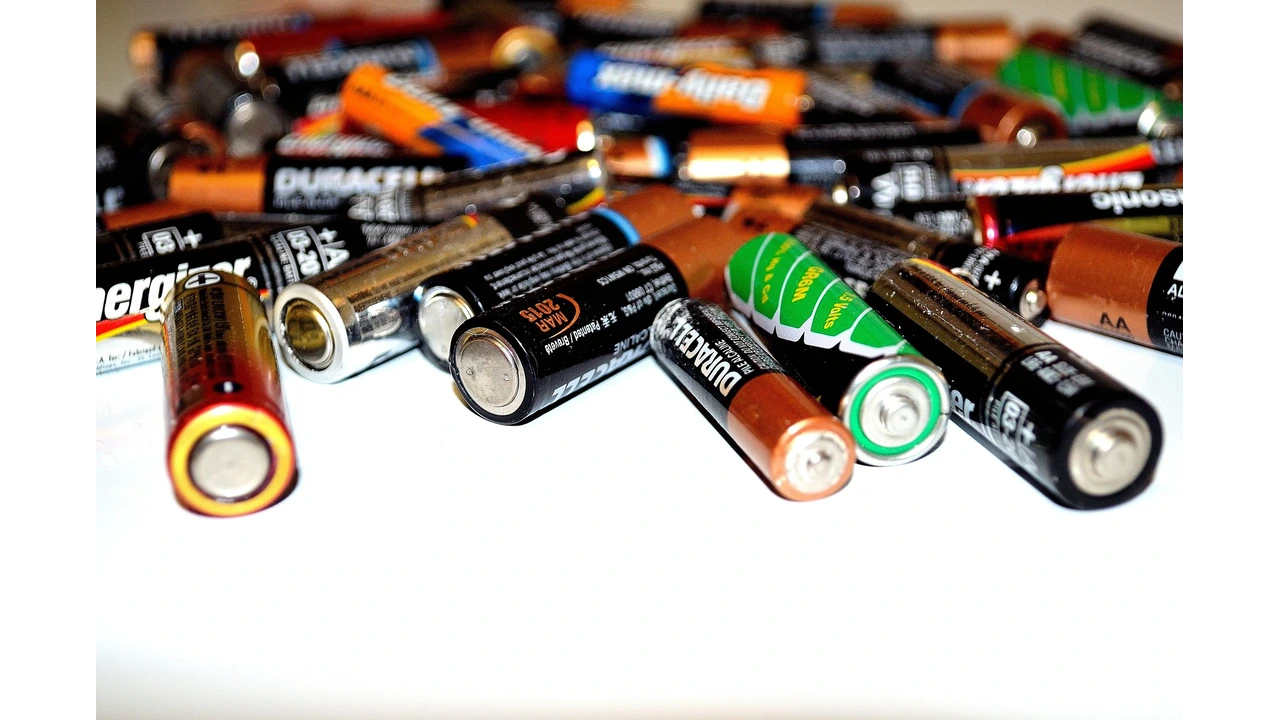
Buying batteries in bulk in Dubai can be smooth and cost-effective—or it can turn into a slow bleed of mismatched specs, invoice rejections, delayed deliveries, and warranty disputes. The difference usually comes down to three things you lock in before you pay a deposit or raise a purchase order: Visit Sea wonders for duracell batteries and energizer batteres or contact us through our official website.
-
MOQ and commercial terms (what “bulk” really means, and what it truly costs)
-
VAT invoice compliance (so finance can book it cleanly and reclaim input VAT where eligible)
-
Delivery SLA clarity (so “next-day” becomes an accountable service level, not a promise)
This 2026 guide is written for procurement teams, resellers, fleet and facilities managers, solar and backup-power installers, maintenance contractors, and any business regularly buying batteries by carton, pallet, or container.
What Counts as “Bulk” When Buying Batteries in Dubai
“Bulk” is not a fixed number. In Dubai, suppliers commonly treat these as bulk orders:
-
Carton-based orders (multiple packs of AA/AAA, small sealed lead-acid, motorcycle batteries)
-
Case/pallet orders (car batteries, telecom batteries, UPS blocks)
-
Mixed-SKU wholesale orders (a distributor bundle across several SKUs)
-
Project-driven buys (solar storage banks, facilities replacement programs, fleet maintenance stock)
-
Recurring scheduled buys (monthly/quarterly forecasts with agreed pricing)
The key point: bulk is a relationship model as much as it’s a quantity. Your leverage comes from predictability (forecasts, repeat orders) and reduced supplier friction (clear specs, fast payments, fewer disputes).

MOQ: How It’s Structured (and How to Negotiate It)
MOQ (Minimum Order Quantity) is rarely “one number.” It’s usually a combination of constraints designed to protect supplier margins and logistics. In Dubai’s market, you’ll see these common MOQ structures:
1) MOQ per SKU
Example: minimum 50 units of one model of automotive battery.
Buyer risk: overstocking slow-moving SKUs.
Negotiation move: Ask for “MOQ by family” (same voltage/capacity group) or MOQ by brand series, so you can mix sizes within a category.
2) MOQ per carton / case
Common for small formats or fast-moving retail SKUs.
Buyer risk: less customization of mix.
Negotiation move: Request a mixed carton option for the first order (“trial mix”), then standard cartons for replenishment orders.
3) MOQ per pallet
Frequent in warehouse-optimized operations.
Buyer risk: you pay for efficiency even if you don’t need it.
Negotiation move: Ask for split pallets with a handling fee instead of a hard MOQ. If your volumes grow, remove the handling fee later.
4) MOQ by value (minimum invoice amount)
Example: minimum AED amount per order.
Buyer risk: supplier may push unsuitable SKUs just to hit value.
Negotiation move: Convert value MOQ into monthly commitment, not per shipment. That gives you flexibility across weeks.
5) MOQ tied to pricing tier
The supplier’s “best” price may only apply above a certain quantity.
Buyer risk: you lock in too much inventory just to get the lowest unit price.
Negotiation move: Ask for tiered pricing with a ramp:
-
Tier 1 for first order (trial)
-
Tier 2 once you hit cumulative volume over 60–90 days
-
Tier 3 once you prove forecast accuracy and payment behavior
6) MOQ tied to import batch or production batch
Typical for specialty batteries or private label.
Buyer risk: long lead times and limited flexibility.
Negotiation move: Require batch traceability and confirmed shelf-life/manufacture date in the contract. If they’re ordering for you, you should control freshness and acceptance criteria.
The Real Cost of Bulk (Unit Price Is Only One Line)
Bulk purchases often fail because teams focus on unit price and ignore “landed cost.” Here are the hidden drivers that can erase savings:
Packaging, handling, and pallet charges
-
Export cartons vs local cartons
-
Palletization fees
-
Shrink wrap, labels, barcodes, item master creation costs
Return allowances and restocking penalties
If your project changes or a SKU misfits, what’s the return policy? Some suppliers offer “no returns” on bulk.
Warranty administration cost
The true cost is not just replacing a battery; it’s the labor, transport, downtime, and reputational hit.
Inventory carrying cost
For batteries, holding inventory is not neutral. You’re carrying:
-
shelf-life risk
-
storage condition risk (heat, ventilation)
-
slower rotation on niche SKUs
Delivery failures
A lower unit price doesn’t help if deliveries miss site schedules and you pay labor idle time or rush shipping.
Rule of thumb for bulk battery buys: If you can’t explain your landed cost and risk cost in one page, you’re not comparing suppliers fairly.
Specs and Compatibility: Prevent 80% of Disputes Before They Start
Batteries aren’t “generic commodities” once you scale. Before placing bulk orders, confirm specs in writing. For each SKU, capture:
Core technical specs
-
Chemistry (lead-acid, AGM, gel, lithium variants)
-
Nominal voltage
-
Capacity rating (and the test standard used)
-
Cold cranking amps (for automotive), or discharge rate specs (for UPS/telecom)
-
Terminal type and orientation
-
Dimensions and weight (critical for racks, battery trays, cabinets)
-
Safety and compliance marks relevant to your use case
Application fit
-
Automotive starting vs deep-cycle usage
-
UPS standby vs cyclic use
-
Solar storage compatibility (including BMS expectations for lithium packs)
Freshness and shelf-life
For many battery types, manufacturing date matters. Define:
-
acceptable manufacturing date window on delivery
-
storage requirements (temperature and stacking)
-
what constitutes “aged stock” and your right to reject it
Interchange / substitution rules
Substitution is a common source of conflict. If substitutions are allowed:
-
define “equivalent” (capacity, dimensions, terminal layout, warranty)
-
require approval before shipping substitutions
Pro tip: Make a one-page SKU sheet per battery category and attach it to every purchase order. Most “supplier mistakes” happen because your PO description was vague.
VAT Invoice Checklist (UAE): What Your Finance Team Will Reject
In bulk buying, VAT invoice issues can delay payment, block input VAT claims, and create audit exposure. The safest approach: pre-validate invoice format before the first large order, and require a corrected invoice within a defined time window.
Essential elements your tax invoice should include
While exact requirements depend on the current rules and whether it’s a standard or simplified tax invoice, your procurement team should ensure the invoice includes, at minimum:
-
Clearly marked as a Tax Invoice
-
Supplier legal name and address
-
Supplier tax registration number (TRN) if VAT-registered
-
Buyer legal name and address (your company)
-
Buyer TRN where applicable (commonly expected for B2B VAT documentation)
-
Unique invoice number (sequential identifier)
-
Invoice issue date
-
Date of supply (if different from issue date)
-
Description of goods (SKU/model and meaningful descriptors)
-
Quantity and unit price
-
Discounts (if any) and how they’re applied
-
Net amount (exclusive of VAT)
-
VAT rate and VAT amount
-
Total amount inclusive of VAT
-
Currency and totals clearly stated (and any required local currency VAT treatment depending on current guidance)
Common “invoice killers” in bulk battery orders
These are the issues that trigger finance rejections:
-
No TRN, or TRN inconsistent with supplier identity
-
Generic descriptions like “battery” without SKU/quantity clarity
-
VAT shown but totals don’t add up (rounding errors across many line items)
-
Credit notes issued without referencing the original tax invoice number
-
Multiple delivery notes combined incorrectly without clear supply dates
-
Wrong company name or address (especially for groups with multiple entities)
Practical procurement controls
-
Ask for a sample tax invoice before onboarding a supplier.
-
Put a clause in your PO: “Tax invoice must meet UAE VAT requirements; non-compliant invoices will be returned and payment terms begin upon receipt of compliant documentation.”
-
Require delivery note + signed proof of delivery to match the invoice line items.
2026 Readiness: E-Invoicing and Audit-Proof Paperwork
Across the region, digital invoicing expectations are rising, and businesses are increasingly asked to produce clean, structured documentation quickly. Whether your suppliers are early adopters or not, your goal is the same: reduce document friction.
What “ready” looks like for a buyer
-
You can receive invoices in a consistent format (even if PDF) with all required fields.
-
Every invoice line maps to your PO and goods receipt.
-
You can retrieve supporting documents quickly:
-
PO
-
goods receipt note (GRN)
-
delivery note
-
proof of delivery
-
warranty terms
-
batch/lot info (where applicable)
What to add to your onboarding checklist in 2026
-
Confirm the supplier’s invoice format and correction process
-
Confirm document retention expectations (how long they keep invoices and delivery proofs)
-
Confirm point of contact for invoice fixes (not “sales,” but operations/finance)
Delivery SLA Checklist: Turn “Fast Delivery” into a Measurable Contract
Dubai’s logistics can be excellent—until it isn’t. For bulk batteries, delays are often caused by:
-
stock mismatches
-
last-minute substitutions
-
packaging delays
-
access and delivery restrictions at sites
-
split shipments not communicated clearly
A delivery SLA (Service Level Agreement) should define what the supplier is responsible for and what you’re responsible for. At minimum, define these:
1) Lead time definition
-
Does lead time start from PO acceptance or payment receipt?
-
Is it calendar days or business days?
-
What counts as “accepted” (signed confirmation, system acceptance, written email)?
2) Cut-off times
Same-day or next-day promises often depend on cut-off times. Put the cut-off time in writing.
3) Delivery window
Define:
-
delivery hours
-
appointment requirements
-
access constraints (e.g., industrial sites, malls, restricted buildings)
4) Partial shipments and backorders
-
Are partial shipments allowed?
-
How are backorders communicated (timeline, weekly updates)?
-
Do you accept partial invoices, or only on full completion?
5) Substitutions
Define a clear rule:
-
no substitutions without written approval
-
define “equivalent” specs
-
price protection if substitution is lower grade
6) Damage and discrepancy process
Batteries are heavy and damage can happen. Define:
-
packaging standards
-
inspection window (e.g., within 24–48 hours)
-
replacement timeline
-
who pays for reverse logistics
7) OTIF targets (On-Time In-Full)
OTIF is a simple KPI: did the order arrive on time and complete?
Set a target (e.g., 95%+) and require monthly reporting for recurring orders.
8) Penalties or service credits (for serious contracts)
For larger recurring commitments, consider:
-
service credits for missed SLA
-
expedited shipping at supplier cost when delays are supplier-caused
-
the right to cancel backorders after a defined delay
Quality and Warranty: The Clauses That Save You Later
Bulk buying magnifies quality issues. A tiny defect rate becomes a big operational burden at scale.
Warranty terms to confirm in writing
-
Warranty period (and when it starts: invoice date vs delivery date vs commissioning date)
-
What’s covered (manufacturing defects, capacity degradation thresholds, etc.)
-
What’s excluded (incorrect installation, over-discharge, heat exposure, misuse)
-
Claim process (documents required, testing method, replacement timeline)
Testing and failure handling
Define the failure handling workflow:
-
Does the supplier require returned units for testing?
-
Who bears transport cost?
-
What is the decision timeline?
-
Do they provide advance replacement for critical operations?
Batch traceability (especially important at scale)
Ask for:
-
batch/lot numbers on cartons or documentation
-
manufacturing date evidence
-
traceability from supplier to original source

Lithium and Shipping Restrictions: What Buyers Must Confirm
If you’re buying lithium-based batteries (or any regulated type), bulk logistics can trigger additional requirements:
-
special labeling and packaging standards
-
carrier restrictions (especially for air transport)
-
storage constraints
Even when the supplier handles shipping, you should confirm:
-
they can legally ship the battery type through the chosen route
-
they provide the correct hazard documentation where required
-
they’ll bear the cost if shipments are rejected due to incorrect paperwork
If you’re not sure whether your battery type is restricted, treat it as a risk item and ask for written confirmation of shipping compliance.
The 1-Page Bulk Battery Buying Checklist (Copy/Paste)
Use this as a procurement-ready checklist for any supplier conversation.
A) MOQ & Pricing
-
MOQ type confirmed (per SKU / carton / pallet / value / batch)
-
Price breaks documented by quantity tier
-
Mixed-SKU MOQ allowed? If yes, rules documented
-
Handling/palletization fees disclosed
-
Return policy and restocking terms agreed
-
Payment terms agreed (deposit, balance, credit days)
-
Validity period for quoted pricing confirmed
B) Product Specs & Acceptance
-
Chemistry, voltage, capacity, and test standard specified
-
Dimensions and terminal layout confirmed
-
Application fit confirmed (starter vs deep-cycle vs standby)
-
Manufacturing date / freshness window agreed
-
Substitutions policy agreed (approval required, equivalence rules)
-
Packaging standards agreed (carton labeling, barcodes if needed)
-
Inspection and rejection window defined
C) VAT Invoice & Documentation
-
Supplier legal name, address, TRN verified
-
Buyer details and TRN (if applicable) captured correctly
-
Invoice format pre-approved with finance
-
Invoice includes: invoice number, dates, itemized lines, VAT rate/amount, totals
-
Delivery note and proof of delivery required for payment release
-
Credit note process defined (references original invoice)
D) Delivery SLA
-
Lead time definition agreed (start point + days type)
-
Cut-off time agreed for same/next-day claims
-
Delivery window + appointment rules defined
-
Partial shipment/backorder rules defined
-
OTIF target agreed for recurring supply
-
Damage/discrepancy process defined (inspection window + replacement timeline)
-
Escalation path documented (ops contact + after-hours contact if needed)
E) Warranty & After-Sales
-
Warranty duration and start point defined
-
Claim process defined (documents, testing, timeline)
-
Return logistics responsibilities defined
-
Batch traceability requirements agreed
Supplier Scorecard Template (Simple and Effective)
Score each supplier 1–5 in each category and keep it on file:
-
Commercials: pricing transparency, flexible MOQs, payment terms
-
Documentation: tax invoice quality, delivery paperwork accuracy
-
Reliability: OTIF performance, communication quality, escalation speed
-
Product confidence: spec accuracy, freshness, defect rate, warranty fairness
-
Operational fit: packaging, labeling, warehousing compatibility, returns handling
A supplier with the lowest unit price but weak documentation and reliability often costs you more within 60–90 days.
Email Script You Can Send to Any Supplier (No Drama, High Clarity)
Subject: Bulk Battery Order Requirements – MOQ, VAT Invoice, Delivery SLA
Hello [Name],
We are evaluating suppliers for bulk battery purchases in Dubai. Please confirm the following in writing:
-
MOQ structure and tiered pricing for the attached SKUs (including any palletization/handling fees).
-
Product specifications and acceptance criteria (chemistry, voltage, capacity, dimensions, terminal layout, manufacturing date window).
-
VAT tax invoice format compliance (supplier legal details and TRN, itemized invoice lines, VAT breakdown, totals).
-
Delivery SLA: lead time definition, cut-off time, delivery windows, partial shipment policy, OTIF expectations, and damage/replacement process.
-
Warranty terms and claim workflow, including timelines and logistics responsibilities.
Please share a sample tax invoice and a delivery note format for pre-approval.
Thank you,
[Your Name / Company]
Final Takeaway
Bulk battery buying in Dubai in 2026 isn’t just “who has the lowest price.” It’s a controlled procurement system where you remove ambiguity in three places:
-
MOQ and pricing terms (so bulk savings are real, not conditional)
-
VAT invoice compliance (so accounting is clean and disputes don’t freeze payments)
-
Delivery SLAs (so timelines are measurable and enforceable)
If you implement the one-page checklist and insist on written confirmations, you’ll prevent most bulk-order failures before they happen—and you’ll build a supplier base that scales with your demand instead of fighting it.
Related Blogs