
 Locate Our Store
 +971 562162730
 AED
AED SAR
SAR KWD
KWD QAR
QAR BHD
BHD OMR
OMR


Beat the Heat: Why a Home Treadmill is Essential for UAE Fitness Enthusiasts
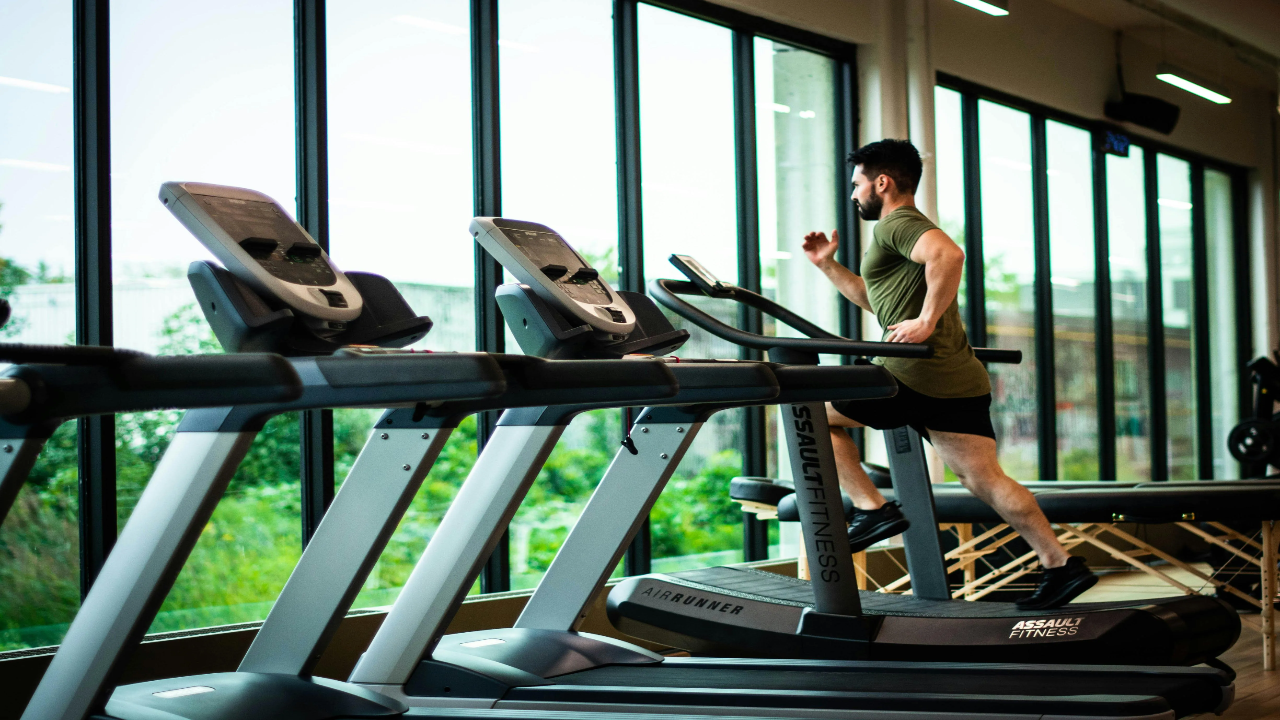
Introduction
Summer in the UAE routinely pushes daily highs into the mid-40s in coastal cities and above 50°C in inland districts. Humidity spikes and frequent dust haze raise the perceived temperature further, narrowing safe outdoor training windows to short slices at dawn or late night. The result is inconsistent workouts and missed fitness targets, especially for runners and brisk walkers who depend on regular sessions. A home treadmill eliminates that friction by bringing steady climate control, predictable footing, and precise pacing into apartments and villas.
Public policy underlines the risk. Each year, the Midday Break prohibits outdoor work under direct sun from 12:30 to 15:00 between 15 June and 15 September, with enforcement and very high compliance. That signal from regulators mirrors medical advice to avoid strenuous activity during peak heat, reinforcing the case for moving cardio indoors during the season’s harshest months.
Reliable indoor running or walking also aligns with global health guidance. Adults benefit from 150–300 minutes of moderate aerobic activity a week or 75–150 minutes of vigorous effort, which a treadmill can deliver in repeatable blocks regardless of outdoor conditions. The same platform supports structured intervals, hill work via incline, and easy recovery sessions without exposure to heat stress.
Apartment realities matter as well. Modern treadmills pair cushioning with compact footprints and folding frames, reducing impact on joints and floor space. With thoughtful setup and basic noise isolation, living-room or spare-room cardio becomes an everyday habit that survives the UAE’s long summer and the occasional dusty day.
TLDR / Key Takeaways
-
UAE heat and humidity compress safe outdoor training windows; indoor cardio solves consistency.
-
The annual Midday Break highlights peak-hour risk and supports shifting aerobic work indoors.
-
Global guidelines call for 150–300 minutes weekly of moderate activity or 75–150 minutes vigorous; treadmills make those minutes repeatable.
UAE climate realities that make indoor cardio non-negotiable
The 2025 season delivered searing readings across the country, including a 51.8°C peak in Sweihan reported by the National Centre of Meteorology and covered by international outlets. Coastal cities such as Dubai and Abu Dhabi hovered in the mid-40s with humidity that raised heat stress and made even shaded outdoor runs taxing. Health advisories urged the public to avoid peak sun, hydrate, and seek air-conditioned spaces during extreme spells.
Policy mirrors the meteorological reality. The Ministry of Human Resources and Emiratisation mandates a Midday Break from 15 June to 15 September with a 12:30–15:00 pause for outdoor work under direct sun. Official guidance, national portals, and media coverage emphasize enforcement and consistently report very high compliance, underscoring that peak heat is not just uncomfortable but hazardous. For fitness planning, the same window should be treated as a no-go zone for hard outdoor efforts.
Is outdoor running safe in Dubai during summer? Safety depends on timing, intensity, and individual tolerance, but midday and mid-afternoon sessions carry clear risk when temperatures exceed 40°C with high humidity. Short, easy efforts at dawn or late evening may be feasible for heat-acclimated runners on select days, yet heat alerts and blowing dust can shut those windows without notice. A home treadmill removes the guesswork by offering steady temperature, clean air, and precise pacing every day of the week.
Health targets first — matching WHO/ACSM guidelines with home equipment
Global recommendations set a clear benchmark: adults should complete 150–300 minutes of moderate aerobic activity weekly or 75–150 minutes of vigorous work, plus muscle-strengthening on two days. These ranges can be met with treadmill sessions split across the week, using time-based targets that remain consistent regardless of weather.
Intensity drives classification. Moderate effort typically allows comfortable conversation and a steady heart-rate rise; vigorous effort produces labored breathing and shorter speaking bursts. On a treadmill, intensity can be tuned by speed, incline, or intervals. For example, moderate cardio can be built from 30-minute steady walks with slight incline on five days, while vigorous cardio can come from 20- to 25-minute run intervals on three days. Both patterns hit the weekly thresholds without exposure to heat or dust.
Adherence improves when the plan is simple. A practical mix pairs three moderate sessions with two short interval blocks, totals 180–220 minutes, and uses incline for added stimulus when time is tight. Heart-rate straps or RPE scales help maintain the intended zone. For those with performance goals, structured microcycles rotate easy aerobic days, hill work, and recovery walks to manage fatigue. The platform’s repeatability also enables safe progression: modest speed or incline increases every one to two weeks while monitoring comfort and sleep.
Strength guidelines fit the same schedule. Two short bodyweight or dumbbell circuits on non-running days satisfy the resistance requirement next to the treadmill space, maintaining joint support and durability for consistent cardio. The outcome is a routine that aligns with WHO and ACSM advice while working with UAE apartments and summer climate, not against them.

What to look for in a Home Treadmill (entity–attribute map)
A strong buying decision starts with the drive system. Continuous horsepower matters more than peak numbers. Most home units use DC motors that suit walking and daily running. Heavy users and sprinters may prefer higher-CHP motors that hold speed under load without surging. Belt geometry influences stride mechanics. Walkers are well served by belts near 120 to 135 cm. Consistent runners benefit from 140 to 152 cm length and 50 to 55 cm width for relaxed foot placement and safer lateral clearance.
Deck design affects joints and neighbor comfort. Quality cushioning spreads impact, trims tibial shock, and cuts vibration transmitted into floors. Incline determines training range and calorie cost. Standard frames reach 10 to 12 percent, which is enough for hill intervals. Decline-enabled and high-incline trainers simulate steep hiking and eccentric control for quadriceps. Speed ceilings separate casual jogging from interval capability. A top speed near 18 to 22 km/h future-proofs progression without forcing constant max-out.
Console and content ecosystems shape adherence. Integrated displays with guided programs, automatic speed and incline control, and heart rate accessories keep intensity honest. iFIT-style formats add route simulation and coaching for those who thrive on structure. Footprint and storage determine room fit. Folding frames with gas assist, transport wheels, and lower deck heights reduce friction in apartments.
Noise and vibration deserve special scrutiny in the UAE. Residential guidance in Dubai references 55 dB(A) daytime and 45 dB(A) nighttime limits, so isolation mats, rubber tiles, and cadence coaching help keep transmitted noise in check.
Service coverage is non-negotiable. Local installation, spare parts availability, and responsive support keep downtime low in a dusty climate. For quick model mapping, the Sea Wonders range provides clear paths: advanced runners who prioritize coaching and cushioning can review NordicTrack Commercial 1750. Space-conscious buyers can compare NordicTrack T Series 8. Incline-focused training is well served by NordicTrack Elite X24i. Balanced, runner-ready specs sit with NordicTrack Commercial 1250.
Operating cost in the UAE — simple DEWA math for treadmills
Electricity expense is predictable when framed as power times time. The sequence is straightforward. Step one involves establishing average draw. Nameplate ratings show the maximum, not the typical load during exercise. Real-world measurements vary with speed, incline, user mass, and deck friction. Independent tests and vendor summaries place operational draw for home units from a few hundred watts during easy walking to several hundred watts during running, often clustering around the mid-hundreds.
Step two converts minutes to hours. For a 45 minute walk, hours equal 0.75. Step three multiplies power by time to get kilowatt-hours. A brisk walk averaging 0.35 to 0.50 kW uses about 0.26 to 0.38 kWh per session. Twelve such walks in a month total roughly 3.1 to 4.6 kWh. A 30 minute run averaging 0.60 to 0.80 kW uses about 0.30 to 0.40 kWh; twelve runs total 3.6 to 4.8 kWh. These are illustrative bands. The most accurate estimate comes from a plug-in energy meter or a smart plug with kWh logging.
Step four translates kWh into dirhams. Dubai Electricity and Water Authority publishes slab tariffs and a monthly fuel surcharge, and provides an official calculator. Enter the anticipated monthly kWh into the calculator and select the correct category to see the current figure including VAT. Because the fuel surcharge changes, a calculator-driven estimate avoids stale numbers.
Practical tips close the loop. Smooth belt alignment and regular lubrication reduce friction and power draw. Console screens and fans add modest overhead; switching off idle screens limits standby waste. A dedicated, properly earthed circuit with surge protection safeguards electronics and avoids nuisance trips in older apartments. For budgeting, a quick rule is minutes per month divided by 60, multiplied by average kW, then run through the DEWA tariff calculator for the month in question.
Apartment-friendly setup that neighbors won’t hate
Noise control starts at the source and the floor. Residential guidance commonly cited in Dubai aims for approximately 55 dB(A) during daytime and 45 dB(A) at night, so the target is a quiet, non-boomy signature. Vibration is often the culprit rather than airborne sound. A dense rubber base layer under the treadmill and separate anti-vibration feet under the frame reduce structure-borne energy. Interlocking tiles beneath a single-piece mat create mass plus compliance, which lowers the amplitude transmitted into slabs and raised floors.
Placement influences outcomes. A corner location with two solid walls behind and to the side reflects less vibration through long spans. A room over concrete is preferable to a suspended slab. If a suspended floor is unavoidable, orient the deck so the running direction crosses joists rather than parallels them. A short pile rug under the mat helps decouple hard tile from the isolation stack without introducing wobble. Leveling matters. An out-of-level deck increases belt friction and noise. Transport wheels should sit off the mat during use to avoid rattling.
Runner behavior matters as much as hardware. Softer cadence with shorter contacts reduces peak forces and audible slap. Incline choices affect impact and belt speed; mild incline often feels quieter than flat at the same effort. Early evening sessions keep within daytime limits longer and avoid late-night peaks that risk neighbor complaints. A small desk fan or AC vent near the console reduces sweat drip on the deck, keeps bearings cooler, and helps air quality on humid days.
Safety and upkeep close the loop. Keep the emergency key clipped, route the cord away from footpaths, and use a surge suppressor rated for the local voltage. Avoid balcony or outdoor placement. Heat, humidity, and airborne dust accelerate corrosion and contaminate the belt, raising noise and power draw over time in the UAE climate. Periodic dusting of vents and a lubrication schedule preserve both civility and equipment life.
Conclusion — climate, room, goals aligned
UAE summers compress safe outdoor training into narrow twilight windows. Consistency drops when heat, humidity, and dust intrude on the plan. A home treadmill restores control over temperature, air, and pacing, which stabilizes weekly minutes and safeguards progress toward health targets. Apartment realities can be met with compact frames, folding designs, and simple isolation mats that reduce structure-borne vibration. Operating costs become predictable once sessions are translated into kWh and checked against the DEWA calculator, while basic upkeep keeps draw and noise in line with expectations. The platform also improves training quality, since incline, speed, and intervals can be prescribed precisely and repeated without weather surprises.
Model selection should mirror intent. Daily runners benefit from cushioning and content depth for intervals and long aerobic days. Mixed users need balanced speed and incline with tidy footprints. Incline-centric goals gain most from steep grades at lower belt speeds that raise energy cost with less impact. Sea Wonders carries options that map neatly to these profiles, including NordicTrack Commercial 1750, T Series 8, Commercial 1250, and Elite X24i. Check other treadmill options at Sea Wonders.
Maintenance and placement complete the picture. Dust management, periodic lubrication, and a surge-protected, grounded outlet protect the motor and electronics in a high-heat region. Corner placement on a dense mat, with wheels lifted off the surface during use, quiets footfall and belt resonance. With these practical steps, indoor running or brisk walking becomes year-round, schedule-proof cardio that suits UAE homes and meets guideline minutes without compromise.
FAQ
Q: Is a home treadmill essential in UAE summers?
A: For many residents, indoor cardio is the only reliable way to maintain weekly aerobic minutes during extended heat and humidity.
Q: How many minutes meet global health targets on a treadmill?
A: Adults typically target 150 to 300 minutes at moderate intensity or 75 to 150 minutes at vigorous intensity each week.
Q: Will neighbors hear treadmill noise at night?
A: Noise can be minimized with a dense rubber mat, isolation feet, and cadence control; early evening sessions are preferable to late-night runs in shared buildings.
Q: Which specs matter most for apartments?
A: Compact footprint, folding mechanism, belt length near 140 cm for regular running, stable handrails, and quiet drive systems.
Q: What belt size suits runners versus walkers?
A: Walkers often manage with 120 to 135 cm, while consistent runners are better served by 140 to 152 cm lengths and 50 to 55 cm widths.
Q: What incline mimics outdoor effort on flat routes?
A: A mild incline near 1 percent can approximate wind resistance for steady efforts on flat terrain.
Related Blogs



Bose SoundLink Bluetooth Speaker
£50.00£60.00
Canon's press material for the EOS 5D states that it 'defines (a) new D-SLR category', while we're not typically too concerned
- Availability :In Stock