
 Locate Our Store
 +971 562162730
 AED
AED SAR
SAR KWD
KWD QAR
QAR BHD
BHD OMR
OMR


Alkaline vs Lithium Batteries in UAE: When Lithium Actually Saves Money
Introduction
In the UAE—especially in Dubai—battery decisions aren’t really about the battery price. They’re about how expensive it is when the battery dies. Visit Sea Wonders for batteries prices or contact us.
A set of AA cells might cost a few dirhams more or less, but the real costs often come from:
-
technician time (and travel time between sites),
-
downtime (POS disruption, access control issues),
-
guest complaints (hospitality),
-
emergency call-outs and same-day sourcing,
-
and wasted stock caused by poor storage or mixed expiries.
That’s why many businesses standardize on alkaline as the baseline for everyday use—then approve lithium only where it reduces total costs enough to justify the higher upfront price.
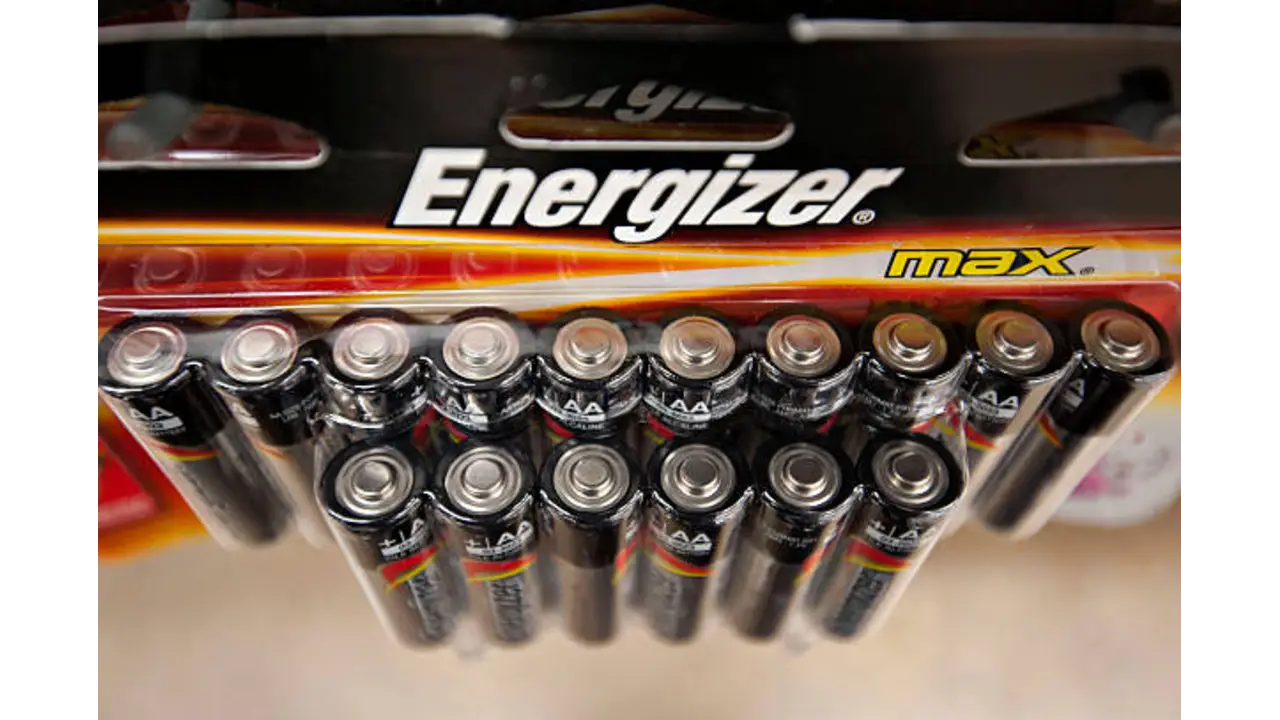
This guide shows how to make that decision clearly, using Energizer batteries and Duracell batteries as your standardization anchors, plus UAE-relevant examples with simple numbers you can adapt.
Alkaline vs Lithium in plain English
Alkaline batteries (AA/AAA/9V)
-
Usually the best “default” choice for many devices
-
Cost-effective when replacements are easy and stock is rotated properly
-
Works well for medium/low-drain devices and quick swaps
Typical procurement setup:
-
Energizer batteries alkaline baseline (often AA/AAA standardization for operations)
-
Duracell batteries alkaline baseline (often AA/AAA across sites)
Lithium batteries (AA/AAA and certain specialty types)
-
Higher upfront cost per cell
-
Often chosen when replacements are expensive, access is difficult, or devices are high-drain/critical
-
Best treated as a controlled exception SKU for specific device categories
Common lines businesses consider:
-
Energizer batteries lithium options (for AA/AAA where compatible)
-
Duracell batteries lithium options (for AA/AAA where compatible)
Important: The right choice depends more on the device and service cost than on brand or marketing claims.
The decision framework: Total Cost of Ownership (TCO)
Stop comparing price per battery. Compare cost per device per year.
Simple TCO formula
For a device that uses replaceable batteries:
**Annual TCO = (Battery cost × number of battery sets used per year)
-
(Labor time per change × labor rate × number of changes per year)
-
(Downtime/incident cost × number of incidents per year)**
Where:
-
“Battery set” means the full set the device requires (e.g., 4×AA for a door lock).
-
“Labor time” includes walking to the device, opening it, swapping batteries, testing it, and logging it.
-
“Downtime/incident cost” includes lost sales, guest disruption, security risk, or emergency call-out premiums.
The break-even question
Lithium “saves money” when it reduces changes (and incidents) enough that:
Extra battery cost < labor + downtime you avoid
In UAE operations, labor/time and downtime are often the biggest levers.

Fast decision rules (use these as your policy)
Use alkaline when:
-
Devices are easy to access
-
Battery swaps are quick (a few minutes)
-
Failure impact is low
-
You can keep fresh stock and rotate it (FEFO)
Examples: meeting room remotes, basic peripherals, low-risk devices.
Use lithium when:
-
Devices are hard to access (time-consuming service)
-
You pay for site visits, technician travel, or access permits
-
Downtime creates business disruption (POS, security, guest impact)
-
The device is high-drain or has frequent battery warnings even with good alkaline
-
You want fewer swaps across many locations (multi-branch control)
Examples: access control points, security sensors in large facilities, critical handheld equipment, field/security devices.
Consider rechargeables only when:
-
You have a disciplined charging workflow (charging station + rotation + accountability)
-
Devices consume batteries very frequently and predictably
If charging discipline is weak, rechargeables often become operational chaos.
When lithium actually saves money: UAE-relevant examples
Below are illustrative examples using simple numbers. They’re not “universal truth”—they show you how to do the math. Swap in your own labor rate, swap time, and incident costs.
To keep it consistent, assume a technician loaded cost of 120 AED/hour (2 AED/min). Adjust to your reality.
Example 1: Access control door lock (4×AA) in a high-traffic area
Scenario: Electronic door lock uses 4 AA. When low battery hits, it beeps and can create service calls or guest disruption.
Assumptions:
-
Alkaline set cost (4×AA): 16 AED
-
Lithium set cost (4×AA): 40 AED
-
Alkaline changes: 2× per year
-
Lithium changes: 1× per year
-
Labor per change: 20 minutes (access + swap + test + log)
-
Incident cost: assume 0 for planned swaps (we’ll handle disruption separately)
Alkaline annual cost
-
Battery: 16 AED × 2 = 32 AED
-
Labor: 20 min × 2 AED/min × 2 changes = 80 AED
-
Total = 112 AED/year
Lithium annual cost
-
Battery: 40 AED × 1 = 40 AED
-
Labor: 20 min × 2 AED/min × 1 change = 40 AED
-
Total = 80 AED/year
Result: Lithium saves 32 AED per lock per year in this scenario.
Now multiply across a property:
-
100 locks × 32 AED = 3,200 AED/year saved
And that’s before counting avoided guest disruption from low-battery beeping or lock issues.
Why lithium can win here: service time dominates the math more than battery price.
Example 2: Door/window contact sensor (coin cell) across multiple sites
Many contact sensors use CR-series coin cells (which are typically lithium by type), but the economic lesson still applies: if a battery swap requires a site visit, battery longevity and planned batching matter.
Scenario: You manage 10 branches. Each branch has 20 battery-powered contact sensors.
Assumptions:
-
Alkaline isn’t typically used here; focus is on replacement frequency and site visits
-
Technician visit (travel + on-site admin): 45 minutes per branch per maintenance window
-
If you can reduce how often you visit just for batteries, you reduce TCO
If “standard cells” force you into 2 battery visits/year but longer-lasting choices and better planning let you do 1 battery visit/year, the savings are:
-
(45 min × 2 AED/min) × (2 − 1) × 10 branches
= 90 AED × 10
= 900 AED/year saved in labor/travel alone
Result: In multi-site UAE operations, “fewer visits” can be worth more than the battery cost.
Operational takeaway: Even when chemistry is fixed (coin cells), longevity + batching saves money when travel time is the real cost.
Example 3: Motion sensors in a warehouse (difficult access)
Scenario: Motion sensors mounted high require ladder setup and safety steps.
Assumptions:
-
Sensor uses 2×AA
-
Alkaline set (2×AA): 8 AED
-
Lithium set (2×AA): 20 AED
-
Alkaline changes: 2× per year
-
Lithium changes: 1× per year
-
Labor per change: 30 minutes (ladder + swap + test + safety)
Alkaline annual cost
-
Battery: 8 × 2 = 16 AED
-
Labor: 30 min × 2 AED/min × 2 = 120 AED
-
Total = 136 AED/year
Lithium annual cost
-
Battery: 20 × 1 = 20 AED
-
Labor: 30 min × 2 AED/min × 1 = 60 AED
-
Total = 80 AED/year
Result: Lithium saves 56 AED per sensor per year.
With 50 sensors, that’s 2,800 AED/year—again without counting the value of fewer “sensor offline” alerts and fewer disruptions.
Example 4: POS handheld scanner (downtime cost matters)
Scenario: A handheld device uses 2×AA or 2×AAA (model dependent). Battery changes interrupt operations.
Assumptions:
-
Alkaline set: 8 AED
-
Lithium set: 20 AED
-
Alkaline changes: 12× per year (about monthly)
-
Lithium changes: 6× per year (about every two months)
-
Swap time is only 5 minutes, but it causes 5 minutes of operational disruption
-
Labor rate: 2 AED/min (for the staff time)
-
Downtime cost: assume 10 AED per incident (conservative, adjust to your reality)
Alkaline annual
-
Battery: 8 × 12 = 96 AED
-
Labor: 5 min × 2 AED/min × 12 = 120 AED
-
Downtime: 10 × 12 = 120 AED
-
Total = 336 AED/year
Lithium annual
-
Battery: 20 × 6 = 120 AED
-
Labor: 5 min × 2 AED/min × 6 = 60 AED
-
Downtime: 10 × 6 = 60 AED
-
Total = 240 AED/year
Result: Lithium saves 96 AED per device per year in this scenario.
Why lithium can win here: it cuts disruption events, not just battery swaps.
Example 5: Security patrol flashlight (high consequence of failure)
Scenario: A flashlight used on security rounds. Failure mid-shift creates risk and escalations.
Assumptions:
-
Uses 2×AA
-
Alkaline set: 8 AED
-
Lithium set: 20 AED
-
Alkaline changes: 6×/year
-
Lithium changes: 3×/year
-
Labor per change: only 5 minutes, but incident risk matters
-
Incident cost: assume 25 AED per mid-shift failure event (time lost + escalation). Lithium reduces incidents from 2/year to 0/year.
Alkaline annual
-
Battery: 8 × 6 = 48 AED
-
Labor: 5 min × 2 AED/min × 6 = 60 AED
-
Incidents: 25 × 2 = 50 AED
-
Total = 158 AED/year
Lithium annual
-
Battery: 20 × 3 = 60 AED
-
Labor: 5 min × 2 AED/min × 3 = 30 AED
-
Incidents: 25 × 0 = 0 AED
-
Total = 90 AED/year
Result: Lithium saves 68 AED per flashlight per year in this scenario.
Why lithium can win here: risk and reliability have economic value, even if swap time is small.
Example 6: Guest room TV remote (where lithium often does NOT save money)
Scenario: Hotel remotes are easy to access and quick to replace. Impact is real, but replacement is extremely fast.
Assumptions:
-
Remote uses 2×AAA
-
Alkaline set: 6 AED
-
Lithium set: 16 AED
-
Alkaline changes: 2×/year
-
Lithium changes: 1×/year
-
Labor per change: 2 minutes (housekeeping quick swap)
-
Downtime cost: negligible if your team swaps quickly
Alkaline annual
-
Battery: 6 × 2 = 12 AED
-
Labor: 2 min × 2 AED/min × 2 = 8 AED
-
Total = 20 AED/year
Lithium annual
-
Battery: 16 × 1 = 16 AED
-
Labor: 2 min × 2 AED/min × 1 = 4 AED
-
Total = 20 AED/year
Result: It’s a tie in this simplified scenario—and in many real cases alkaline wins because it’s cheaper and swaps are easy.
Operational takeaway: Use lithium where it reduces expensive service work. Don’t blanket-upgrade everything.
UAE factors that change the math (especially Dubai)
1) Heat exposure and storage discipline
Poor storage can erase the benefits of either chemistry. In UAE conditions:
-
avoid leaving cartons in sun-exposed loading bays
-
avoid hot mezzanine corners and unventilated storerooms
-
don’t store spares loose in vehicles or gloveboxes in peak summer
If storage is uncontrolled, you may see:
-
early low-battery warnings
-
inconsistent performance across sites
-
higher leakage risk and device damage costs
2) Stock rotation matters for alkaline programs
If you’re using alkaline as your baseline (common and smart), protect the program with:
-
minimum remaining shelf life on delivery (set your standard, e.g., ___ months)
-
FEFO rotation (First Expiry, First Out)
-
avoiding mixed-expiry cartons where possible
A well-managed alkaline program often beats a poorly managed lithium program.
3) Multi-branch operations magnify labor cost
Lithium is most likely to save money when:
-
you have many sites,
-
service visits are expensive,
-
and replacement frequency drives repeated travel and ticket volume.

Standardization policy using Energizer and Duracell
You’ll get the best ROI not from debating brands endlessly, but from choosing a clean policy and enforcing it.
Option A: Standardize on Energizer batteries
-
Alkaline baseline for AA/AAA
-
Lithium as an approved exception list for specific device categories (locks, sensors, high-drain tools)
Option B: Standardize on Duracell batteries
-
Alkaline baseline for AA/AAA
-
Lithium as an approved exception list for defined devices
Option C: Dual-approved (controlled)
-
One primary brand
-
One approved fallback brand (only when primary is unavailable)
-
“No substitutions without approval” to prevent branch-level chaos
Rule for all options: Don’t allow teams to mix chemistries randomly. Define where lithium is allowed and why.
A practical “starter standard list” by chemistry (commercial-friendly)
Baseline alkaline SKUs (most companies)
-
AA alkaline (primary brand)
-
AAA alkaline (primary brand)
Lithium exception SKUs (approved devices only)
-
AA lithium (for defined high-cost replacement devices)
-
AAA lithium (for defined high-cost replacement devices)
Coin cells and specialty (only if your audit proves usage)
-
CR2032 (exact code only)
-
CR2025 (only if needed)
-
9V (only if needed for specific devices)
-
CR123A (only if your security devices require it)
Key principle: Don’t stock what you don’t consume. Specialty SKUs become dead inventory quickly.
Practical rollout: how to implement without overcomplicating
-
Audit devices (locks, sensors, scanners, tools) and group by AA/AAA/coin cells
-
Identify “expensive replacement” devices (hard access, travel, downtime impact)
-
Approve lithium only for those categories
-
Set acceptance rules (shelf life minimum, no substitutions, FEFO rotation)
-
Track changes for 60–90 days and adjust the exception list based on real replacement frequency
FAQs
Is lithium always better than alkaline in UAE?
No. Lithium often costs more upfront and only saves money when it reduces expensive replacement labor, travel, downtime, or incidents. Alkaline is usually best for easy-access, low-impact devices.
When does lithium save money for businesses?
When battery replacement is expensive (technician time, travel, access difficulty) or failures cause operational disruption (POS, security, guest impact). In these cases, reducing replacement frequency often beats higher unit cost.
Does Dubai heat change battery choice?
Heat changes storage risk and consistency. A well-stored alkaline program can perform reliably. Poor storage can create early failures and inconsistency for any chemistry. The best approach is chemistry + storage discipline.
Should we standardize on Energizer batteries or Duracell batteries?
Either can work well. The bigger win is standardization and control: a baseline alkaline program plus a tightly defined lithium exception list where it saves total cost.
Final takeaway
Lithium saves money in the UAE when your real costs aren’t the batteries—they’re the labor, travel, downtime, and incident risk that come with battery replacements.
Use alkaline as your baseline for easy swaps. Use lithium selectively for:
-
hard-to-access sensors,
-
high-traffic access control points,
-
high-drain or disruption-prone devices,
-
and equipment where failure is costly.
Related Blogs


Bose SoundLink Bluetooth Speaker
£50.00£60.00
Canon's press material for the EOS 5D states that it 'defines (a) new D-SLR category', while we're not typically too concerned
- Availability :In Stock